ConsumerLab.com uses JavaScript to provide the best possible experience for our content, but your browser has it disabled. Learn how to enable it here.
There two main types of ginseng root: Asian ginseng (Panax ginseng, often sold as Panax, Chinese or Korean ginseng) and American ginseng (Panax quinquefolius, which includes what is sold as Wisconsin ginseng). Note that "Siberian" or "Russian" ginseng is not true ginseng and does not contain the same active compounds as real ginseng. Ginseng is normally off-white in color but, when steamed and dried, it is "red" -- both forms are sold. (See What It Is for more details.)
As discussed in detail in the What It Does section, ginseng is widely used with the belief that it will improve overall energy and vitality, although there is little clinical evidence of this. Korean red ginseng is particularly popular for enhancing sexual function. Some studies in men with erectile dysfunction have shown some benefit, and some studies in women have shown improvement in sexual arousal.
There is preliminary evidence that ginseng extract can help improve blood sugar levels in people with type 2 diabetes, although it did not improve levels in a study of people with metabolic syndrome. A study found minor benefit with ginseng extract in people with liver dysfunction.
Despite some positive results, the role of ginseng in preventing the common cold or flu remains uncertain and, overall, there is not enough evidence to support using it for such purposes. In children with ADHD, a ginseng extract appeared to reduce hyperactivity but did not improve inattention. A study found ginseng to improve symptoms in women with cold hypersensitivity (which can include Raynaud's).
What did ConsumerLab find when testing ginseng supplements?
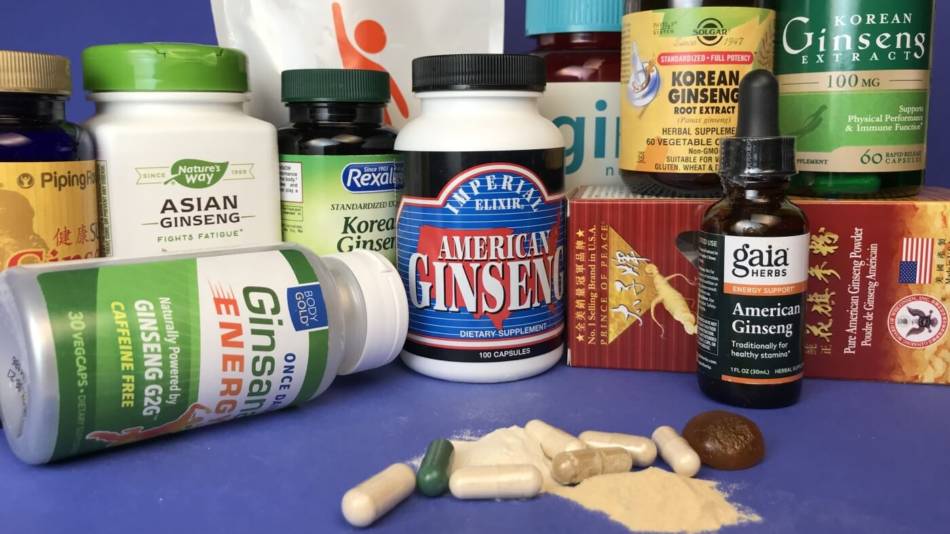
Our tests showed a very wide range in the amount of ginsenosides in ginseng supplements. Per serving, ginsenosides ranged from as little as 7.4 mg to as much as 82.9 mg. One product was Not Approved, as it contained only 77.4% of the minimum amount of ginsenosides we expected from its claimed amount and form of ginseng. (For details, see What CL Found and How Products Were Evaluated).
Which is the best ginseng?
Among the products that passed testing, ConsumerLab.com chose three Top Picks — one Asian ginseng supplements and two American ginseng supplements. These provide high quality ginseng at relatively good value.
How much ginseng should I take?
Dosage depends largely on the form of ginseng used: Generally about 1,000 mg (1 gram) of root powder is taken twice daily, while only about 100 mg of root extract is taken twice daily, but dosage can vary significantly based on type of ginseng and reason for use. Effects may take days or weeks. (See What to Consider When Using).
Is ginseng safe and does it cause side effects?
Ginseng is generally thought to be safe when taken in appropriate suggested amounts, although its safety has not been established during pregnancy or breast-feeding. Due to its potential effect on blood sugar levels, people with diabetes should be cautious about using ginseng. Ginseng may also interact with a range of drugs including warfarin and statins. It may also stimulate breast cancer cells, so should not be used in people with breast cancer. For details, see Concerns and Cautions.
Products tested in 2021
+— 25 sources
In addition the results of its expert testing, ConsumerLab uses only high-quality, evidence based, information sources. These sources include peer-reviewed studies and information from agencies such as the FDA and USDA, and the National Academy of Medicine. On evolving topics, studies from pre-print journals may be sourced. All of our content is reviewed by medical doctors and doctoral-level experts in pharmacology, toxicology, and chemistry. We continually update and medically review our information to keep our content trustworthy, accurate, and reliable. The following sources are referenced in this article:
You must be a member to get the full test results along with ConsumerLab.com's recommendations and quality ratings of ginseng supplements. You will get results for 11 supplements — eight selected by ConsumerLab.com and three which passed testing in our voluntary Quality Certification Program.
In this comprehensive review, you'll discover:
Which ginseng supplements passed or failed our testing
CL's Top Picks among ginseng supplements for quality and value
The amount of ginsenoside compounds in each ginseng product and how much you should look for
What American and Asian Ginseng can or cannot do
Ginseng dosage for specific uses
Potential side effects and drug interactions with ginseng
Make sure you're choosing the best ginseng supplements approved in our tests!
For a Limited Time, Become a Member for $1.25/week
Ginseng may increase levels of certain immune cells in the body, but does this result in fewer colds? See what a recent study showed in the What It Does section of the Ginseng Supplements Review.
Ginseng for Desire?
September 13, 2020
Does ginseng improve desire and satisfaction in women? Find out what a recent study showed in the What It Does section of Ginseng Supplements Review.
Ginseng for Liver?
August 02, 2020
Does taking ginseng lower blood markers of liver disfunction? Find out what a recent study showed in the What It Does section of the Ginseng Supplements Review. Also see our Top Picks for ginseng.
Ginseng Interaction?
April 16, 2019
Liver injury was recently reported in a man who began taking a Siberian ginseng supplement in addition to his prescription statin medication. Get the details in the Concerns and Cautions section of the Ginseng Supplements Review.
Ginseng Role in Diabetes
February 27, 2018
Results of a recent study suggest that a form of ginseng can help control blood sugar in people with type 2 diabetes. Get the details in the What It Does section of the Ginseng Supplements Review.
Ginseng for Metabolic Syndrome?
March 02, 2016
A study in men with metabolic syndrome found no benefit on blood sugar levels from taking ginseng, but a small increase in testosterone. Get the details about this and other uses for ginseng, as well as our quality ratings in the Ginseng Supplements Review >>
Ginseng for ADHD
November 19, 2014
A ginseng extract showed promise in improving the symptoms of attention deficit-hyperactivity disorder (ADHD) without adverse effects in children ages 6 to 15 in a placebo-controlled study. You can get details about this and other studies with ginseng, as well as our test results for ginseng supplements in the Ginseng Supplements Review >>
Ginseng for Lower Blood Sugar
November 14, 2014
A new study found that a certain kind of ginseng helps lower blood sugar levels in people with impaired fasting glucose. For more about this study and related studies on blood sugar and diabetes with other types of ginseng (which have had mixed results), see the Ginseng Supplements Review >>
Ginseng Reduces Cancer-Related Fatigue
August 18, 2013
A well-controlled clinical trial recently showed reduced fatigue among cancer patients given a particular type and dose of ginseng. Get the details, as well as our test results for 16 ginseng supplements, in the updated Ginseng Supplements Review >>
As a ConsumerLab.com member, you may print a copy of this report for your personal use.
You can access a special print version by clicking the "Print" icon in the upper right corner of this report.
You can then use your web browser's print functions to print the whole report or just selected pages.
You may also email or post a link to this report using the web address above.
Non-members using the link will see a free summary and can join to view the full report.
Other means of copying or distributing this report, in part or full, are not permitted.
If you are sight-impaired and your computer is having trouble converting the text in this report to speech,
contact us for assistance at Membership@ConsumerLab.com or by
phone at 914-722-9149.
The "Latest Update" date indicates when new clinical or product information was most recently added. In the full review (available to CL members), the newest information is highlighted in yellow and, if a new product is added, it is footnoted in the results table, showing the date added to the review. The year(s) when testing was completed for the products in the review appears at the end of the Summary section.