



Save to favorites
This feature is restricted to active members.
Join now to save favorites and get all member benefits, including over 1,400 product reviews.
Join NowAlready a member? Sign in here.

Our Members Asked:
Does Gynostemma pentaphyllum really work as an AMPK activator and help for diabetes, high cholesterol, or weight loss?

Answer:
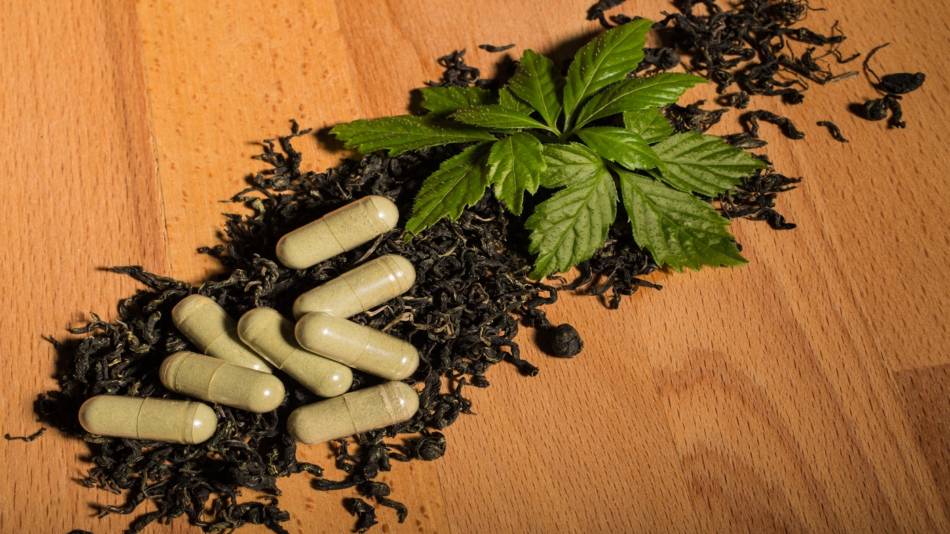
Gynostemma pentaphyllum (also known as jiaogulan) is an herb native to China and Vietnam. As a supplement, an extract of Gynostemma pentaphyllum known as ActivAMP is often promoted as an "AMPK activator," i.e., activating the enzyme AMP-activated protein kinase (AMPK), which stimulates sugar intake in skeletal muscles. Consequently, it has been promoted for improving metabolism, as well as for increasing energy and for anti-aging effects. This has led to further promotion of it as a treatment for people with type 2 diabetes type 2 or high cholesterol, as well as for weight loss and hair growth. We investigated the evidence behind these potential uses.
How Gynostemma pentaphyllum works
AMP-activated protein kinase (AMPK) is an energy-sensing enzyme that is activated when cellular energy levels are low, stimulating sugar uptake in skeletal muscles as well as fatty acid oxidation fat in other tissues. There is some evidence that AMPK is not properly regulated in animals and humans with metabolic syndrome or type 2 diabetes (Coughlin, Diabetes Metab Syndr Obes 2014). There is some evidence that certain drugs used to treat diabetes may work, in part, due to indirect activation of AMPK. In vitro and animal studies show that certain compounds in Gynostemma pentaphyllum (damulin A and damulin B) activate AMPK (Nguyen, Bioorg Med Chem 2011; Gauhar Biotechnol Lett 2012), but other compounds in the herb may contribute to its effects on blood sugar and insulin as well. For example, a gypenoside compound called phanoside has been shown to have insulin-releasing activity (Hoa, J Endochrinol 2007). In animals, an extract of Gynostemma pentaphyllum standardized to 98% gypenosides was shown to improve glucose tolerance, increasing insulin secretion and blood insulin levels (Lokman, Evid Based Complement Alternat Med 2015).
Potential health benefits of Gynostemma pentaphyllum
Type 2 diabetes
There are only a few, small studies on the effects of Gynostemma pentaphyllum in people with type 2 diabetes, and each involved consuming Gynostemma pentaphyllum tea, not an extract. In addition, these studies compared the effects of drinking Gynostemma pentaphyllum tea with drinking green tea (which has also been shown to activate AMPK and has been associated with a decreased risk of developing diabetes). For example, a small study among 16 men and women in Vietnam who were newly diagnosed with type 2 diabetes found consuming 3 grams of Gynostemma pentaphyllum tea powder (18% gypenosides) dissolved in 2 ounces of room temperature water twice daily (30 minutes before breakfast and dinner) for one month significantly lowered fasting blood sugar compared to green tea (Huyen, J Nutr Metab 2013). Participants in both groups were also instructed in improving their diet and asked to walk for 30 minutes per day, five days per week. Drinking Gynostemma pentaphyllum tea decreased fasting blood sugar by an average of 1.9 mmol/L, while there was no change in fasting blood sugar levels after drinking green tea; steady-state blood sugar levels were also improved after drinking Gynostemma pentaphyllum tea compared to green tea, indicating improved insulin sensitivity. In a similar study, among 25 men and women newly diagnosed with type 2 diabetes, the same researchers found drinking the same amount of Gynostemma pentaphyllum tea along in addition to treatment with medication (30 mg gliclazide daily) for two months significantly decreased HbA1c (a measure of blood sugar levels over time) by 2%, compared to a 0.7 % decrease in those drinking green tea. However, there were no changes in measures of insulin resistance (Huyen, Evid Based Complement Alternat Med 2012).
Although the results with tea are intriguing, to-date there are no clinical studies with Gynostemma pentaphyllum extract for preventing or treating diabetes.
Weight loss
Some research suggests that Gynostemma pentaphyllum can modestly aid in weight loss. A study conducted in South Korea among 80 obese men and women (average age 40), found that those who took one tablet containing 225 mg of a Gynostemma pentaphyllum extract (Actiponin — now called ActivAMP, Gencor) providing 1.1% damulin A before breakfast and dinner for three months had, on average, a decrease in total abdominal fat of 20 cm2 and lost an average of about 3 pounds, compared to an average decrease of 2 cm2 in total abdominal fat and no decrease in weight among those who took the placebo (Park, Obesity 2013). ActivAMP is found in products such as Swanson ActivAMP Amp-K Stimulator and Nutri-Thrive Optimized Jiaogulan at the same dose used in this clinical study.
Using the same dosage of the same product for 16 weeks, 117 people in Australia who were overweight or obese found the supplement decreased body mass by about 2 pounds, fat mass by about 2 pounds, body mass index (BMI) by 0.24 kg/m2 and mass of fat around the hips (gynoid mass) by about 0.35 pounds compared baseline. These improvements were modest but statistically significant compared to the placebo group. However, there was no significant between-group difference in lean mass, mass of fat around the buttocks and upper body (android mass), or changes in waist or hip circumference. The study was funded by the product's manufacturer (Rao, J Hum Nutr Diet 2021).
Lowering cholesterol
Although several earlier studies suggested Gynostemma pentaphyllum may help to lower cholesterol, no significant changes in total cholesterol, LDL or HDL cholesterol, or triglyceride levels were found in the above studies.
Hair growth
Gynostemma pentaphyllum appeared to stimulate the activity of certain hair follicle cells that control hair growth in a laboratory study (Kovale, Nutrients 2024), suggesting it may improve hair growth, but clinical research has demonstrated only modest benefit, at best. A study among healthy adults with moderate hair damage but not hair loss showed that taking 340 mL (about 11.5 fl. oz) of a Gynostemma pentaphyllum extract (concentration and standardization not specified) once daily before breakfast for 24 weeks significantly increased hair count by about 9 hairs/cm2 (normal hair count: 100 to 150 hairs/cm2) and hair diameter by about 14 microns (normal hair diameter: 50 to 120 microns) compared to placebo. However, it did not improve the pattern and density of hair at the front hairline or top of the head (based on expert visual evaluation) or most measures of user satisfaction compared to placebo. The study was conducted, in part, by the company that developed the Gynostemma pentaphyllum extract (Lee, Nutrients 2025).
Safety
Doses of Gynostemma pentaphyllum leaf (up to 6 grams per day) or extract (up 450 mg per day) have been well tolerated in short-term clinical studies (up to 3 months). Laboratory research suggests Gynostemma pentaphyllum may have blood-thinning effects (Tan, Zhongguo Zhong Xi Yi Jie He Za Zhi 1993), and supplementation with Gynostemma pentaphyllum extract has been reported to cause mild decreases in red blood cells, hemoglobin, hematocrit and blood platelet counts (although levels remained within normal ranges) (Park, Obesity 2013). For these reasons, it should be used with caution in people taking blood-thinning medication and those who may be anemic or prone to anemia. Although not proven, due to its potential effects on blood sugar and insulin levels, people who take antidiabetes medications should use with caution.
Bottom line
There is currently not enough clinical evidence to support the use of Gynostemma pentaphyllum and extracts of it prevent or treat type 2 diabetes. There is only limited evidence suggesting it may be of limited benefit for weight loss. Gynostemma pentaphyllum appears to be generally safe and well tolerated when taken for up to three months in doses used in clinical studies, although people who take blood-thinning medication or who are anemic should use with caution.
Be the first to comment
Loading Comments…
Submit your comment
This feature is restricted to active members.
Join now to add comments and get all member benefits, including over 1,400 product reviews.
Join NowAlready a member? Sign in here.
Agree to Comment Terms
Please abide by the following:
- If you make a statement of fact, such as whether a type of treatment does or does not work, state your basis -- such as personal experience or a published study.
- If you make a positive or negative comment about a product, note whether or not you have a financial interest in the product or in a competing product.
- Please be respectful in your tone.
- Please do not submit any type of HTML markup or scripting as it will not be accepted, nor will posts that exceed 2,500 characters.
For your privacy, only your first name (from your account) followed by a random number will appear with your comment. Your last name and email address will not be displayed.
Your comment has been submitted
We will review your comment before it is posted.
Join today to unlock all member benefits including full access to all CL Answers and over 1,400 product reviews.
Join NowAlready a member? Sign In Here.
Join now at www.consumerlab.com/join/
Join over 300,000 people on our weekly email list.
Related CL Answers (2)
Join over 100,000 members and access 1,400+ product reviews

Find the best products with instant access to our latest tests & reviews of over 1,400 health products.
Save money by finding high-quality products at lower cost.
Stay safe with the latest clinical findings, warnings, and expert answers.
Access our weekly newsletter.