



Save to favorites
This feature is restricted to active members.
Join now to save favorites and get all member benefits, including over 1,400 product reviews.
Join NowAlready a member? Sign in here.

Our Members Asked:
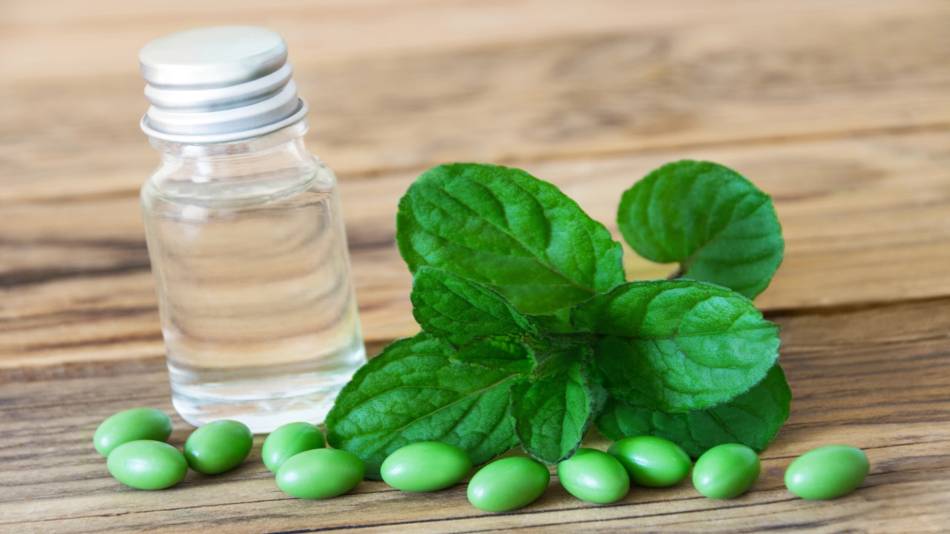
Peppermint Oil for Irritable Bowel Syndrome (IBS): Does It Work?

Answer:
Many people share your reluctance to rely on drugs for irritable bowel syndrome (IBS), a common gastrointestinal disorder that causes chronic abdominal pain and altered bowel habits (diarrhea, constipation, or alternating bouts of both). Other non-pharmaceutical interventions for IBS — notably the low FODMAP diet, cognitive behavioral therapy, and gut-directed hypnotherapy — have performed well in clinical trials, but the time and commitment they require can be difficult for some people.
Although several older clinical trials reported peppermint oil (187 mg to 225 mg in an enteric-coated capsule) taken two to four times daily for one to two months improved symptoms such as abdominal pain, gas and bloating and/or stool frequency compared to placebo (Liu, J Gastroenterol 1997, Cappello, Dig Liver Dis 2007; Merat, Dig Dis Sci 2010), later, more rigorous studies have not found a benefit.
For example, a randomized, double-blind, placebo-controlled trial in the Netherlands among 178 adults with IBS found that 180 mg of a small intestinal-release peppermint oil, Tempocol, taken three times daily 30 minutes before meals, did not meet stringent criteria for reducing abdominal pain and overall IBS symptoms. An experimental version of Tempocol that delayed the release of peppermint oil until the capsule entered the final section of the small intestine and the colon also failed to meet the criteria (Weerts, Gastroenterology, 2019). Tempocol is similar to IBgard, a product that is widely available in the U.S.
In addition, a study in the U.S. among 101 men and women (average age 43) with moderate IBS found that, compared to a placebo, 180 mg of enteric-coated peppermint oil (Pepogest) taken three times daily (30 minutes before meals) for six weeks did not reduce the severity of symptoms and resulted in higher rates of acid reflux, heartburn and burping (Nee, Am J Gastroenterol 2021).
Nevertheless, in 2025, pediatric gastroenterology experts in Europe and North America conditionally recommended enteric-coated peppermint oil for treating IBS in children and teens based on results from two older, low-quality studies, which found that enteric-coated peppermint oil reduced the frequency and intensity of IBS pain in children. However, the experts noted that any benefit is likely to be small (Groen, J Pediatr Gastroenterol Nutr 2025).
For information about other supplements that may help for IBS, see our answer to the question: Do any supplements help for irritable bowel syndrome (IBS)?
Other uses:
Peppermint oil may be helpful for mild indigestion and stomach upset in people who do not have IBS, although in studies showing a benefit, peppermint is often combined with other ingredients.
Safety and side effects:
Be aware that peppermint oil can cause side effects such as gastroesophageal reflux, heartburn, belching, nausea, vomiting, headache and blurry vision (Pittler, Am J Gastroenterol 1998; Nee, Am J Gastroenterol 2021). Taking an enteric-coated product, and starting with a small dose and gradually increasing to the full dose, may help to minimize these effects.
Consuming large amounts of pure peppermint oil that is not enterically-coated can cause skin irritation and severe chemical burns of the lips, mouth, and pharynx (Tamir, Otolaryngol Head Neck Surg 2005).
Rarely, allergic reactions to peppermint have been reported (Bayat, Allergy Asthma Clin Immunol 2014).
Join the conversation
Loading Comments…
Submit your comment
This feature is restricted to active members.
Join now to add comments and get all member benefits, including over 1,400 product reviews.
Join NowAlready a member? Sign in here.
Agree to Comment Terms
Please abide by the following:
- If you make a statement of fact, such as whether a type of treatment does or does not work, state your basis -- such as personal experience or a published study.
- If you make a positive or negative comment about a product, note whether or not you have a financial interest in the product or in a competing product.
- Please be respectful in your tone.
- Please do not submit any type of HTML markup or scripting as it will not be accepted, nor will posts that exceed 2,500 characters.
For your privacy, only your first name (from your account) followed by a random number will appear with your comment. Your last name and email address will not be displayed.
Your comment has been submitted
We will review your comment before it is posted.
Join today to unlock all member benefits including full access to all CL Answers and over 1,400 product reviews.
Join NowAlready a member? Sign In Here.
Join now at www.consumerlab.com/join/
Join over 300,000 people on our weekly email list.
Related CL Answers (2)


Join over 100,000 members and access 1,400+ product reviews

Find the best products with instant access to our latest tests & reviews of over 1,400 health products.
Save money by finding high-quality products at lower cost.
Stay safe with the latest clinical findings, warnings, and expert answers.
Access our weekly newsletter.