






Quick Summary
What are the benefits of beetroot juice, powder, or chews?
Beetroot and the juice, juice concentrates, powders, chews, and other products made from it naturally contain nitrate, which is converted by the body to the vasodilator nitric oxide.
Depending on how much nitrate a product provides, beetroot may modestly lower blood pressure, although it does not seem to help people with hypertension already treated with medication. Beetroot can also increase blood flow to muscles, and it may modestly improve some aspects of exercise endurance or performance, especially in people who are not trained athletes or when the exercise is more physically challenging than one is accustomed to (see What It Does).
How do beetroot products compare on nitrate strength? Which are best?
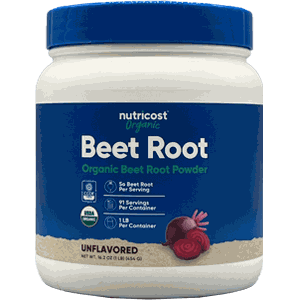
We tested popular beetroot juices and supplements from Beet It, Biotta, Lakewood, BulkSupplements, Micro Ingredients, Nutricost, Super Beets (by Humann), and Total Beets (by Force Factor)
ConsumerLab’s tests found that a serving of beetroot product could provide as much as 495.7 mg to as little as 4.3 mg of nitrate – more than a 100-fold difference.
-
Beetroot juices provided about 200 to 300 mg of nitrate per 8 fl oz cup, and a concentrated juice contained nearly 500 mg per shot.
-
Beetroot powders ranged widely in strength from just 4.1 mg (in a product that was NOT APPROVED) to 173.5 mg per 5-gram serving.
-
Beetroot chews provided very little nitrate – in the single digits per chew.
The amount of nitrate in beetroot products used in clinical trials has typically been around 300 mg to 600 mg daily.
See What CL Found and How Products Were Evaluated.
How much does it cost to get nitrate from beetroot products?
ConsumerLab found the cost to get 100 mg of nitrate from beetroot products to range from just 30 cents to over $20. Beetroot powders were often the most cost-effective way to get nitrate. Chews were the most expensive sources of nitrate – along with a powder that was unexpectedly low in nitrate.
Which beetroot products are best?
Our Top Picks among beetroot products each provided the highest amount of nitrate among competing brands, with the least lead contamination, and at low cost. This not only means that you get a product that is more likely to be potent, but saves you money and calories, as you can use less beetroot (see What to Consider When Buying).
Beetroot safety and side effects
Beetroot may cause gastrointestinal side effects and may turn urine and stool red. It may also trigger headaches or migraine is some people. People with diabetes, and those who take insulin or blood sugar-lowering medication should consult with a physician before using, as beetroot may lower blood sugar levels. Beetroot is also high in oxalate, which may increase the risk of kidney stones in some individuals (see details in Concerns and Cautions).