ConsumerLab.com uses JavaScript to provide the best possible experience for our content, but your browser has it disabled. Learn how to enable it here.
Black cumin seed (Nigella sativa) oil -- often called just “black seed oil” – consists mainly of the polyunsaturated fatty acids linoleic acid (an omega-6 fatty acid) and oleic acid (an omega-9 fatty acid) and includes the antioxidant compound thymoquinone and other compounds. Black seed is not related to the spices cumin or black caraway, or to black currant seed (see What It Is).
Possible health benefits of black seed:
Limited evidence from clinical studies conducted primarily in parts of Asia and the Middle East suggests that black seed oil, in liquid or capsule form, as well as black seed powder, may modestly lower blood sugar, blood pressure, cholesterol, and weight, and improve asthma symptoms, osteoarthritis, and thyroid status in people with Hashimoto's disease, but more research is needed to confirm these findings (see What It Does)
What did CL's tests of black seed supplements show?
ConsumerLab purchased seven black seed supplements and tested them for their levels of thymoquinone and fatty acids and for potential contamination from heavy metals (lead, cadmium, arsenic, and mercury). Products sold as bottled oils were also tested for freshness, based on peroxide values. Only 5 of the 7 black seed supplements could be Approved for quality, as two products did not contain their claimed amounts of thymoquinone, a key compound in black seed. ConsumerLab found that amounts of thymoquinone per serving ranged from as little as 2.7 mg to as much as 77.5 mg, with the cost to obtain a 20-mg serving ranging from 18 cents to 74 cents (see What CL Found and How Products Were Evaluated).
Best black seed supplements:
Among CL Approved products, ConsumerLab chose Top Picks for black seed bottled oil, black seed oil in capsules or softgels, and black seed extract based on quality and cost.
How much black seed should I take?
It is not clear what dose of black seed oil is best. Studies have generally involved taking anywhere from ¼ to 1 teaspoon (about 1.25 to 5 mL) per day of black seed oil or 1,000 to 2,000 mg per day of black seed powder or 100 mg to 200 mg of black seed extract per day. Be aware that black seed oil has an unpleasant wood varnish-like taste. If taken as a liquid (rather than in a pill), it's best to mix into a food or beverage (see ConsumerTips for details).
Black seed oil safety and side effects:
Black seed may occasionally cause mild gastrointestinal disturbances, such as nausea and stomach upset. It may, potentially, have a blood-thinning effect. Contact dermatitis has been reported with topical use. Long-term study of the potential side effects and adverse effects of black seed oils and extracts has not yet been conducted (see Concerns and Cautions).
Products tested in 2025
+— 33 sources
In addition the results of its expert testing, ConsumerLab uses only high-quality, evidence based, information sources. These sources include peer-reviewed studies and information from agencies such as the FDA and USDA, and the National Academy of Medicine. On evolving topics, studies from pre-print journals may be sourced. All of our content is reviewed by medical doctors and doctoral-level experts in pharmacology, toxicology, and chemistry. We continually update and medically review our information to keep our content trustworthy, accurate, and reliable. The following sources are referenced in this article:
Black seed oil supplement brands compared in this review
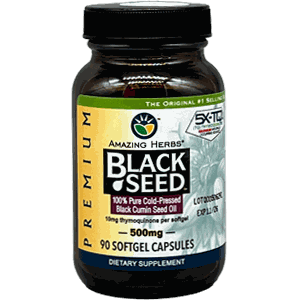
Amazing Herbs Black Seed
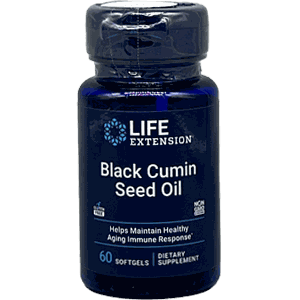
Life Extension Black Cumin Seed Oil
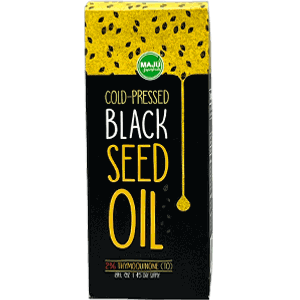
Maju Superfoods Cold-Pressed Black Seed Oil
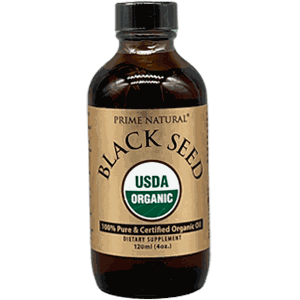
Prime Natural Black Seed
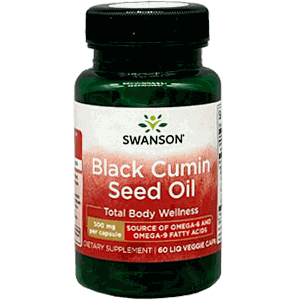
Swanson Black Cumin Seed Oil
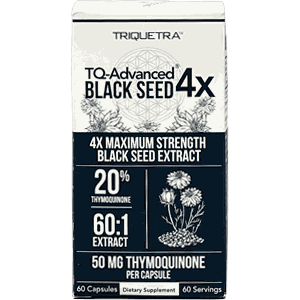
Triquetra TQ-Advanced Black Seed 4x
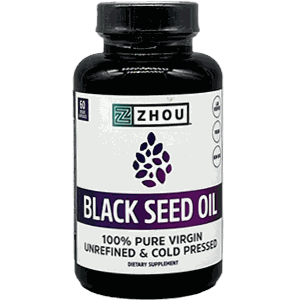
Zhou Black Seed Oil
You must be a member to get the full test results along with ConsumerLab.com recommendations and quality ratings. You will get results for 7 black seed oil supplements, including bottled black seed oil, black seed oil in capsules or softgels, and black seed extracts, selected for testing by ConsumerLab.
In this comprehensive review, you'll discover:
Which black seed oil supplements passed or failed our tests
Which black seed oil supplements offer the best quality and value and are CL's Top Picks
If black seed oil supplements were fresh (not rancid), or contaminated with heavy metals (lead, cadmium, arsenic, and mercury)
The clinical evidence for and against black seed oil for lowering blood sugar, blood pressure, and cholesterol, reducing symptoms of osteoarthritis, and other proposed uses
Safety, side effects, and drug interactions with black seed oil
Make sure you're choosing the best black seed oil or supplement approved in our tests!
For a Limited Time, Become a Member for $1.25/week
Latest Clinical Research Updates for Black Seed Oil Review
Can Black Seed Oil Help You Sleep Better?
October 05, 2026
Does taking black seed oil improve sleep? Find out what the latest research suggests in our Black Seed Oil Review + see our Top Picks for black seed oil.Does taking black seed oil improve sleep? Find out what the latest research suggests in our Black Seed Oil Review + see our Top Picks for black seed oil.
As a ConsumerLab.com member, you may print a copy of this report for your personal use.
You can access a special print version by clicking the "Print" icon in the upper right corner of this report.
You can then use your web browser's print functions to print the whole report or just selected pages.
You may also email or post a link to this report using the web address above.
Non-members using the link will see a free summary and can join to view the full report.
Other means of copying or distributing this report, in part or full, are not permitted.
If you are sight-impaired and your computer is having trouble converting the text in this report to speech,
contact us for assistance at Membership@ConsumerLab.com or by
phone at 914-722-9149.
The "Latest Update" date indicates when new clinical or product information was most recently added. In the full review (available to CL members), the newest information is highlighted in yellow and, if a new product is added, it is footnoted in the results table, showing the date added to the review. The year(s) when testing was completed for the products in the review appears at the end of the Summary section.