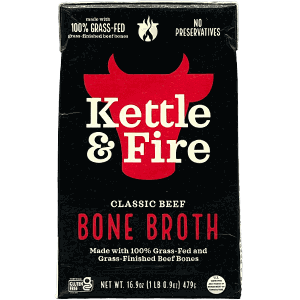
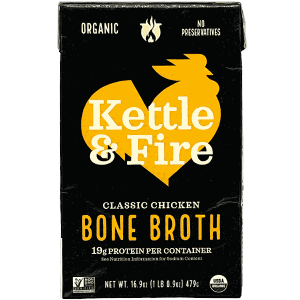
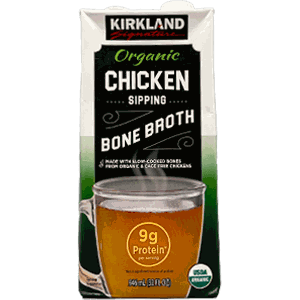
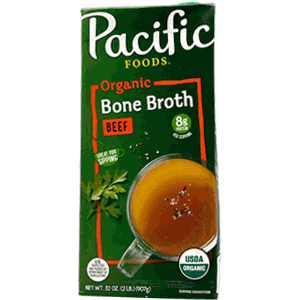
Quick Summary
What did CL's tests of bone broth products find?
The bad news: Only 6 out of 10 popular bone broth products passed our tests for quality. Two failed to pass because they provided much less protein than listed, one of which also contained much more sodium (an extra 63 mg) than claimed. A third product could not be approved due to unusually low collagen content, and another was not a true bone broth but a mixture of collagen, meat extract, and other ingredients. Across the products, amounts of sodium ranged from 104.2 mg in an unsalted product to over 800 mg. The good news: No product exceeded stringent limits for contamination with heavy metals (lead, arsenic, mercury or cadmium).
 Best bone broth? Best bone broth?
CL chose a Top Pick for beef bone broth and two Top Picks for chicken bone broth (one salty and one with little salt) based on quality, taste, and value.
What is bone broth?
Bone broth (made from simmering chicken or beef bones) can be a good source of protein — particularly collagen. Although vitamins and minerals are naturally found in bone broth, amounts are small — less than 5% of daily requirements. The mineral found in highest concentration is potassium. (See What It Is). Sodium naturally occurring in bone broth is about 100 mg per cup, but some have added salt, boosting levels to about 500 mg. Bone broth is also sold in powder form by dehydrating bone broth. Some products marketed as “bone broth” are not truly bone broth but mixtures of collagen with other ingredients.
What are the health benefits of bone broth?
Bone broth has been promoted for boosting the immune system and healing the digestive tract, although there is not much clinical information about the effects of bone broths. Nevertheless, research with collagen suggests that it may help build muscle, reduce joint pain, increase bone mineral density, modestly improve skin elasticity, reduce wrinkles and strengthen nails.
The protein in bone broth (including the collagen) significantly contributes to one's daily requirement for protein and provides essential amino acids after digestion. (See What It Does). A one-cup serving of bone broth can significantly contribute to your daily protein needs. A typical bone broth provides about 9 grams of protein per cup, although our tests showed amounts ranging from 3.8 grams up to 11 grams per cup. In terms of collagen, we found 1.3 grams to 11.5 grams per cup, with around 4 grams being most common. Clinical trials of collagen have generally used daily doses of 10 to 15 grams (see What CL Found and How Products Were Evaluated).
(See how bone broth compares to other sources of protein, such as whey, casein, soy, rice, pea and hemp in our Protein Powders and Drinks Review)
How much should I expect to spend on bone broth?
A cup of bone broth was found to range in price from 84 cents to $3.84, but the cost to get 5 grams of collagen from products ranged from $1.14 to $5.74 (see What CL Found).
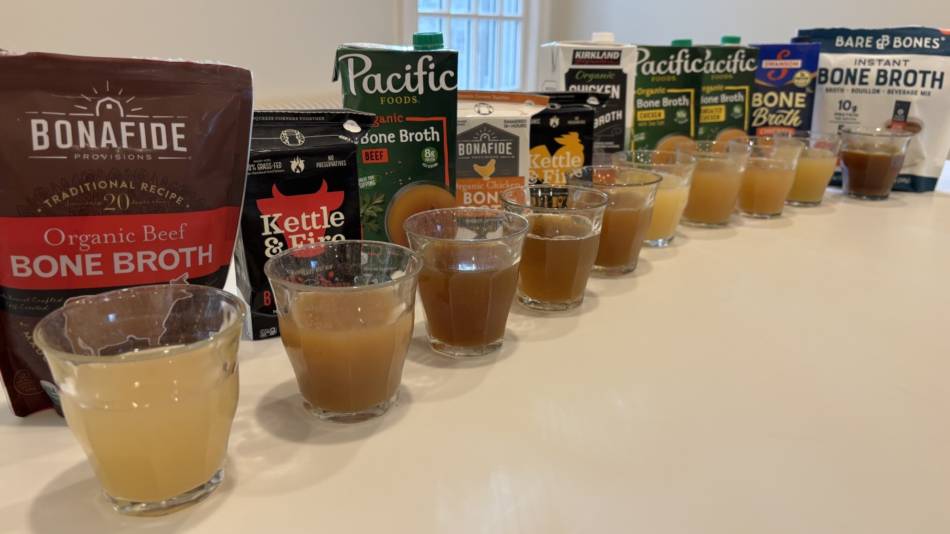
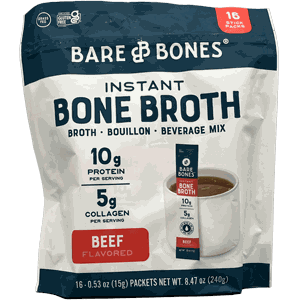
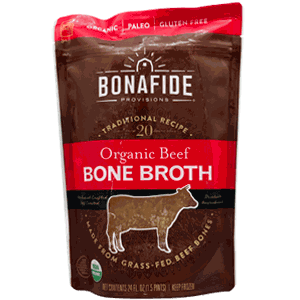
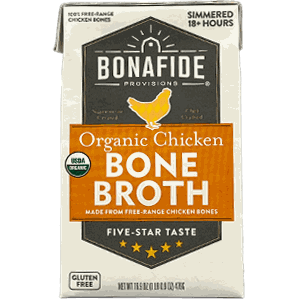
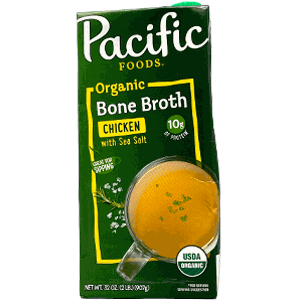
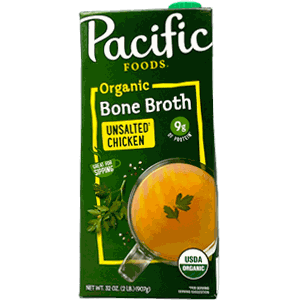
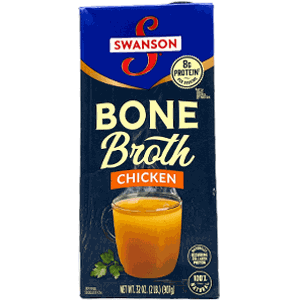
Products tested in 2025
+— 23 sources
In addition the results of its expert testing, ConsumerLab uses only high-quality, evidence based, information sources. These sources include peer-reviewed studies and information from agencies such as the FDA and USDA, and the National Academy of Medicine. On evolving topics, studies from pre-print journals may be sourced. All of our content is reviewed by medical doctors and doctoral-level experts in pharmacology, toxicology, and chemistry. We continually update and medically review our information to keep our content trustworthy, accurate, and reliable. The following sources are referenced in this article:
- Adam, Cas Lek Cesk 1996
- Bo, Chest 2000
- Bruyere, Comp Ther in Med 2012
- Cagan, Med Sci Monit 2017
- Choi, J Cosmet Laser Ther 2014
- Clark, Curr Med Res Opin 2008
- Dressler, J Sports Sci Med 2018
- Fanaro, Rev Bras Geriatr Gerontol 2016
- Frasca, Clin Exp Gastroenterol 2012
- Hexsel, J Cosmet Dermatol 2017
- Koutroubakis, J Clin Pathol 2003
- Kumar, J Sci Food Agric 2014
- Proksch, Schunck, Skin Pharmacol Physiol 2014
- Proksch, Segger, Skin Pharmacol Physiol 2014
- Saketkhoo, Chest 1978
- Scaldaferri United European Gastroenterol J 2014
- Trc, Intl Orthop 2011
- Zdzieblik, Br J Nutr 2015
- Monro, Med Hypotheses 2013
- Alcock, Int J Sport Nutr Excer Metab 2018
- Barnett, Arthritis Rheum 1998
- Vijven, Osteoarthritis Cartilage 2012
- Zhang, Arthritis Rheum 2008
You must be a ConsumerLab.com member to get the full test results along with ConsumerLab.com's Top Picks and ConsumerTips on how to choose and use bone broth liquids and powders. You'll get results for 10 bone broths selected by ConsumerLab.
 ConsumerLab.com's Top Picks for best bone broths based on quality, nutrients, taste and value ConsumerLab.com's Top Picks for best bone broths based on quality, nutrients, taste and value- Which bone broth liquids and powders passed or failed testing
- The amounts of collagen found in popular bone broth products — something that's not listed on most labels
- How bone broths compare on quality, ingredients, sodium, protein and collagen content, and cost
- The clinical evidence for and against bone broth
- What to look for on labels — and what labels won't tell you
As a ConsumerLab.com member, you may print a copy of this report for your personal use.
You can access a special print version by clicking the "Print" icon in the upper right corner of this report.
You can then use your web browser's print functions to print the whole report or just selected pages.
You may also email or post a link to this report using the web address above.
Non-members using the link will see a free summary and can join to view the full report.
Other means of copying or distributing this report, in part or full, are not permitted.
If you are sight-impaired and your computer is having trouble converting the text in this report to speech,
contact us for assistance at [email protected] or by
phone at 914-722-9149.
The "Latest Update" date indicates when new clinical or product information was most recently added. In the full review (available to CL members), the newest information is highlighted in yellow and, if a new product is added, it is footnoted in the results table, showing the date added to the review. The year(s) when testing was completed for the products in the review appears at the end of the Summary section.
|