
Quick Summary
What is the best seaweed snack or food based on ConsumerLab’s tests?
 Among the dried seaweed products we tested, four out of eight exceeded limits for cadmium, lead, and/or iodine. Our Top Pick among seaweed snacks contained the lowest amount of cadmium, good flavor, and was reasonably priced. However, even among products APPROVED for quality in our tests, we advise not eating more than one serving per day to avoid exceeding limits for iodine and heavy metals.
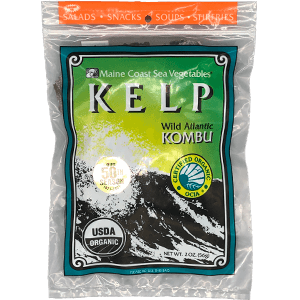
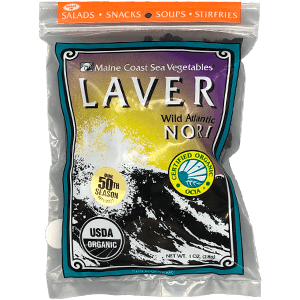
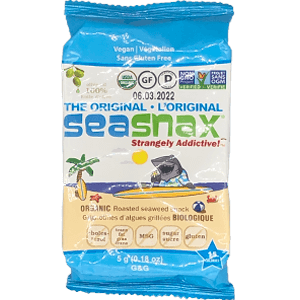
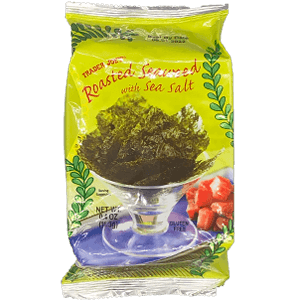
Tested products include those from GimMe, Kirkland (Costco), Maine Coast, SeaSnax, and Trader Joe's.
What are the risks of eating seaweed snacks and foods?
Eating too many servings of seaweed snacks or large portions of seaweed foods can be dangerous. Seaweed, particularly kelp, can provide too much iodine, which increases the risk of thyroid problems and other adverse effects (see Concerns and Cautions). The amount of iodine per day that one can safely tolerate ranges from 200 mcg in young children to 1,100 mcg in adults. Among products we tested, we found that one contained more than 18,000 mcg of iodine! The rest contained 66.5 mcg to 341.7 mcg per serving.
All of the products also contained the heavy metals lead and cadmium at levels often exceeding tolerable upper intake levels. It is no secret that there are heavy metals in seaweed snacks, in fact, many have warning labels indicating that they may pose a risk of reproductive harm or cancer, as this is a legal requirement for products sold in California under its Prop 65 law. However, labels don't tell you how much lead or other heavy metals are present in a product. We found 2 mcg to 6 mcg of cadmium per serving in seaweed snacks and up to 12.9 mcg in a serving of seaweed foods (kelp or laver/nori), with 5 products exceeding the 4.1 mcg California warning level for cadmium (see What CL Found and How Products Were Evaluated).
What are the benefits of eating seaweed snacks and foods?
Dried seaweed foods typically have a mild seaweed flavor and consist of mostly fiber (about two-thirds of the carbohydrates in seaweed are fiber), protein, and, if roasted in oil (as with most seaweed "snacks"), some unsaturated "good" fat. Seaweed foods are also vegan-friendly. Seaweed also provides sodium, the amount of which depends on the type of seaweed, although roasted seaweed snacks invariably have added salt, making them mildly salty.
What sets dried and roasted seaweed apart from most other foods is a significant amount of iodine. Adults need 150 mcg of iodine per day. A small (5 gram) serving of dried or roasted seaweed typically provides at least 50 mcg, or one third of the adult daily requirement, and can provide much more — sometimes too much, as noted above. Seaweed also provides small amounts of iron, potassium, and other vitamins and minerals but typically less than 5% of the daily requirement per serving.
Seaweed such as kelp has also been promoted for increasing energy and for weight loss. This has not been clinically proven, but such effects are possible if the iodine treats underlying hypothyroidism due to iodine deficiency (see What It Does).