



Save to favorites
This feature is restricted to active members.
Join now to save favorites and get all member benefits, including over 1,400 product reviews.
Join NowAlready a member? Sign in here.

Our Members Asked:
Does AZO Bladder Control really work for overactive bladder?

Answer:
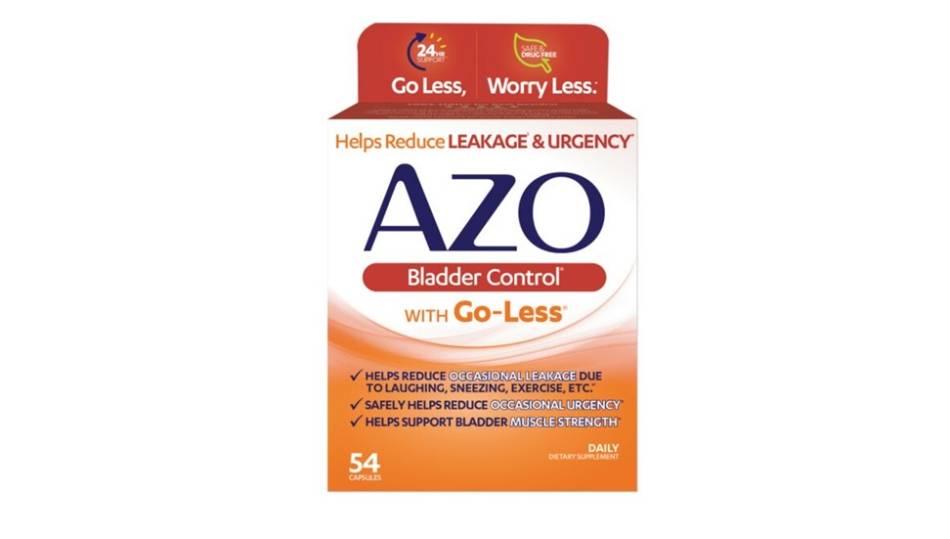
AZO Bladder Control with Go Less (i-Health Inc.) is promoted to "safely reduce occasional urgency" and "support bladder strength." However, the evidence behind it suggests, at best, only a slight improvement in bladder control in women. For men, only preliminary research has been conducted — although one of the ingredients in its formula has potential benefit for men with enlarged prostate.
Despite these possible benefits, be aware that the American Urological Society has stated that there is insufficient evidence to support the use of any nutraceutical, vitamin, or supplement to treat the symptoms of OAB (Cameron, Neurourol Urodyn 2024).
Evidence
Bladder control in women
This product contains a "proprietary blend" of pumpkin seed extract and soy germ extract (Go Less®) which has been found in several small, preliminary studies to improve symptoms of overactive bladder in women. However, these studies were not placebo-controlled and so it's not possible to draw conclusions about efficacy based on this research. There is one double-blind, placebo controlled study which investigated the effects of an extract blend similar to that in AZO Bladder Control in women (ages 35 through 70) with symptoms of overactive bladder. The study found that women who took 500 mg of the blend (comprised of 437.5 mg of pumpkin seed extract and 62.5 mg of soy germ extract) (30 minutes before breakfast and dinner) for three months had slight decreases in urinary frequency compared to placebo. After three months, those given placebo had to urinate 9.5 times during the day and 2 times at night, while those taking the blend averaged 8 times per day and 1.7 times during the night. No adverse events were reported and no significant changes in measures of kidney and liver function and cholesterol levels occurred (Shim, J Funct Foods 2014).
Urinary frequency in men
Preliminary studies suggest this blend may improve some symptoms of BPH (benign prostatic hyperplasia, or enlarged prostate); however, these studies were not placebo-controlled and so it's not possible to draw conclusions about efficacy based on this research. (Note: pumpkin seed oil is a common ingredient in Prostate Supplements containing saw palmetto, although there are no placebo controlled studies on pumpkin seed as a single ingredient or in combination with soy germ extract).
Bladder strength
The claim that AZO Bladder Control supports bladder strength appears to be based on an unpublished laboratory study by the manufacturer which found its pumpkin seed exact (without soy germ extract) binds to androgen receptors, along with the theory that androgen receptors in the pelvic floor and urinary tract may play a role in urinary tract disorders. There do not appear to be any studies demonstrating this effect in people.
Dosage
AZO Bladder Control contains 300 mg of Go Less® (a blend of pumpkin seed extract and soy germ extract) per capsule. The directions suggest taking one capsule three times daily (morning, noon and night) for a total daily dose of 900 mg during the first two weeks (100 mg less than the daily dose of 1000 mg taken in the Shim study, above), and then one capsule twice per day thereafter.
Safety
This product contains soy and should not be taken by people with an allergy to soy. According to the manufacturer, it should also not be taken by women who are pregnant or nursing.
No adverse effects were reported when taken at a daily dose of 900 mg for three months; however, there do not appear to be any longer term safety studies.
Cost
A box containing 54 capsules ranges in price from $18.98 (Walmart) to $29.49 (CVS). [Note that although the front of the box states 54 capsules is a 27 day supply, this is only a 20 day supply if you start by taking 3 capsules daily for the first two weeks as recommended. However, it will last 27 days once you are on the maintenance dose.]
Bottom Line
AZO Bladder Control may slightly decrease daytime and nighttime urinary urgency and frequency in women. There is not enough evidence to suggest it strengthens bladder or pelvic muscles. Its benefit in men has not been demonstrated. No adverse events have been reported in published studies; however, it should not be taken by people with an allergy to soy, or women who are pregnant or nursing and long term studies to determine efficacy and safety are needed.
Submit your comment
This feature is restricted to active members.
Join now to add comments and get all member benefits, including over 1,400 product reviews.
Join NowAlready a member? Sign in here.
Agree to Comment Terms
Please abide by the following:
- If you make a statement of fact, such as whether a type of treatment does or does not work, state your basis -- such as personal experience or a published study.
- If you make a positive or negative comment about a product, note whether or not you have a financial interest in the product or in a competing product.
- Please be respectful in your tone.
- Please do not submit any type of HTML markup or scripting as it will not be accepted, nor will posts that exceed 2,500 characters.
For your privacy, only your first name (from your account) followed by a random number will appear with your comment. Your last name and email address will not be displayed.
Your comment has been submitted
We will review your comment before it is posted.
Join today to unlock all member benefits including full access to all CL Answers and over 1,400 product reviews.
Join NowAlready a member? Sign In Here.
Join now at www.consumerlab.com/join/
Join over 300,000 people on our weekly email list.
Related CL Answers (4)



Join over 100,000 members and access 1,400+ product reviews

Find the best products with instant access to our latest tests & reviews of over 1,400 health products.
Save money by finding high-quality products at lower cost.
Stay safe with the latest clinical findings, warnings, and expert answers.
Access our weekly newsletter.