



Save to favorites
This feature is restricted to active members.
Join now to save favorites and get all member benefits, including over 1,400 product reviews.
Join NowAlready a member? Sign in here.

Our Members Asked:
Is it okay to buy supplements as tablets? I've heard that tablets may go through our system without dissolving. Is there any way to know whether tablets will properly dissolve?

Answer:
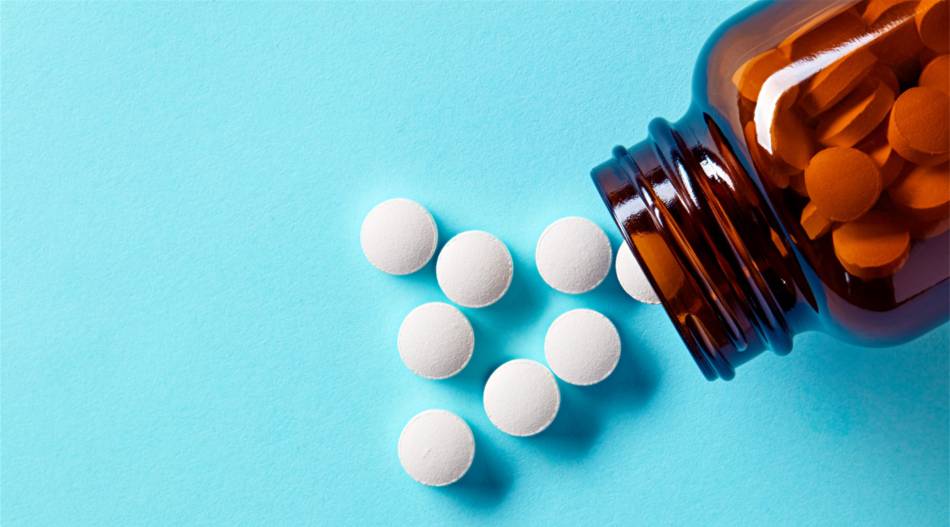
Although tablets should disintegrate in a short period of time in your stomach, not all do. ConsumerLab.com has found that about 5% of products sold as tablets don't disintegrate as fast as they should, and some fail to disintegrate at all.
So how do you know if the tablet you are taking is among those that don't dissolve properly?
- See if your product was tested in a recent ConsumerLab.com Product Review. You can look it up by type of product or by brand to find the relevant review. Then, check the results table.
- Try ConsumerLab.com's Home Test for tablet disintegration, which, while not foolproof, can provide some helpful information.
Be aware that passing a disintegration test does not guarantee bioavailability — which depends on additional factors such as how well ingredients are absorbed.
You are less likely to have a disintegration issue with regular capsules and softgels than with tablets, because only the shell (or a portion of it) needs to disintegrate to allow the contents to be released, as opposed to an entire tablet having to disintegrate. Although they may look plastic, capsules are typically made of easily digested gelatin or, in the case of vegetarian capsules, plant cellulose or starch derivatives. However, ConsumerLab.com has found issues with some enteric-coated (delayed-release) capsules and softgels, which are made from other materials.
(ConsumerLab.com uses USP standards for tablet disintegration (United States Pharmacopeia [USP] "Disintegration and Dissolution of Dietary Supplements" method <2040>), which require uncoated and plain-coated tablets to disintegrate completely within 30 minutes. Enteric-coated (delayed-release) tablets and soft shelled capsules are required to disintegrate within one hour in simulated intestinal fluid after an initial hour in simulated gastric fluid during which they should remain intact.)
Join the conversation
Loading Comments…
Submit your comment
This feature is restricted to active members.
Join now to add comments and get all member benefits, including over 1,400 product reviews.
Join NowAlready a member? Sign in here.
Agree to Comment Terms
Please abide by the following:
- If you make a statement of fact, such as whether a type of treatment does or does not work, state your basis -- such as personal experience or a published study.
- If you make a positive or negative comment about a product, note whether or not you have a financial interest in the product or in a competing product.
- Please be respectful in your tone.
- Please do not submit any type of HTML markup or scripting as it will not be accepted, nor will posts that exceed 2,500 characters.
For your privacy, only your first name (from your account) followed by a random number will appear with your comment. Your last name and email address will not be displayed.
Your comment has been submitted
We will review your comment before it is posted.
Join today to unlock all member benefits including full access to all CL Answers and over 1,400 product reviews.
Join NowAlready a member? Sign In Here.
Join now at www.consumerlab.com/join/
Join over 300,000 people on our weekly email list.
Related CL Answers (3)



Join over 100,000 members and access 1,400+ product reviews

Find the best products with instant access to our latest tests & reviews of over 1,400 health products.
Save money by finding high-quality products at lower cost.
Stay safe with the latest clinical findings, warnings, and expert answers.
Access our weekly newsletter.