ConsumerLab.com uses JavaScript to provide the best possible experience for our content, but your browser has it disabled. Learn how to enable it here.
Farro refers to one of three ancient types of wheat that differ from common wheat by being a bit softer, faster to cook, and having somewhat less fiber. Farro that is sold in the U.S. is commonly “pearled” – i.e., some of its bran coating has been removed, further reducing cook time but also further reducing its fiber content. Bulgur refers to whole wheat grain that has been partially cooked (par-boiled) dried and ground (or “cracked”), which makes it relatively quick to prepare. Both farro and bulgur contain gluten, so are not appropriate for gluten-free diets (see What They Are). (For gluten-free grains, see our separate Oat Cereals Review and our Buckwheat, Quinoa, Millet, Sorghum, and Teff Review.)
What did ConsumerLab tests of farro and bulgar show?
This small Review focused on just two brands of farro and one brand of bulgur popular among ConsumerLab.com members. We found no bacterial contamination with E. coli, Salmonella, or Listeria. Two products had no detectable yeast or mold and the third had a small amount, but well under our limit. All three products had very low levels of lead and two had low levels of cadmium (the third had no detectable cadmium), but these amounts are not dangerous with moderate use. Arsenic and mercury could not be detected in any of the products (see What CL Found and How Products Were Evaluated).
Best farro and bulgar products?
ConsumerLab considered both farro products to be Top Picks for farro, although for different reasons. The bulgur product, having met ConsumerLab’s quality standards, is a Top Pick for bulgur.
Products tested in 2024
+— 3 sources
In addition the results of its expert testing, ConsumerLab uses only high-quality, evidence based, information sources. These sources include peer-reviewed studies and information from agencies such as the FDA and USDA, and the National Academy of Medicine. On evolving topics, studies from pre-print journals may be sourced. All of our content is reviewed by medical doctors and doctoral-level experts in pharmacology, toxicology, and chemistry. We continually update and medically review our information to keep our content trustworthy, accurate, and reliable. The following sources are referenced in this article:
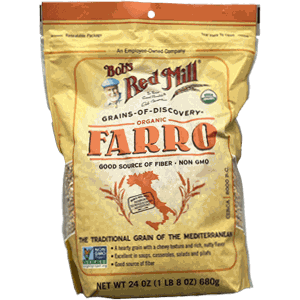
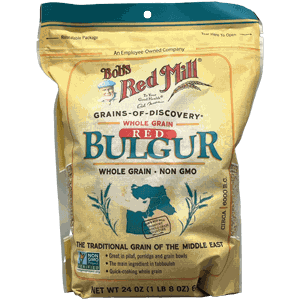
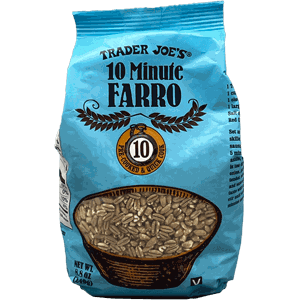
Whole grain brands (farro and bulgur) compared in this review
Bob's Red Mill Organic Farro
Bob's Red Mill Whole Grain Red Bulgur
Trader Joe's 10 Minute Farro
You must be a member to get the full test results along with ConsumerLab.com recommendations and quality ratings. You will get results for two farro products and one bulgur product selected for testing by ConsumerLab.
In this comprehensive review, you'll discover:
Which farro and bulgur products passed or failed our tests
Which farro and bulgur products were found to be contaminated with toxic heavy metals such as lead, cadmium, and arsenic, or with yeast and mold
ConsumerLab's Top Picks among farro and bulgur products
Cost comparisons and quality ratings
If whole grains such as farro and bulgur are a good source of protein, fiber, and omega-3s, vitamins, or minerals
The best way to store farro and bulgur
Make sure you're choosing the best farro and bulgur approved in our tests!
For a Limited Time, Become a Member for $1.25/week
As a ConsumerLab.com member, you may print a copy of this report for your personal use.
You can access a special print version by clicking the "Print" icon in the upper right corner of this report.
You can then use your web browser's print functions to print the whole report or just selected pages.
You may also email or post a link to this report using the web address above.
Non-members using the link will see a free summary and can join to view the full report.
Other means of copying or distributing this report, in part or full, are not permitted.
If you are sight-impaired and your computer is having trouble converting the text in this report to speech,
contact us for assistance at Membership@ConsumerLab.com or by
phone at 914-722-9149.
The "Latest Update" date indicates when new clinical or product information was most recently added. In the full review (available to CL members), the newest information is highlighted in yellow and, if a new product is added, it is footnoted in the results table, showing the date added to the review. The year(s) when testing was completed for the products in the review appears at the end of the Summary section.