


Remove from favorites?
Are you sure you want to remove this item from your favorites?.

Our Members Asked:
Does ergothioneine help prevent age-related problems such as impaired cognition, Alzheimer’s disease, Parkinson’s disease or cataract, and is it safe?


Answer:
Ergothioneine is a sulfur-containing amino acid produced by mushrooms and other fungi and found in certain foods (see list). It cannot be produced by the human body.
As discussed below, although research has linked lower ergothioneine levels in the body with increased risk of neurodegenerative diseases, cataract, and kidney disease progression, no controlled clinical studies have confirmed that taking ergothioneine can treat or prevent these conditions.
What is the science around ergothioneine?
Ergothioneine is absorbed and distributed throughout the body when consumed as part of the diet. Interestingly, ergothioneine appears to be retained preferentially in cells exposed to oxidative stress and those involved in inflammatory responses. Ergothioneine has been shown in cell-based laboratory studies to have antioxidant activity, which is thought to help protect cells against harmful agents (Halliwell, FEBS Letters 2018). Furthermore, ergothioneine appears to block the release of chemicals that cause inflammation, suggesting that it may have anti-inflammatory effects (Paul, Cell Death Differ 2010).
Neurodegenerative diseases
Lower levels of ergothioneine have been associated with various neurodegenerative diseases, but it is unclear if supplementing with ergothioneine can improve or prevent these conditions.
An observational study in Singapore among community dwelling, elderly individuals found that ergothioneine levels in the blood decreased with age, and blood levels of ergothioneine were about 35% lower among elderly people with mild cognitive impairment compared to similarly aged individuals with normal cognitive function (Cheah, Biochem Biophys Res Comm 2016). Another observational study in Singapore among nearly 500 elderly people found that lower blood levels of ergothioneine were associated with increased risk of Alzheimer's disease and vascular dementia (Wu, Free Radical Biol Med 2021). In addition, a study in Japan among people 65 and older found that those who consumed mushrooms (a source of ergothioneine) three or more times weekly had 19% lower risk of dementia compared to those who consumed mushrooms less than once weekly (Zhang, J Am Geriatr Soc 2017).
One of these studies (Cheah) found that intake of ergothioneine from the diet (based on assessment of mushroom intake) and level of ergothioneine transporter was similar among participants with and without mild cognitive impairment, suggesting that it was unlikely that differences in ergothioneine intake was responsible for the association.
A small study among 35 people with Parkinson's disease and 15 individuals without Parkinson's disease found that those with Parkinson's disease had lower blood levels of ergothioneine. This study also found associations between levels of other compounds including tryptophan, caffeine, and bilirubin and risk of Parkinson's disease (Hatano, J Neurol Neurosurg Psychiatry 2016).
Cataracts
Notable levels of ergothioneine have been found in the eye, and it has been suggested that ergothioneine may protect the eye against oxidative damage caused by, for instance, UV exposure. Although early research showed that the lenses of people with cataracts have lower levels of ergothioneine compared to those without cataracts (Shukla, Ind J Ophthalmol 1982), no subsequent studies have confirmed this association or evaluated whether ergothioneine supplementation helps prevent cataract development or progression.
Kidney disease
An observational study in Japan among people with chronic kidney disease showed that blood levels of ergothioneine decreased as chronic kidney disease progressed. Among three people who underwent a kidney transplant, ergothioneine blood levels were restored. However, it is unclear if ergothioneine supplementation might slow progression of kidney disease. The researchers of the study attributed the lower levels of ergothioneine among people with chronic kidney disease to impaired function of a compound, OCTN1, that transports ergothioneine (Shinozaki, Kidney Internat 2017).
Safety of ergothioneine
A study among healthy individuals reported no side effects following supplementation with up to 25 mg of ergothioneine daily for one week (Cheah, Antioxid Redox Signal 2017). A specific ergothioneine product called ErgoActive, which is produced by a fermentation process and contains 5% ergothioneine with maltodextrin, has received Generally Recognized as Safe (GRAS) status in the U.S. for use as a food additive in amounts providing up to 5 mg of ergothioneine per serving (GRAS Notice No. GRN 000734). Similarly, the European Food Safety Authority (EFSA) concluded that an ergothioneine product marketed as Ergoneine was safe when used in doses of 5 mg per serving, up to daily doses of 30 mg for adults and 20 mg for children ages 3 and older (EFSA Panel on Dietetic Products, EFSA J 2016).
Cost
Products containing ergothioneine can be expensive. For example, ErgoActive by Sundita costs about $2.50 per 10-mg serving, while L-Ergothioneine by Supersmart costs nearly $3 per 5-mg serving. A less expensive product called Ergo+ Ergothioneine Supplement by Real Mushrooms provides 5 mg of ergothioneine plus possible additional ergothioneine from its listed mushroom extracts. It costs 50 cents per 5-mg serving of ergothioneine.
Getting ergothioneine from foods
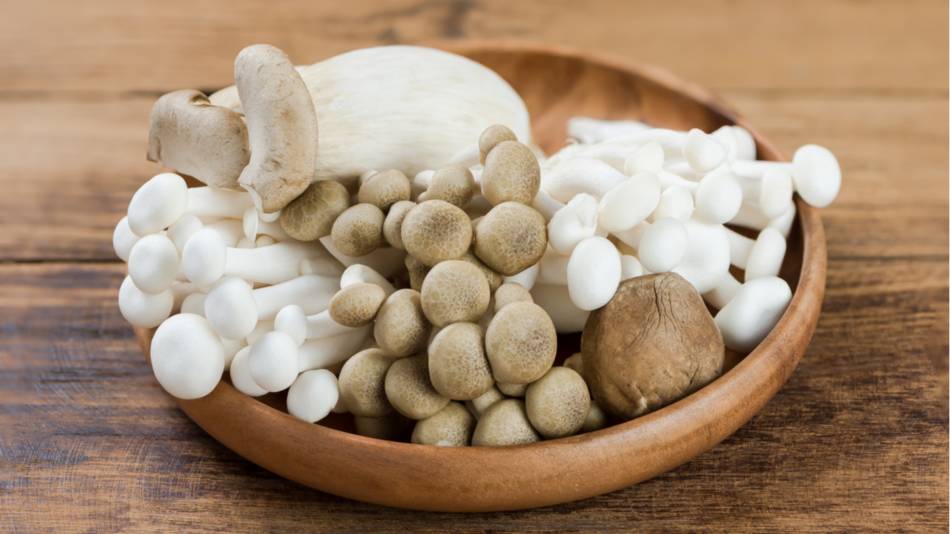
Dietary sources of ergothioneine include various mushroom, including porcini (181 mg/100 grams), lion's mane (96 mg/100 grams), king oyster (54 mg/100 grams), white beech (43 mg/100 grams), shiitake (35 mg/100 grams), enoki (35 mg/100 grams), and tempeh (20 mg/100 grams) (Lee, Mycobiology 2009; Halliwell, FEBS Letters 2018). Lower concentrations are found in portobello (19 mg/100 grams, white button (15 mg/100 grams), reishi (8 mg/100 grams), and maitake (2 mg/100 grams) (Lee, Mycobiology 2009; Halliwell, FEBS Letters 2018). Keep in mind that the processing of mushrooms may affect ergothioneine concentration. For example, slicing and hot air-drying (135 °F for 6 hours) shitake mushrooms was shown to reduce ergothioneine concentration by 43%. For white button mushrooms, bleaching with heat (212 °F for 3 minutes) reduced ergothioneine content by 33%, while pasteurization (heating in brine at 212 °F for 15 minutes) reduced ergothioneine by 59.3% (Pratti, J Food Compos Anal 2023).
(Note: If you consume shiitake mushrooms, make sure the mushrooms are cooked thoroughly. Cases of shiitake dermatitis — a distinctive rash marked by linear, itchy lesions on the skin that resemble lash marks — have been reported to a poison control center by people who ate raw or undercooked shiitake mushroom. In most cases, the rash appeared about 2 days after mushroom ingestion. Treatment with corticosteroids and/or antihistamines did not appear to help resolve rash symptoms although the rash resolved in all patients within one to 40 days, with the duration of the rash correlated with the amounts of mushrooms eaten (Boels, Clin Toxicol 2022). This side effect of shiitake mushrooms is attributed to lentinan, a constituent believed to increase the release of inflammatory mediators (including interleukin-1) that may cause vasodilation, hemorrhage and rash but that becomes inactivated when heated to appropriate temperatures (about 300 °F) (de Mendonça, An Bras Dermatol 2015; Corazza, J Eur Acad Dermatol Venereol 2015).
Foods such as garlic (3.5 mg/100 grams), black beans (1.3 mg/100 grams), chicken liver (1.1 mg/100 grams) and oats (0.2 mg/100 grams) are also dietary sources of ergothioneine, although they contain much less (Paul, Cell Death Differ 2010; Nguyen, Lipid Oxidation 2013).
The bottom line on ergothioneine
It is too early to know if supplementing with ergothioneine provides health benefits. As you can get significant amounts from foods, and consumption of these foods has been associated with health benefits, it would seem a better use of money to consume foods that contain ergothioneine than purchase ergothioneine supplements.
Join the conversation
Loading Comments…
Submit your comment
This feature is restricted to active members.
Join now to add comments and get all member benefits, including over 1,400 product reviews.
Join NowAlready a member? Sign in here.
Agree to Comment Terms
Please abide by the following:
- If you make a statement of fact, such as whether a type of treatment does or does not work, state your basis -- such as personal experience or a published study.
- If you make a positive or negative comment about a product, note whether or not you have a financial interest in the product or in a competing product.
- Please be respectful in your tone.
- Please do not submit any type of HTML markup or scripting as it will not be accepted, nor will posts that exceed 2,500 characters.
For your privacy, only your first name (from your account) followed by a random number will appear with your comment. Your last name and email address will not be displayed.
Your comment has been submitted
We will review your comment before it is posted.

Related CL Answers (2)