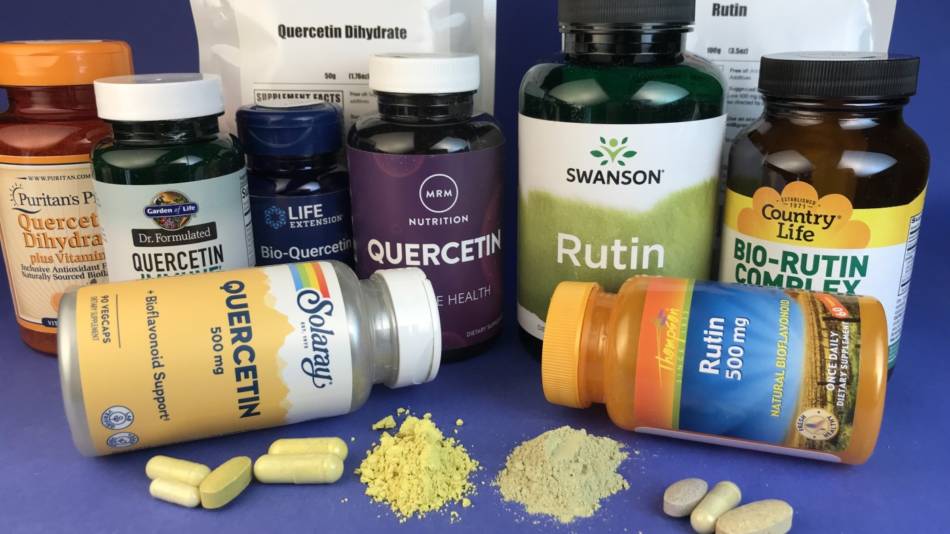
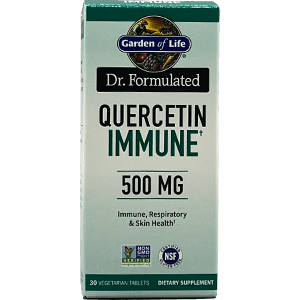
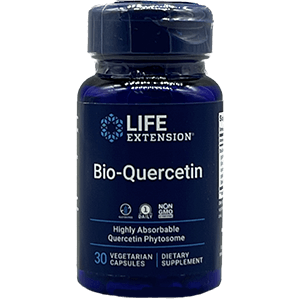
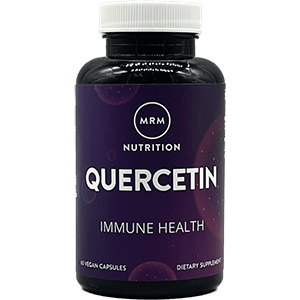
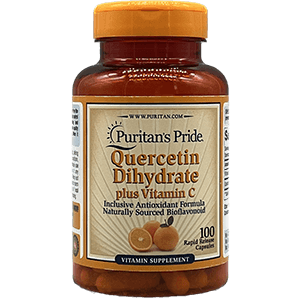
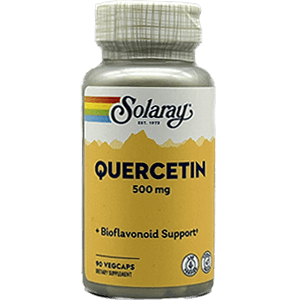
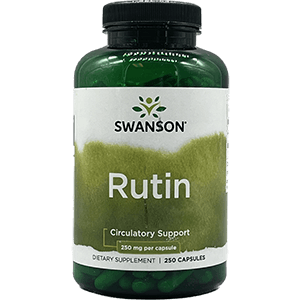
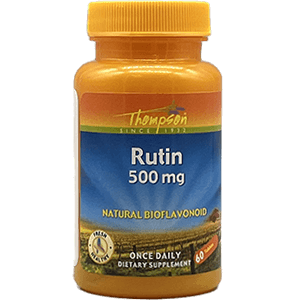
Preview Our Test Results
Here's a look at our independent findings. Become a member for full results for every product, Top Picks,
and more.
Quick Summary
-
What are quercetin and rutin?
Quercetin is a yellow-colored flavonoid found in plant-based foods such as capers, onions, and kale. In its natural form it is attached to sugar molecules and known as rutin (which is 49.5% quercetin). Supplements may contain rutin, or quercetin itself, or quercetin attached to water molecules (as quercetin dihydrate, which is about 90% quercetin). Interestingly, the absorption of quercetin from the gut appears to be greater from quercetin- and rutin-containing foods than from supplements. See What It Is.
-
How are quercetin and rutin used?
Many short-term and relatively small clinical studies have been conducted with quercetin, suggesting modest benefit in conditions such as prostatitis, insulin resistance, rheumatoid arthritis, and in preventing or treating viral illness. Quercetin may also modestly reduce blood pressure. It has also been tried for allergy, viral infection, sleep, memory, and cancer. There has not been much clinical study of rutin as a stand-alone supplement — it has mainly been studied within a multi-ingredient product. See What It Does.
-
What did CL's tests of quercetin and rutin supplements find?
CL's tests revealed that one rutin supplement contained only 17.4% of its listed rutin and one other fell short at just 88.7% of what it promised. Overall, the cost to obtain quercetin (or potential quercetin from rutin) ranged from as little as 16 cents to $6.41! See What CL Found and How Products Were Evaluated.

Top Picks for quercetin and rutin:
Based on quality and cost, ConsumerLab selected two Top Picks for quercetin and one Top Pick for rutin.-
How much quercetin or rutin should I take and when?
Typical dosage of quercetin is 500 mg taken once or twice daily. There is less known about dosage with rutin. To enhance absorption, it is best to take quercetin or rutin with a meal containing fats or oils. See the ConsumerTips™ section for the dosage for specific uses.
Be aware that you can also get quercetin and rutin naturally from foods — and absorption may be higher from food than supplements. Also note that a form of quercetin called EMIQ is touted as having 40 times greater absorption than quercetin, but this is not an accurate claim.
-
Quercetin and safety and side effects:
Side effects of quercetin are uncommon and generally mild. However, quercetin may interact with a variety of prescription medications. As quercetin is a major component of rutin, similar concerns apply to rutin. For details, see Concerns and Cautions.
Products tested in 2023
+— 54 sources
In addition the results of its expert testing, ConsumerLab uses only high-quality, evidence based, information sources. These sources include peer-reviewed studies and information from agencies such as the FDA and USDA, and the National Academy of Medicine. On evolving topics, studies from pre-print journals may be sourced. All of our content is reviewed by medical doctors and doctoral-level experts in pharmacology, toxicology, and chemistry. We continually update and medically review our information to keep our content trustworthy, accurate, and reliable. The following sources are referenced in this article:
- Formica, Food Chem Tox 1995
- USDA 2011
- Agrawal, Nat Prod Commun 2020
- Aziz, Biomed Pharmacother 2018
- Chen, Bioorg Med Chem 2006
- Clin Cancer Res 1996
- Di Pierro, In J Gen Med 2021
- Di Pierro, Int J Gen Med 2021
- Hirano, Allergol Int 2009
- Huhn, Neuroimage 2018
- Javadi, J Am Coll Nutr 2017
- Kambe, Brain Res 2010
- Kashiwabara, BMC Complement Altern Med 2016
- Kooshyar, J Clin Diagn Res 2017
- Li, Am J Clin Nutr 2024
- Li, Nutrients 2016
- Mlcek, Molecules 2016
- Niemen, Med Sci Sports Exerc 2007
- Ostadmohammadi, Phytother Res 2019
- Pelletier, Int J Sport Nutr Exerc Metab 2013
- Qiu, Antimicrob Agents Chemother 2016
- Resvan, Cell J 2018
- Rondanelli, Life 2022
- Serban, J Am Heart Assoc 2016
- Shohan, Eur J Pharmacol 2021
- Shoskes, Urology 1999
- Somerville, Adv Nutr 2016
- Ujah, Andrologia 2018
- Witte, J Neurosci 2014
- Wong, Virol Sin 2017
- Yamada, Eur Rev Med Pharmacol Sci 2022
- Guo, Nol Nutr Food Res 2013
- Makino, Biol Pharm Bull 2009
- Murota, Arch Biochem Biophys 2010
- Riva, Eur J Drug Metab Pharmacokinet 2019
- Shi, Food Funct 2015
- Ahmad, Eur Rev Med Pharmacol Sci 2023
- Andres, Mol Nutr Food Res 2018
- Bedada, Phytother Res 2018
- Br J Clin Pharmacol 2012
- Devi, Sci Rep 2023
- Duan, J Clin Pharmacol 2012
- Ferry, Clin Cancer Res 1996
- Giuliani, Food Chem Toxicol 2014
- Han, BMJ Open Respir Res 2020
- Izumi, Drug Metab Dispos 2015
- Kalliokoski, Br J Pharmacol 2009
- Lesjak, Eur J Nutr 2018
- Niemi, Br J Clin Pharmacol 2005
- Paxlovid, LiverTox 2022
- Rastogi, Phytother Res 2014
- Veklury Prescribing Information
- Wang, Fron Cell Dev Biol 2021
- de Souza Dos Santos,Food Chem Toxicol 2011
You must
be a member to get the full test results, along with ConsumerLab's recommendations. You'll get results for ten quercetin and rutin supplements, including nine that were selecting for testing by ConsumerLab and one other product that passed the same testing through ConsumerLab's voluntary Quality Certification Program.
In this comprehensive review, you'll discover:

- Which quercetin and rutin supplements passed or failed our tests
- ConsumerLab's Top Picks quercetin and rutin supplements
- The evidence for or against quercetin and rutin for prostatitis, insulin resistance, rheumatoid arthritis, lowering blood pressure, and other uses
- The differences between quercetin and rutin, and different forms of quercetin, including "free" quercetin and quercetin dihydrate
- What to look for on quercetin and rutin supplement labels
- Quercetin dosage for specific uses
- The best way to take quercetin and rutin to improve absorption and reduce stomach upset
- Which foods provide significant amounts of quercetin and rutin and how these compare to supplements
- Cautions, potential side effects, and drug interactions with quercetin and rutin supplements
As a ConsumerLab.com member, you may print a copy of this report for your personal use.
You can access a special print version by clicking the "Print" icon in the upper right corner of this report.
You can then use your web browser's print functions to print the whole report or just selected pages.
You may also email or post a link to this report using the web address above.
Non-members using the link will see a free summary and can join to view the full report.
Other means of copying or distributing this report, in part or full, are not permitted.
If you are sight-impaired and your computer is having trouble converting the text in this report to speech,
contact us for assistance at Membership@ConsumerLab.com or by
phone at 914-722-9149.