



Save to favorites
This feature is restricted to active members.
Join now to save favorites and get all member benefits, including over 1,400 product reviews.
Join NowAlready a member? Sign in here.

Our Members Asked:
Dimethyl sulfoxide (DMSO): Health Effects & Safety Concerns


Answer:
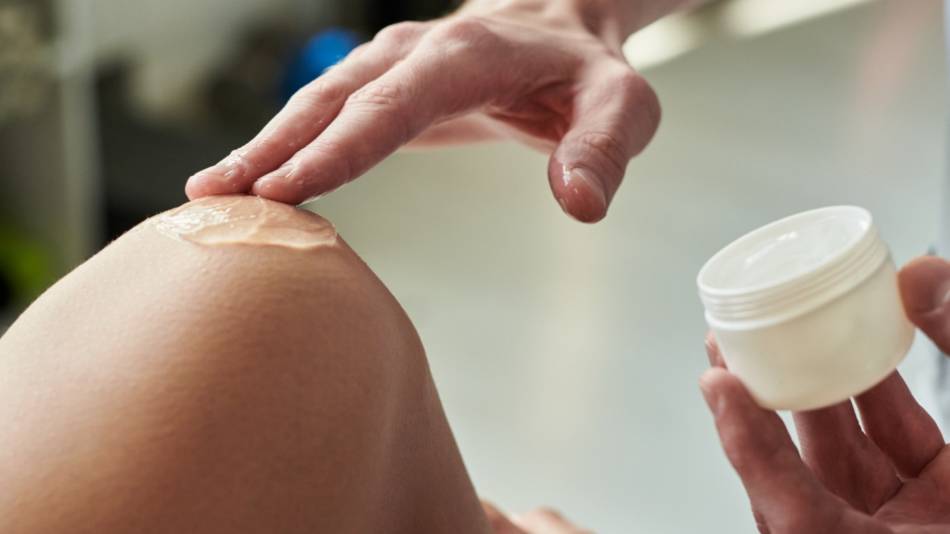
Dimethyl sulfoxide (DMSO) is a compound that is readily absorbed across the skin when applied topically, and laboratory research suggests it may have antioxidant, anti-inflammatory, analgesic, and wound healing effects (Karim, Arch Dermatol Res 2022).
However, the only FDA-approved uses of DMSO are 1) its topical application to treat acute swelling in horses and dogs (FDA 2017) and 2) its infusion with a catheter into the bladder to reduce pain and decrease urinary frequency in people with interstitial cystitis (DailyMed 2021) — although these benefits may be limited.
DMSO used topically in humans has been linked with numerous side effects (including "garlic breath") and safety concerns. Nevertheless, topical DMSO has been proposed for many uses in people including osteoarthritis, tendonitis, bursitis, synovitis, rheumatoid arthritis, peripheral neuropathies, spinal cord injuries, strains, sprains, bruises, burns, musculoskeletal injuries among athletes, Down syndrome, emphysema, cancer, scleroderma, Raynaud's phenomenon, Alzheimer's disease, and eye conditions such as macular degeneration, retinitis pigmentosa, eye floaters, glaucoma, loss of vision, and colorblindness. DMSO is not to be taken orally.
What Is DMSO Used For?
Interstitial Cystitis / Bladder Pain Syndrome
Despite interest in DMSO for numerous medical applications, the only condition for which DMSO has been approved by the FDA is treatment of interstitial cystitis/bladder pain syndrome, a chronic condition that causes bladder pain and frequent need to urinate. Administering DMSO directly into the bladder has been shown to improve pain, urinary frequency, average voided volume and maximum voided volume in people with interstitial cystitis, although some evidence suggests it may only be beneficial for those with Hunner lesions (i.e., inflammatory patches in the bladder wall that cause more severe bladder pain and symptoms) (Tomoe, Continence 2023). The benefit of DMSO for interstitial cystitis has been attributed to its antioxidant, anti-inflammatory, analgesic, and muscle-relaxant effects.
To treat this condition, about 50 mL of a 50% DMSO solution (under the brand name Rimso-50) is administered directly into the bladder using a catheter. The solution is allowed to remain for 15 minutes, after which it is expelled by spontaneous voiding (DailyMed 2021).
Osteoarthritis
Due to its potential anti-inflammatory and analgesic effects, as well as its ability to rapidly absorb across the skin, there is interest in topical DMSO for treating osteoarthritis, but DMSO does not appear to be significantly beneficial for this condition.
A study among 248 adults with knee osteoarthritis showed that applying 40 drops of 45.5% wt/wt DMSO solution to the knee four times for 4 weeks did not reduce pain compared to placebo (4.5% wt/wt DMSO solution) (Bookman, CMAJ 2004). Although an earlier study among 112 adults with knee osteoarthritis showed that applying 25% DMSO gel to the knee three times daily for 3 weeks reduced self-reported loading pain by about 11 points (on a scale of 0 to 100) compared to placebo, and this difference was statistically significant (Eberhardt, Fortschr Med 1995), it was less than the amount that is considered clinically meaningful (>17.5 mm) (Brien, Evid Based Complement Alternat Med 2011).
Relieving Other Pain and Injuries
Based on its possible anti-inflammatory and analgesic effects, there has also been interest in DMSO for other pain conditions including tendonitis, bursitis, synovitis, rheumatoid arthritis, peripheral neuropathies, spinal cord injuries, strains, sprains, bruises, burns, and musculoskeletal injuries among athletes (Canada Depart Natl Defense, 2016). However, there have been very few, if any, studies assessing DMSO for these conditions, and some published research showed no benefit.
A study among 40 adults with tennis elbow or 40 with rotator cuff tendonitis showed that, for both injuries, applying 70% DMSO solution did not significantly improve pain, tenderness, swelling, or range of motion compared to placebo (5% DMSO solution) (Percy, Med Sci Sports Exerc 1981).
Scleroderma
Scleroderma is a chronic, autoimmune disease where the body produces too much collagen, leading to the hardening and tightening of skin, joints, and internal organs. Several observational studies have evaluated topical DMSO (typically 70% to 100% solutions) for improving joint mobility and strength, reducing pain, increasing ulcer healing, and improving sensation among people with scleroderma. Although many of these studies showed benefit compared to baseline, nearly all lacked a placebo control group, which is needed to prove a benefit (Karim, Arch Dermatol Res 2022). A study among 84 adults with systemic sclerosis (a serious type of scleroderma) that compared 2% or 70% DMSO solution with a placebo solution (saline), all of which were applied topically for 12 weeks, showed no between-group differences in ulcer healing (Williams, Arthritis Rheum 1985).
Eye Conditions
Old case reports and observational studies suggested possible benefits of applying DMSO to the eye or around it for treating retinitis pigmentosa (vision loss due to the breakdown of light-sensitive cells in the retina) or macular degeneration. However, much of the suggested benefit was based on patient reports rather than measured outcomes, and the studies did not include control groups, which are needed to prove a benefit (Hill, Ann N Y Acad Sci 1975). A subsequent placebo-controlled study in which 123 people with retinitis pigmentosa received topical DMSO drops for up to 7 years found no significant benefits for visual acuity, color vision, visual fields, dark adaptation, electroretinography, or electrooculography (Garcia, Ann N Y Acad Sci 1983). Anecdotal reports claim that applying DMSO drops may be beneficial for many other eye conditions, including treating eye floaters, reducing eye pressure related to glaucoma, reversing blindness or loss of vision, and "curing" colorblindness, but there do not appear to be any clinical studies supporting these uses.
Other Uses
DMSO is sometimes promoted for other conditions including Down syndrome, emphysema, cancer, Raynaud's phenomenon, and Alzheimer's disease but there does not appear to be clinical evidence to support these uses (Canada Depart Natl Defense, 2016).
DMSO has been approved by the FDA for cryopreservation (i.e., preserving cells, tissue and organs), as it can prevent the formation of ice crystals that can damage to biological samples during freezing and thawing (Ekpo, Front Immunol 2022). For example, DMSO may be used to preserve bone marrow and stem cells that are being held for future transplantation (Canada Depart Natl Defense, 2016).
In addition to its use in cryopreservation, DMSO may also be used as a penetration enhancer for topical treatments. Because DMSO is an very good solvent and is rapidly absorbed across the skin, it can enhance the absorption of many other compounds, including medications such as anti-inflammatories and corticosteroids, across the skin (Karim, Arch Dermatol Res 2022; Canada Depart Natl Defense, 2016).
What Are Possible Side Effects and Safety Concerns of DMSO?
When used by any route of administration, DMSO can cause garlic-like taste in mouth, garlic-like breath, and garlic-like body odor. This is not due to impurities in DMSO but to the sulfur that is an integral part of DMSO and the body's normal conversion of DMSO to dimethyl sulfide, a sulfur compound that is eliminated through the breath and skin (DailyMed 2021; Canada Depart Natl Defense, 2016).
Headache has also been reported in clinical studies in which DMSO was used topically (8%) or administered into the bladder (5%). Dizziness, weakness, and sedation have also been reported with topical use (Madsen, F1000Res 2019).
Gastrointestinal side effects reported with topical use of DMSO include nausea (5%), vomiting (1%), abdominal cramps/stomachache (4%), and diarrhea (3%). Reported skin reactions with topical use have included skin reddening (9%), itching (6%), hives (16%), rash (5%), burning or stinging sensation (16%), scaly/dry skin (15%), blistering (4%), skin thickening (10%), contact dermatitis (6%), and increased skin pigmentation (5%). Many reported skin reactions have been temporary (i.e., lasting several minutes), although some cases resulted in treatment discontinuation (Madsen, F1000Res 2019).
Several studies have reported cases of allergic reactions to topical DMSO (Madsen, F1000Res 2019).
Laboratory research using cells has suggested that DMSO may damage red blood cells and inhibit blood clotting, which may increase the risk of bleeding or bruising (Yi, FEBS Open Bio 2017). A case of recurrent intracerebral hemorrhage (bleeding in the brain due to ruptured blood vessels) was reported in an otherwise healthy 70-year-old man who reportedly had been ingesting DMSO (dose not specified), which he purchased online to improve his mood (Olds, BMJ Case Rep 2021).
DMSO can increase the skin absorption of drugs such as corticosteroids and other steroids (Wood, Ann NY Acad Sci 1975; Groel, Arch Dermatol 1968) and non-steroidal anti-inflammatory drugs such as diclofenac (Voltaren, Solaraze, etc) (Bookman, CMAJ 2004), as well as many others. This might increase the effects and side effects of these medications. Furthermore, some DMSO products are meant to be industrial solvents. Such products are not intended for human use and may contain contaminants such as pesticides that may be absorbed by the skin when used topically (Canada Depart Natl Defense, 2016).
Join the conversation
Loading Comments…
Submit your comment
This feature is restricted to active members.
Join now to add comments and get all member benefits, including over 1,400 product reviews.
Join NowAlready a member? Sign in here.
Agree to Comment Terms
Please abide by the following:
- If you make a statement of fact, such as whether a type of treatment does or does not work, state your basis -- such as personal experience or a published study.
- If you make a positive or negative comment about a product, note whether or not you have a financial interest in the product or in a competing product.
- Please be respectful in your tone.
- Please do not submit any type of HTML markup or scripting as it will not be accepted, nor will posts that exceed 2,500 characters.
For your privacy, only your first name (from your account) followed by a random number will appear with your comment. Your last name and email address will not be displayed.
Your comment has been submitted
We will review your comment before it is posted.
Join today to unlock all member benefits including full access to all CL Answers and over 1,400 product reviews.
Join NowAlready a member? Sign In Here.
Join now at www.consumerlab.com/join/
Join over 300,000 people on our weekly email list.

Related CL Answers (4)




Join over 100,000 members and access 1,400+ product reviews

Find the best products with instant access to our latest tests & reviews of over 1,400 health products.
Save money by finding high-quality products at lower cost.
Stay safe with the latest clinical findings, warnings, and expert answers.
Access our weekly newsletter.