



Save to favorites
This feature is restricted to active members.
Join now to save favorites and get all member benefits, including over 1,400 product reviews.
Join NowAlready a member? Sign in here.

Our Members Asked:
Which is the best mask to prevent COVID-19 and how do cloth, disposable, N95, and KN95 masks compare? How can I stop glasses from fogging?

Answer:
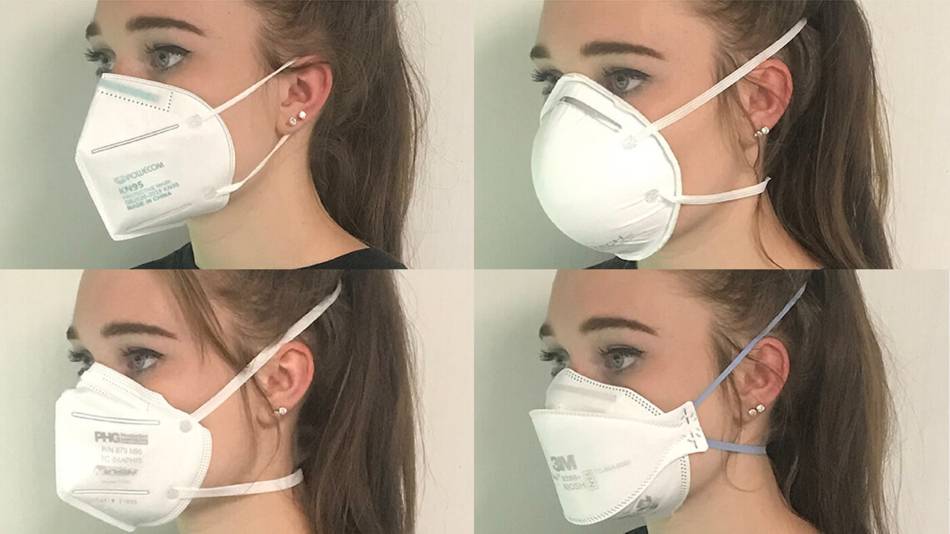
N95 masks are the gold standard, but well-fitting, high quality KN95 masks are also a good option. Disposable surgical masks are also readily available but tend to leave gaps between the mask and face, reducing their usefulness (although there are ways to improve it).
If you want an N95 respirator, see Finding the Best N95 Masks section. If you want a KN95 respirator, see the Finding the Best KN95 Masks section.
Masks can be used alone or, for increased protection, particularly for the eyes, with a face shield — which we have also reviewed.
Here's what we cover in this answer:
- Why and When You Should Wear a Mask
- How N95and KN95 Masks Compare
- Best N95 Respirators
- Best KN95 (Respirator) Masks
- Best Disposable Surgical/Medical Masks
- Cleaning and Caring for Masks
- How to Improve Mask Fit to Reduce Leakage
- Does Double Masking Help?
- How to Reduce Eyeglass Fogging
- Concerns About Co2 Build Up
- Concern with Inhaling Microplastics and OPEs
- Are Copper Masks Better?
- What Masks Protect Against Wildfire Smoke?
Why and when you should wear a mask
While vaccination to protect against COVID-19 has led to a decreased need for masking, the CDC still recommends wearing a mask as an additional prevention strategy to reduce the spread of the virus to others when worn by someone with an infection, and to protect wearers from breathing in infectious particles from people around them. It advises that use of masks may be considered when 1) respiratory viruses are causing a lot of illness in your community, 2) you or the people around you were recently exposed to a respiratory virus, are sick, or are recovering, or 3) you or the people around you have risk factors for severe illness, such as women who are pregnant, young children, older adults, and people with a compromised immune system.
As wearing a mask may reduce the amount of virus to which a wearer is exposed, it has been postulated that even if a mask-wearing person becomes infected, the reduced viral load to which they were exposed may mean that they suffer a milder disease. For example, on cruise ships with COVID-19 outbreaks, the majority of infected patients (81%) were asymptomatic on a ship that had provided surgical masks to all passengers and N95 respirators to staff compared to only 18% of cases being asymptomatic on a cruise ship without masking (Gandhi, J Gen Intern Med 2020; Gandhi, N Engl J Med 2020).
Another benefit of wearing a mask is that, due to the heat and moisture of exhaled breath, masks have been shown to increase the humidity and temperature of inhaled air, which, researchers have proposed, may reduce the risk of respiratory infections such as COVID by promoting the clearance of pathogens in the lungs (Courtney, Biophysical J 2021).
Any benefit to wearing masks at home?
Although CDC guidelines do not currently include the use of face masks at home, the rate of transmission from one household family member to another was 79% lower when members wore face masks prior to the first member developing COVID-19 symptoms, according to a study of 124 families in Beijing in which there was at least one infected person. Overall, there was a 23% rate of transmission of COVID-19 from an infected family member to another, but this was no lower when mask wearing began after the first member developed symptoms. These results are consistent with the fact that viral load is highest two days before symptoms and on the first day of symptoms. Daily use of disinfectants reduced transmission by 77%. Transmission rates were four times higher if the primary case had diarrhea and 18 times higher when there was frequent daily close contact (less than 3 feet apart). The researchers recommended use of face masks in families in which a member has been at risk of getting infected. In China, over 70% of transmission occurred within families (Wang, BMJ Global Health 2020).
Which masks protect you best?
The CDC advises that the most protective masks are NIOSH Approved filtering facepiece respirators (like N95 respirators), followed by international filtering facepiece respirators (like KN95 respirators), surgical/disposable masks (although they provide far less protection than N95 and KN95s), and lastly, cloth masks (CDC 2024).
A study that evaluated how well masks protect the wearer from breathing in small particles (ranging in size from 0.02 to 0.6 microns) and factored in the fit of the mask as well as its filtration efficiency found that a NIOSH approved N95 (3M 9210) had the highest filtration efficiency at 98%, followed by 80% for a medical procedure mask with ear loops (Cardinal Health) with nylon hosiery placed over it, and 71.5% for a surgical mask with ties. [Note: The filtration efficiency of the medical procedure masks can range dramatically depending on how it was worn.] The filtration efficiency was 74% for a 2-layer woven nylon mask with ear loops (Easy Masks LLC) with an aluminum nose bridge and nonwoven filter insert which, interestingly, had a slightly higher filtration efficiency after being washed once, 49.9% for a folded, cotton bandana, 39.3% for a single-layer woven polyester/nylon mask with ties (Renfro Corporation), 37.8% for a single-layer woven gaiter/neck cover balaclava bandana MPUSA LLC), 28.6% for a nonwoven polypropylene mask with fixed ear loops (Red Devil Inc), and just 26.5% for a 3-layer woven cotton mask (100% cotton) with ear loops (Hanesbrands Inc) (Clapp, JAMA Intern Med 2020).
How N95 and KN95 Masks Compare
NIOSH approved particulate N95 respirators have been tested by the National Institute for Occupational Safety and Health, a division of the U.S. CDC. They must meet certain minimum criteria, including a particular filtration efficiency of at least 95%, an inhalation resistance of < 25 mm H20 and an exhalation resistance of <35 mm H20 (these are measures of how difficult is to breath in and out while wearing the respirator). Unlike cloth masks, NIOSH approved N95s are also required to attach to the head with head straps, rather than ear loops, as head straps can provide a more secure fit and reduce gapping.
KN95 respirators, the Chinese "equivalent" of N95 respirators, must meet similar standards, including a particular filtration efficiency of at least 95%, and limits for inhalation and exhalation resistance. They are not required to have head straps (most have ear loops), although some do. Be aware that, during the pandemic, there have been many reports of counterfeit KN95s sold in the U.S., so you need to be careful where you buy KN95s. As of December 2021, sales in the U.S. of counterfeit N95 and KN95 respirations continue to be a problem, according to the CDC. The agency provides tips for spotting counterfeits and updates its page with examples of counterfeit respirators. As discussed below, although ConsumerLab's Top Pick among KN95 respirators can be found on Amazon, we do not recommend purchasing it there (as the CDC has indicated that there could be counterfeits), but it can be purchased through an authorized dealer.
(For more about the differences between N95s and KN95s and quality concerns, see Are KN95 respirators as good as N95s?).
CL's Reviews of Popular N95 Respirators:
We purchased and reviewed the N95s listed below.
All of the N95s we reviewed are made in the U.S., and we verified that each has been NIOSH approved (either through full NIOSH approval or emergency-use approval) for meeting the minimum NIOSH requirements. (You can verify the NIOSH approval status of any N95 by searching for its approval number on the CDC's website.)
We also tried each mask for their fit and feel, comfort and breathability, and how well they could be worn with eyeglasses or without causing lens fogging.
We purchased and evaluated many types of N95s, resulting in Top Picks in several categories.
Our overall Top Picks among the N95s, based on quality, fit and comfort, are:
- For everyday wear for small and medium faces: Protective Health Gear (PHG) N95 Model 6150 Disposable Particulate Respirator
- For everyday wear for large faces: Deme Tech N95 cup style (DT-N950CH)
- For extended hours of wear (such on an airplane): Kimtech Kimberly-Clark PROFESSIONAL N95 Pouch Respirator Model 53358
- For wearing with glasses: 3M Aura Particulate Respirator 9205+ Foldable N95
We also evaluated a mask with an exhalation valve for use with wildfire smoke.
You can find the full details about these, as well as the other respirators we tried, below.
Top Pick for N95 Respirator for Small and Medium Faces:
Protective Health Gear (PHG) N95 Model 6150 Disposable Particulate Respirator
NIOSH Approval Number: 84A-9525 and Instructions for Use
Overall assessment: We tested an earlier version of this respirator (Model 5160), pictured below, but the newest model (6150) is similar in style, has all of the same features, and is NIOSH Approved. The PHG N95 respirator is one of our Top Picks among N95s. It is soft, comfortable, and breathable, while providing a snug fit. (It is also foldable, making it easy to fit in bag or pant pocket.) It has a padded, molded nose bridge and the elastic bands are fused onto the mask rather than attached with staples, which can sometimes feel scratchy or snag hair. However, be aware that it's only available in one size, and we found it to be a bit too tight on a larger, broader face, so it's probably best suited for people with small and medium-sized faces. For people with larger faces, we would recommend the Deme Tech respirator below, which is also quite comfortable and is available in a large size.
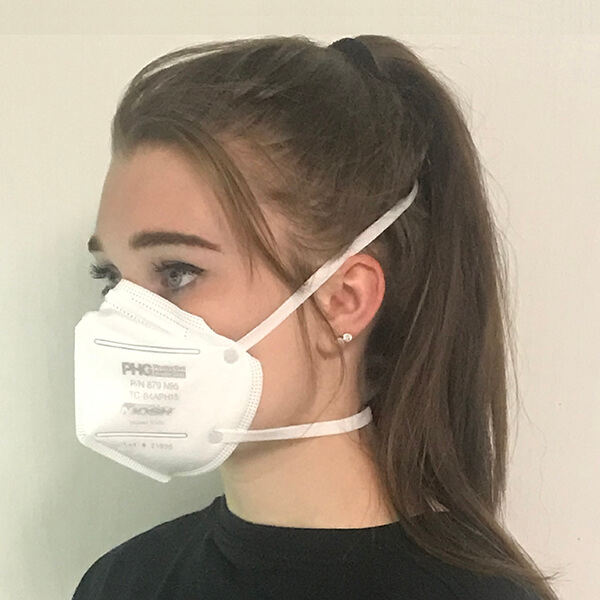
Interestingly, we found PHG to be similar in size, shape, comfort and breathability to our Top Pick among KN95s (the Powecom KN95, shown on the left), which, according to test results provided to ConsumerLab, has an average particulate filtration efficiency of 99% or higher but costs significantly less ($1.20 for the ear-loop version or $1.50 for the version with head straps) vs. $2.10 per mask for PHG). For these reasons, the Powecom KN95, preferably with headbands rather than ear loops, is our overall Top Pick among N95/KN95 respirators of all sizes.
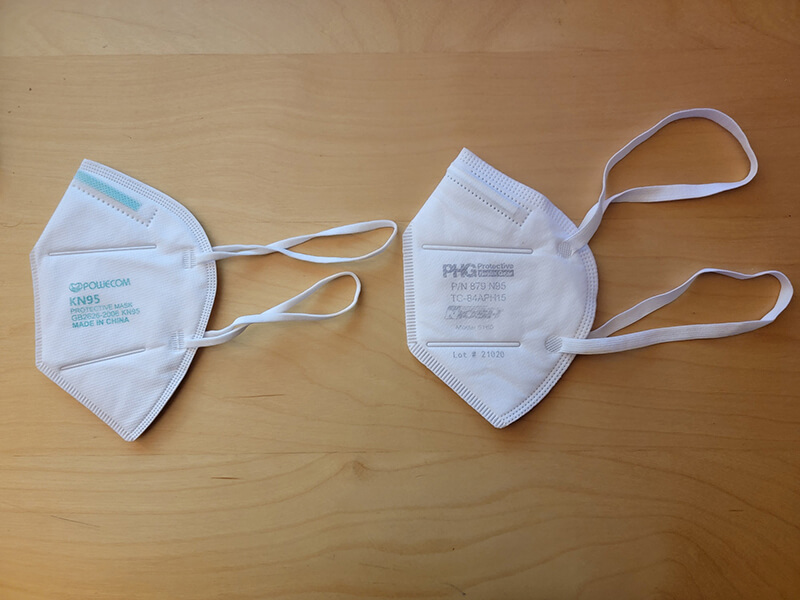
Cost: $2.10 per mask. Selling for $41.99 for 20 (plus shipping, calculated at checkout)
Website: https://protectivehealthgear.com/products/model-6150-niosh-approved-n95-respirator-20-pack
Fit: Fit well on small and medium size faces, but was a bit small on a larger, broader face. This respirator is also sold on Amazon, and a number of Amazon reviews also note that this mask appears to run small, so we would not recommend this N95 for people with larger faces.
Feel: This foldable respirator was relatively soft, and quite comfortable. It has soft elastic head straps that are fused to the sides without the use of staples, but still felt secure even when putting on and taking off several times. It has a moldable nose bridge and a small strip of soft foam on the inside, across the nose bridge, that was comfortable while providing a snug fit. Each respirator is individually packaged in a plastic envelope, making it easy to grab on the go, or store a in purse, backpack or in the car, while keeping it clean.
Breathability: This respirator was easier to breathe through than the Deme Tech dome shaped N95 and the 3M 8511 N95 with exhalation valve, and similar in breathability to the Powecom KN95 (GB2626-2019).
Eyeglass Fogging: Despite the soft, moldable nose bridge and snug fit, we experienced significant eyeglass fogging.
Suggested use and replacement: Single use, disposable.
Where It's Made: Made in the U.S.A. Ships from Paterson, New Jersey.
Top Pick for N95 Respirator for Large Faces:
Deme Tech N95 cup style (DT-N95-CH)
Overall assessment: Of the two dome shaped N95s we tried (the other being the 3M 8511 with exhalation valve which is useful to keep particles out but not to protect others) Deme Tech was the most comfortable It is light-weight, relatively soft and flexible, and the elastic bands are fused onto the mask rather than stapled. It also has a moldable nose bridge and inner foam strip across the nose and was easy to put on and remove. It's available in two sizes, small and regular (which fits larger sized faces, according to Dem Tech). In addition, this was the only N95 respirator that listed its particulate filtration efficiency (≥ 98 %), inhalation resistance (<25 mm H2O) and exhalation resistance (<35 mm H2O) test results on its website (as discussed above, all NIOSH approved N95s must have a particulate filtration efficiency of at least 95%, but some may have higher filtration efficiencies). However, due to its thick outer edge, it's difficult to wear glasses with this respirator.
NIOSH Approval Number: TC-84A-9258 and Instructions for Use
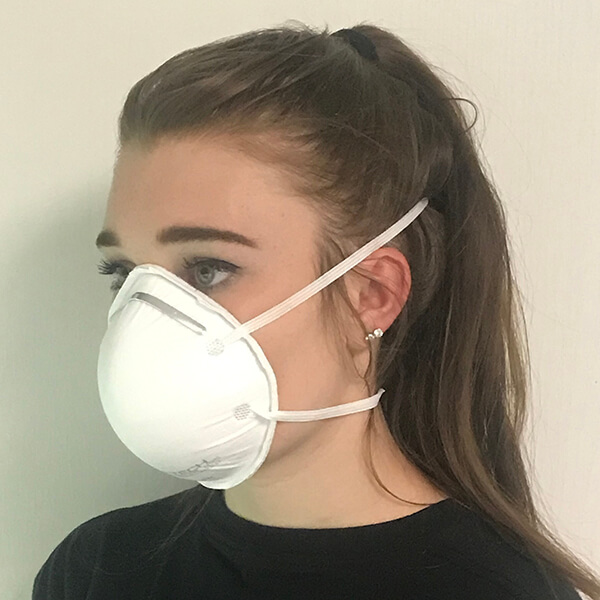
Cost: $3.99 per mask. Selling for $79.99 for 20 (additional shipping cost calculated at checkout)
Website: https://www.demetech.us/product/PPE/RespiratorN95CupStyle
Fit: This respirator is available in small and large. We tried the large size, and this fit well on a large male with a broad face. On two women with smaller faces, it was too large and the lower band was too loose.
Feel: The dome of this N95 felt softer, more flexible, and the outer and inner material felt less scratchy than the other dome shaped N95 we tried (the 3M 8511 with exhalation valve). The molded nose bridge consists of thin, bendable metal on the outside of the mask, and a small strip of padding on the inside along the nose, which was quite comfortable. The elastic bands are heat-fused into the side of the mask rather than stapled (so no risk of scratching), and but felt secure and did not break even when stretching and pulling the bands multiple times.
Breathability: We found that breathing in with this respirator was more difficult than with the foldable N95s we tried and Powecom KN95 but slightly more breathable than the 3M 8511 with exhalation valve.
Eyeglass fogging: This respirator has a high profile on the nose bridge and thick edging around the seam of the molded cup which made it difficult to wear with glasses. We also experienced significant eyeglass fogging.
Suggested use and replacement: Discard after every use.
Although we didn't try it, Dem Tech also manufactures a NIOSH approved (84A-9251) folded-style N95 ($75 for 20, which is $3.75 per mask).
Where It's Made: Made in the U.S.A. Ships from Miami, Florida.
Top Pick N95 Respirator for Extended Wear:
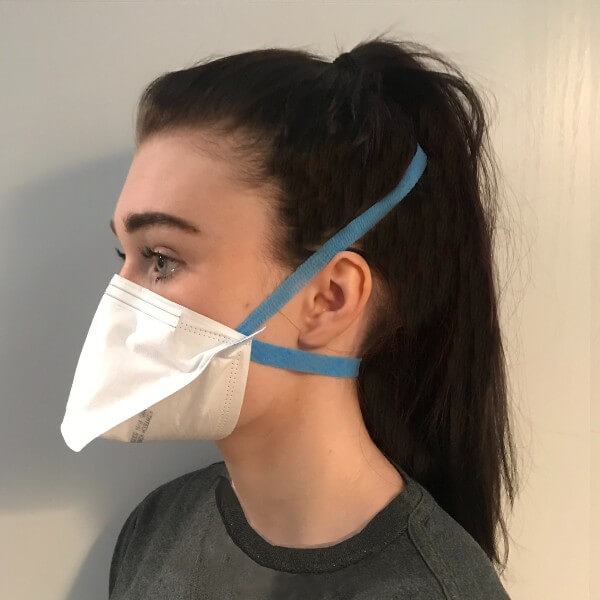
Kimtech Kimberly-Clark PROFESSIONAL N95 Pouch Respirator Model 53358
NIOSH Approval Number: TC-84-A-9042 and Instructions for Use
Overall assessment: This duckbilled mask is soft and lightweight, provides a good fit, and is the most breathable N95 that we have tried, making it a Top Pick. It has a molded wire nose bridge and soft stretchable head bands. This was much easier to put on over the head than the other pouch/duckbill-style respirator we tried (Halyard), while still providing a good fit.
Cost: $1.22 per mask. Selling for $60.75 for 50 (plus shipping, calculated at checkout) on Amazon.
Website: https://www.amazon.com/Kimtech-Pouch-Respirator-Pack-Masks/dp/B08PPYX1X7/
Fit: This respirator is available in a regular and small size (which is a different model number, as explained below), and we found the regular size to be a good fit for a regular-sized face, but a bit too loose on a smaller sized face. Be aware that the Kimberly Clark does not manufacture this respirator in a large size, despite sometimes being listed on Amazon as available in a "Large." (According to a Kimberly Clark representative, they are aware of this issue and have reached out to Amazon to correct the size options when ordering, and will be adding a "small" or "regular" label to the package in the future. In the meantime, the representative noted that size can be distinguished by the model number listed on the bag: Regular size is model 53358 and small size is 54066.) A few Amazon reviewers complained that the nose piece and/or head straps began to fall apart after multiple uses, but this is designed to be a single-use respirator.
Feel: As noted above, this respirator is very soft and comfortable, as are the headbands. They are packaged in one large plastic bag and are not individually wrapped.
Breathability: This respirator was by far, the most breathable N95 we've tried, and even easier to breathe through than our KN95 Top Pick) It was much more breathable than the Deme Tech dome shaped N95 and the 3M 8511 N95 with exhalation valve.
Eyeglass Fogging: We experienced only mild eyeglass fogging.
Suggested use and replacement: Single use, disposable.
Where It's Made: Made in the U.S.A. Ships from Charlotte, North Carolina.
Top Pick for N95 Respirator for Wearing With Glasses:
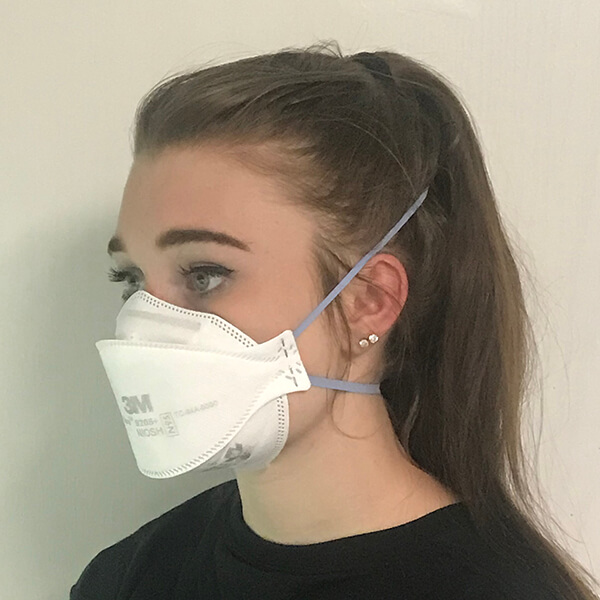
3M Aura Particulate Respirator 9205+ Foldable N95
Overall assessment: We liked this N95 very much — the trouble was getting it on. Everyone who tried this mask remarked that it felt much easier to breathe through than the dome shaped N95s, and slightly easier to breathe through than PHG. However, due its design (including a chin panel that must pulled back and down while pulling over your head) and its stiff outer corners, we found this respirator more difficult to put on, which is a consideration for anyone who frequently removes their mask. It costs less than some of the other N95s that we reviewed (about $1.20 vs almost $4.00 per mask). As its shape accommodates glasses and, in our experience, minimizes eyeglass fogging compared to other N95s, it is our Top Pick N95 for wearing with glasses.
NIOSH Approval Number: TC-84A-8590 and Instructions for Use
Cost: $3.32 per mask when purchased on 3M store on Amazon as a 3-pack. Also sold at Home Depot ($2.30 per mask sold as a pack of 10).
Website (for information only): https://www.3m.com/3M/en_US/p/d/b00051022/
Fit: This respirator appears to be available in just one size but provided a snug seal and stayed in place on small, medium and larger faces. It has a lower profile (around the nose and under the eyes) designed to accommodate glasses.
Feel: Some people might find this respirator a little tricky to put on the first time, due to its 3-panel design. Unlike traditional dome-shaped or folded style N95s, you have to pull the head straps up and away from the mask and pull down the bottom chin panel before placing over your head. We also found the stiff outer corners of the respirator and the staples that attached the head straps to be scratchy against the skin while putting it on. However, it feels very light, comfortable and secure once in place. It has a moldable nose bridge and includes a strip of padded foam that runs the length of the mask, across the top of the cheeks (as opposed to just the nose bridge area) which creates a very soft, comfortable and snug fit.
Breathability: Among all of the N95s we tried, this was the easiest to breathe through. Breathability was slightly better than the PHG foldable N95 and the Powecom KN95 (GB2626-2019).
Eyeglass fogging: According to 3M's website, this respirator's low profile helps to accommodate eyewear, and is designed to direct exhaled air away from the nose area to reduce eyeglass fogging. Although we did experience some slight eyeglass fogging with this respirator, it was significantly less compared to the fogging we experienced with any other N95, making it a good choice for people who wear glasses.
Suggested duration of use and replacement: No suggested duration of use is noted, but the packaging notes "If respirator becomes damaged, soiled, or breathing becomes difficult, leave the contaminated area immediately and replace the respirator."
For Wildfire Smoke
We purchased and tried one N95 with an exhalation valve intended for protection from wildfire smoke. (Be aware that the CDC advises against using N95 respirators with exhalation valves for COVID-19 as valves can allow virus particles to escape into the air, putting others at risk). See the Masks for Wildfire Smoke section for more information about this type of use.
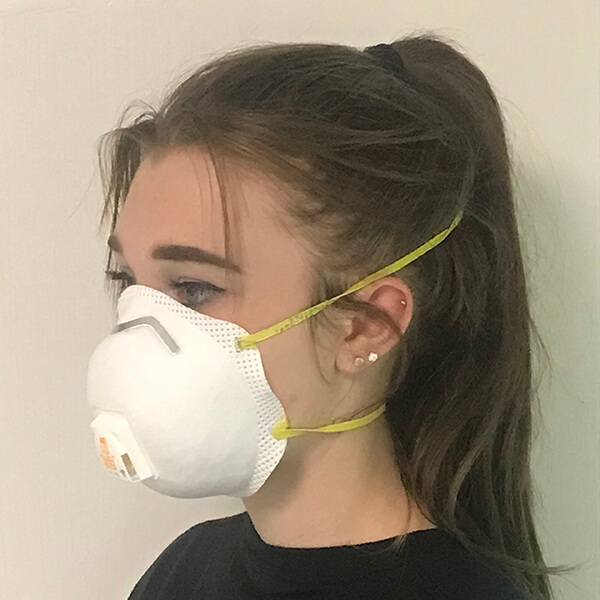
3M N95 Particulate Respirator 8511 With Exhalation Valve
Overall assessment: This N95 with an exhalation valve can provide protection from wildfire smoke, but should not be relied on for protection from, or for protecting others from, COVID-19. Interestingly, we found this N95 less comfortable and moderately more difficult to breathe through than the other dome shaped N95 we tried, the Deme Tech, which did not have a valve. It has a moldable nose bridge, but no inner foam strip on the inside of the mask. On the other hand, unlike Deme Tech, the edges of the mask are flat, not ridged, making this respirator easier to wear with glasses (although both produced significant eyeglass fogging). People with glasses who need to wear an N95 with an exhalation valve for wildfire smoke protection may want to consider using mask tape to help reduce fogging.
NIOSH Approval Number: TC-84A-1299 and Instructions for Use
Cost: $4.99 per mask. Selling for $9.98 for 2 (additional shipping cost calculated at checkout)
Home Depot: https://www.homedepot.com/p/3M-8511-N95-Respirator-with-Cool-Flow-Valve-2-Pack-8511PA1-2A/202670465
Website (for information only): https://www.3m.com/3M/en_US/p/d/v000057511/
Fit: This respirator appears to be available in one size only. However, in a small fit test study, this N95 was found to properly fit more participants (3 out of 7 participants) than the other N95s that were tested (3M 8200, Aero Pro AP0028 and Makrite 9500) (O'Kelly, PLOS ONE 2021). We found it to fit well on small and medium size faces, but was too tight on a larger, broad face.
Feel: Although the dome of this N95 is relatively soft and flexible, it is quite thick, and seems to dent easily. In fact, even though it comes in plastic molded packaging, several were dented when they arrived. The outer shell is rougher and somewhat scratchy compared to the Deme Tech N95, but the inner lining is soft and comfortable. The elastic bands are attached with staples, and felt very strong and secure, and provided a tight fit. The molded nose has a small, bendable aluminum bridge on the outside of the mask, but not padding on the inside of the nose bridge.
Breathability: Despite the exhalation valve, we found it more difficult to breathe through this N95 than the Deme Tech N95, the foldable N95s we tried, and the Powecom KN95.
Eyeglass fogging: We found it much easier to wear eyeglasses with this respirator than with the Deme Tech N95, but still a bit awkward, and, much less comfortable than with the folded-style N95s or the Powecom KN95. We experienced significant eyeglass fogging.
Suggested use and replacement: Packaging states, "Replace the respirator when it becomes dirty, damaged, or difficult to breathe through."
Other: Made in the U.S.A. with "globally sourced materials."
KN95 respirators can also provide protection from particles in wildfire smoke (see our Top Pick among KN95 masks).
General Precautions
Be aware that, as noted by the FDA, people with chronic respiratory, cardiac, or other medical conditions that make breathing difficult should consult with their healthcare provider before using an N95. Also be aware that having facial hair can compromise the fit and protection provided by N95s (see below for more about this), and that N95s are not designed to be worn by children. N95s with exhalation valves should not be relied upon when sterile conditions are needed, and are not recommended for protecting from COVID-19.
Fit and Use
In healthcare settings such as hospitals, people using N95s have to undergo regular fit testing using sodium chloride particles to ensure the N95 they use is the proper size and provides a tight seal to prevent air leakage. This test cannot be performed at home, but to ensure the best fit possible, make sure the N95 you choose fits snugly, without gaps, around your nose, mouth, cheeks and chin. Some manufacturers also suggest holding your hands in front of the mask and above the nose bridge (without touching the mask) once it is in place exhaling to check and see if you feel air leakage. You may find instructions for doing this user seal check on the packaging of some N95s.
Facial Hair and N95s
As noted above, facial hair can interfere with the fit, and therefore the protection provided by, N95s. Being clean-shaven while wearing an N95 is best, but facial hair may be acceptable if it does not come between the skin and the edge of the respirator where a snug seal should form. The CDC provides an infographic of facial hair styles for clarification.
A study that investigated the effects of beards on the filtration efficiency of an N95 (3M Model #8210) found that average filtration efficiency decreased from 98.9% when clean-shaven to about 95% with beards of various lengths (a little less than ½ an inch up to 1 ½ inches in length). Despite this, it found that the N95 still offered better protection than KN95s or surgical masks for beard lengths up to ½ inch. KN95 filtration efficiency also decreased from about 95% clean-shaven to about 40 - 70% for the longest beard length of 1.2 inches but provided better protection than a surgical mask with ear loops (Medline Industries) or a 3-ply 100% cotton mask with ear loops and adjustable nose piece (Hanes). Covering beard hair with a large yoga-style exercise resistance band underneath respirators improved filtration efficiencies, however these bands appear to be quite large and may be uncomfortable or not practical to wear (Chen, Expo Sci Environ Epidemiol 2021).
How to reduce air leakage around a mask
Air leakage around a mask reduces the level of protection it provides you and those around you. There are several ways to reduce air leakage, as discussed below. Also be aware that if you are infectious, the area of your face beyond a leak, including eyeglasses, may become contaminated due to exhaled droplets, as demonstrated in OSHA study (Stephenson, medRxiv 2021 -- preprint).
Knotting ear loops
The fit and filtration efficiency of medical procedure masks with ear loops can be significantly improved by knotting the ear loops and then tucking in and flattening the extra material close to the face (see illustration), according to research conducted on manikins by the CDC. This was shown to reduce exposure to aerosols from a cough by 64.5%.
Double masking
Wearing a medical mask (i.e., a blue "procedure" mask) under a cloth mask improves protection, (likely by minimizing leaks between the medical mask and skin), but wearing a medical mask over a cloth mask has less benefit. A study found that wearing a medical mask under a cloth mask increased the filtration efficiency of cloth masks (which, alone, were 41 to 44% efficient), as well as medical masks (which, alone, were 43 to 62% efficient). Adding a medical mask beneath a cloth mask increased fitted filtration efficiencies to 66% for a simple cotton ear-loop mask, 77% for a cotton bandana, and 81% for a gaiter. Doubling a medical mask was not as effective, nor was doubling cloth masks — which also reduced breathability (Sickbert-Bennett, JAMA Intern Med 2021).
Try not to bend over while wearing a mask
Researchers at Columbia University who were fit testing N95 respirators found that normal breathing and talking did not negatively affect mask fit, and turning the head from side to side slightly improved fit (perhaps due to tightening). However, moving the head up and down slightly worsened fit, and bending over decreased proper fit by as much as 50%. The researchers suggested kneeling rather than bending over when wearing a mask (Chen, medRxiv 2020 -- preprint).
Mask fitters
Masks fitters are a "frame" that can be placed over masks to improve the fit and "seal" of the mask against the face to reduce air leakage and increase inhalation filtration efficiency. Using mannequins that could "breathe" (as shown in the image below), researchers at the University of Wisconsin-Madison found that placing either of two marketed mask fitters over a variety of masks increased inhalation filtration efficiencies from 52% to 63% for a 3-ply spunbond polypropylene mask, from 44% to 91% for a surgical mask, and from only 18% up to as much as 95% for a 3-ply disposable non-medical mask with a melt-blown polypropylene center. Fix the Mask ($30 for a 2-pack) tended to be slightly more effective than Badger Seal ($9.99 for 1), but the difference was not statistically significant (Rothamer, medRxiv 2021).
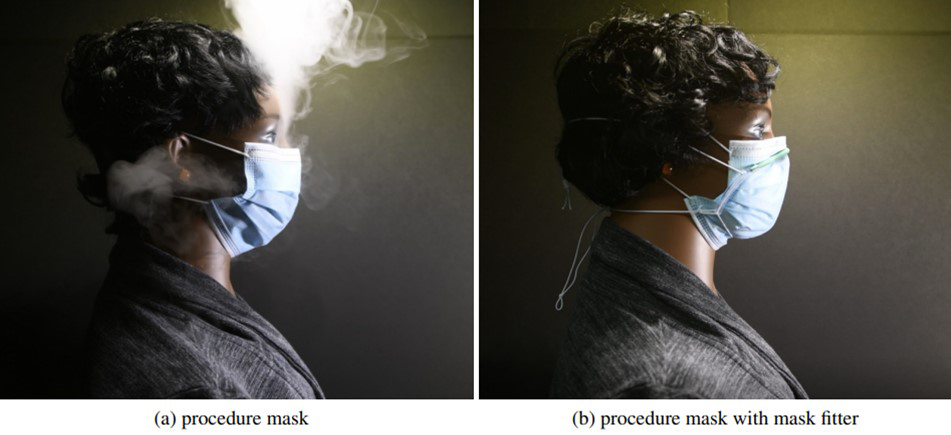
Using modeling scenarios, the researchers estimated that, if everyone in a classroom were to wear a mask with moderate to highly effective filtration efficiency, the probably of infection from aerosols could be reduced up to 100 times more than using a typical ventilation system with no one were wearing a mask. (For information about air filtration, see our article about Air Purifiers and COVID-19.)
How to reduce eyeglass fogging from masks
Lens fogging may be minimized by rinsing lenses with highly diluted liquid soap and then air drying (stand lenses up so excess drips off) (Hu, J Emerg Nurs 2020). This leaves a surfactant film that reduces surface tension and causes water molecules to spread out evenly into a transparent layer, reducing fogging (Margrain, Ann R Coll Surg Engl 2011). Anti-fogging sprays and wipes are also sold, but be sure to follow directions and allow liquids to dry before wearing to avoid eye irritation or injury from the liquid. (A CL member reported severe eye irritation after using JAWS Spit Gel which seems to have gotten into his eye after a COVID nasal test that caused eye tearing) (Peng, Cornea 2006). Eye injury has also been reported in healthcare workers in China who used anti-fog spray on medical goggles (Hu, J Emerg Nurs 2020).
Double-sided tape strips, such as MaskTite Adhesive Strips, can also be used to seal the edges of masks around the eyes and nose to reduce fogging. ConsumerLab purchased these strips ($14.20 for 36 strips on Amazon) and tried them with a disposable mask while wearing glasses, and they did reduce fogging when properly affixed along the tops and sides of the mask.
Re-using N95s?
In general, N95s should not be reused, as the CDC notes that "Previously worn N95 FFRs can serve as a source of pathogens, which can be transferred to the wearer." However, in times of crisis or when supplies are not available, the CDC advises a single N95 respirator may be reused up to, but no more than, five times. It also advises healthcare workers "wear one N95 FFR each day and store it in a breathable paper bag at the end of each shift with a minimum of five days between each N95 FFR use, rotating the use each day between N95 FFRs," noting that this "will provide some time for pathogens on it to "die off" during storage."
N95s respirators lose filtration efficacy when used more than once for several hours or longer. A study among 365 healthcare workers in six emergency departments throughout the U.S. wearing N95s by 3M (models 3M1860 and 3M1870) and Halyard found that, while loss of filtration efficiency was minimal after one shift (which are typically 8 to 12 hours in length), 10% of respirators did not perform properly during a second shift, and 18% to 43% did not perform properly during a 3rd shift (Wang, JAMA Netw Open 2024).
Preventing mask-related skin irritation and acne
Keeping masks clean can also help prevent skin irritation, acne, and other skin conditions that can be caused by or exacerbated by wearing a mask, including eczema (contact dermatitis), rosacea, and folliculitis (inflammation/infection of hair follicles). Although the term "maskne" has become a common term to describe skin irritation and eruptions after wearing masks, contact dermatitis appears to be the most common skin irritation associated with wearing masks. All of these conditions can be aggravated by humidity within the mask, increased bacterial load on the skin, and friction from mask material. In addition to replacing masks regularly, dermatologists recommend applying light moisturizer 30 minutes before putting on your mask and maintaining good oral hygiene to help minimize the risk of skin irritation. You can find more information and the full list of tips for skin care when wearing masks in this article (see "General measures to prevent PPE related facial dermatoses") (Rud, BMJ 2021).
Effect on breathing function and potential carbon dioxide buildup
When wearing an N95 respirator or a well-fitted mask with high blocking efficiency there can be some carbon dioxide buildup inside the mask over time (Sinkule, Ann Occup Hyg 2013). According to researchers at Stanford University, N95 masks are "are estimated to reduce oxygen intake by anywhere from 5 to 20 percent. That's significant, even for a healthy person. It can cause dizziness and lightheadedness." However, a small study in the U.S. found that wearing an N-95 mask for up to one hour did not cause any significant adverse effects in healthy healthcare workers performing moderate activities, despite significantly decreased inhaled oxygen and increased inhaled carbon dioxide levels (Roberge, Respir Care 2010). A representative from the CDC told Reuters.com that "...the level of CO2 likely to build up in the mask is mostly tolerable to people exposed to it. You might get a headache but you most likely [would] not suffer the symptoms observed at much higher levels of CO2. The mask can become uncomfortable for a variety of reasons including a sensitivity to CO2 and the person will be motivated to remove the mask. It is unlikely that wearing a mask will cause hypercapnia [elevated blood levels of carbon dioxide].
On the other hand, surgical masks (also known as medical masks), which are inherently not as well-fitting as N95 respirators, do not lead to CO2 intoxication or oxygen deficiency, as noted by the World Health Organization. Several studies have demonstrated this. For example, a study among 20 healthy adults showed that moderate exercise (walking on a treadmill) for one hour while wearing a surgical mask led to only slight, clinically non-significant changes in CO2 levels (as measured on the skin) compared to exercise without a mask (Respir Physiol Neurobiol 2012). Even during vigorous exercise (cycling to exhaustion, an average of about 10 minutes) a study among 14 healthy men and women showed that wearing a disposable surgical mask or a three-layer cloth mask (Washable 3D Face Mask, TriMax Sports Inc. — made with bamboo charcoal cloth, non-woven fabric, and Lycra) had no effect on blood or muscle oxygenation or exercise performance compared exercising without a mask (Shaw, Int J Environ Res Public Health 2020).
Furthermore, a study of 10 healthcare workers (including individuals with controlled asthma and four smokers), found that wearing a surgical mask (AFLUID, made of three layers of polypropylene and one layer of liquid resistant polyethylene) continuously for four hours did not reduce breathing function (Ciocan, Med Lav 2020). Additionally, older adults who wore a three-layer disposable nonmedical face mask with ear loops (Boomcare DY95 model, Deyce Leather Co Ltd) for one hour showed no decline in self-reported blood oxygen levels (as measured by pulse oximeter) (Chan, JAMA 2020).
Another study showed that, even among older adults (average age 71) with breathing difficulty due to severe chronic obstructive pulmonary disease (COPD), wearing a surgical mask during a six-minute walk test did not result in any major changes in CO2 retention (Samannan, Ann Am Thorac Soc 2020). The researchers suggested that discomfort while wearing a surgical mask might be caused by the increased warmth of facial skin and inhaled air inside the mask, which may trigger sensations of anxiety or claustrophobia in some people.
The CDC advises that face masks should not be placed on children under the age of two, anyone who has trouble breathing, or anyone who would not be able to remove the mask without assistance.
Inhalation of microplastics and OPEs
Concern has been raised about the risk of inhaling microplastic particles when wearing a mask made of polypropylene or other materials containing plastics. A study in China found that most masks increased the inhalation of fiber-like microplastics but notably decreased the risk of inhalation of spherical particles. While some evidence has suggested that fiber-like microplastics may be more toxic to animals than spherical microplastics (Ziajahromi, Environ Sci Technol 2017), the investigators concluded that, overall, inhalation of microplastics from masks is a small problem compared to the risk of spreading COVID-19 without a mask, as people already regularly inhale high amounts of microplastics from the air, with or without a face mask.
The study found that only N95 respirators reduced the risk of inhaling fiber-like microplastic particles compared to not wearing a mask, while a nonwoven mask, a fashion mask, and a cotton mask increased it by 17%, 41%, and 54%, respectively, surgical masks increased it by about 4% to 73%, and activated charcoal mask increased it by 117%. Inhalation of spherical microplastic particles was reduced by about 47% to 96% for all masks compared to not wearing a mask.
Disinfecting any of the masks with UV irradiation, alcohol, air blower treatment, washing with soap and water, or exposure to sunlight increased the microplastic inhalation risk compared to untreated masks, although the risk was only small following washing with water and was lowest following exposure to sunlight. Alcohol disinfection increased the risk of microplastic inhalation most significantly (Li J Hazard Mater 2020).
Polypropylene and other plastic materials used to make KN95 respirators, medical, surgical and other types of masks are often treated with organophosphate esters (OPEs), which act as fire retardants and improve flexibility. These chemicals are used in a variety of household materials such as clothing and carpeting and are found in drinking water and foods (which are now the largest source of exposure (Gbadamosi, Sci Total Environ 2021). High concentrations and prolonged exposure to OPEs through ingestion, inhalation or skin contact have been linked with cancer and may have other adverse effects, such as endocrine disruption, kidney and liver toxicity, and toxic effects on the nervous system.
An analysis conducted in Spain of 21 masks showed that all contained OPEs (KN95s contained the most), but when worn for a single use (four hours) in a moderate temperature (62°F), KN95s, FFP2s (the European equivalent of an N95) and surgical masks would increase an average-sized adult's daily exposure to OPEs (through inhalation) by about 10% -- and when added to average estimated total daily exposure of OPEs, levels of risk were still below those of acceptable risk. No inhalation of OPE compounds was observed with the fabric masks. The researchers advised that filtering facepiece respirators (such as KN95s and FFP2s) should still be used "in situations of relatively high risk of viral inhalation, such as poorly ventilated indoor public spaces." (Fernandez-Arribas, Environ Int 2021).
Disposable "non-surgical" masks vs. surgical masks
Disposable face masks are now widely in stores and online and typically consist of one to three layers of non-woven, blue or white material such as polypropylene and usually have elastic ear loops (which, as noted above, do not provide the snug fit that masks with ties or head straps can). Although some disposable masks sold to consumers may appear similar to surgical masks they are not FDA regulated and are not required to meet the same standards. More importantly, neither surgical masks nor non-surgical disposable masks are designed to protect the wearer, but to reduce the number of droplets and aerosols from the wearer. Both the FDA and CDC emphasize that, due to leakage that can occur around the edges of surgical masks, they "...do not provide full protection from breathing in airborne pathogens, such as viruses." The main function of surgical masks is to provide a barrier from fluids, splatter and droplets that may contain viruses and bacteria. For this reason, a well-constructed, properly fitted multilayer cloth mask may be a better option.
The material used for surgical masks must meet certain standards (known as ASTM F2100-19) for bacterial and particulate filtration efficiency, differential pressure (breathability), resistance to penetration by synthetic blood, and flammability as outlined by the American National Standards Institute (ANSI). During the COVID-19 epidemic, the FDA has given emergency use authorization (EUA) for additional surgical masks that have not been FDA-cleared, although these masks must also meet certain ASTM standards. Surgical masks from China are not eligible for FDA authorization (the reason for this is not explained).
While non-surgical disposable masks sold to consumers are not FDA regulated and are not required to meet the same ASTM standards as surgical masks, some of those sold online or in pharmacies or grocery stores claim to meet ASTM standards. However, these masks cannot make any claims to meet a NIOSH filtration efficiency standard, as such claims only apply to respirators (see further below).
If you do decide to use disposable masks, or like to keep some on hand as a back-up for your regular mask, it may be best to choose one that meets basic ASTM standards (ASTM 2100-19 Level 1). An example of such a mask is the 3-ply Plastcare USA Sentinel ASTM Level 1 Blue Earloop Surgical Face Mask ($19.99 for 50), sold on Amazon. Plastcare USA also sells a slightly more expensive Level 2 version ($21.95 for 50), which has slightly greater filtration efficiency (98% vs 95%) and is somewhat more splatter-resistant. CVS also appears to sell an ASTM Level 1 disposable medical face mask but it is more expensive ($34.99 for 50). Although Plastcare is a U.S. company, its masks, along with those from CVS, are made in China.
Be aware that while disposable and surgical masks may list ASTM filtration efficiencies, these mask cannot make any claims to meet a NIOSH filtration efficiency standard, as these claims only apply to respirators (see below).
See How to reduce air leakage around a mask above for tips on improving the filtration efficiency of surgical and medical masks.
Are KN95 respirators as good as N95s?
N95 and KN95 masks (or, more technically, respirators) are designed to protect you, as well as others around you. Both are supposed to filter 95% of particles down to 0.3 microns. However, as discussed below, this isn't always the case with widely sold KN95 masks (which are designed to meet Chinese, rather than U.S. specifications). In addition, while N95 respirators attach with head bands to help ensure the best fit, most KN95s attach with ear loops, which may cause a loose or improper fit, and allow for air leakage. A study of N95 and KN95 respirators have shown that mask performance depends, in part, on the tightness of the contact between the material and the facial skin and masks that tied around the head outperform those with elastic ear loops (Sickbert-Bennett, JAMA Intern Med 2020). As discussed above, how you move while wearing a mask may also affect fit.
Tests of KN95s from China by the CDC show that the filtration efficacy of some KN95 masks is 95% or higher but can be as low as 5.3%. Furthermore, tests by ECRI, an independent, U.S. based non-profit organization that evaluates equipment for hospitals and healthcare systems, showed that 5 of 11 KN95s did not meet the filtration efficiency standard of 95%. ECRI also found large variations in filtration efficiencies of KN95s within the same lot from a single manufacturer, suggesting quality control issues. (You can download ECRI's test results, which includes manufacturer information and photos of the respirators tested by clicking on "PPE Testing Report" on this page on ECRI's site).
Nevertheless, due to the previous shortage of N95 masks, in April 2020 the Occupational Safety and Health Administration (OSHA) provided guidance that KN95 masks certified to China's GB2636 standards of 2006 or 2019 (imprinted on masks as "GB2626-2006" or "GB2626-2019") "will provide greater protection than surgical masks (i.e., facemasks, other than surgical N95s[3]), homemade masks, or improvised mouth and nose covers, such as bandanas and scarves." Caution: You should not buy a KN95 mask that does not have its GB2626-2006 or GB2626-2019 imprinted on it.
Buying a KN95
Starting in 2020, the FDA published and maintained a list of N-95 and KN95 respirators from China given emergency use authorization (EUA) from the FDA during the pandemic. However, as of July 6, 2021, due to the increased supply and availability of NIOSH-approved respirators, the FDA has revoked its authorization of non-NIOSH approved respirators manufactured in China for healthcare workers. Respirators with previous EUA status may still be marketed to the general public, but must be labeled as face masks, rather than respirators.
Update: On August 25, 2021, the FDA announced that NIOSH approval of N95 respirators made by Chinese manufacturer Shanghai Dasheng has been revoked due to serious concerns about the quality of these products, noting "the company did not implement, maintain, and control a quality management system." It advised healthcare workers stop using N95 respirators made by Shanghai Dasheng and intended for emergency use, including several sold under other brand names (see the FDA notice for details).
Finding the Best KN95 Mask
KN95 masks are widely available for purchase on websites such as Amazon. However, it can be very difficult to know if a KN95 mask is genuine and effective. We reviewed many KN95 masks sold online and on Amazon.
Top Pick
UDPATE (9-10-21): Our previous Top Pick among KN95s, the Powecom KN95 Face Mask (manufactured by Guangzhou Powecom Labor Insurance Supplies Co., LTD), was changed to conform to China's GB2626-2019 standard for KN95s, which went into effect on July 1, 2021. [Note: As this is now the standard in China, be sure to look for this number on any KN95 you are considering purchasing.] The melt blown material used to make the outer layers of the mask has been changed to improve the breathability of the mask, but the inner filter material remains the same as the previous version. The new version of the Powecom mask has not been tested by the CDC, but, according to tests (results of which were provided to ConsumerLab) conducted by Guangzhou Fibre Product Testing and Research Institute, an independent laboratory in China, it has a filtration efficiency ranging from 99.46% to 99.50%. The tests also showed improved breathability (as measured by inhalation and exhalation resistance in pascals (Pa), or maximum pressure drop). Exhalation resistance decreased from an average of 185 Pa to 102 Pa, and inhalation resistance, from an average of 119 Pa to 67 Pa (for comparison, NIOSH Approved N95s should have an exhalation resistance below 245 Pa and an inhalation resistance below 343 Pa). For this reason, and its low cost, it remains our Top Pick among KN95s.
The previous version of this mask met the previous Chinese standard, GB2626-2006 and tests of it by the CDC in the U.S. in December 2020 found the filtration efficiency ranged from 99.35% to 99.64%. [Note: Both the GB2626-2006 and GB2626-2019 standard requires a filtration efficiency of 95% or greater, and products meeting either standard were recognized by OSHA as providing "similar filtration as NIOSH-certified equipment."
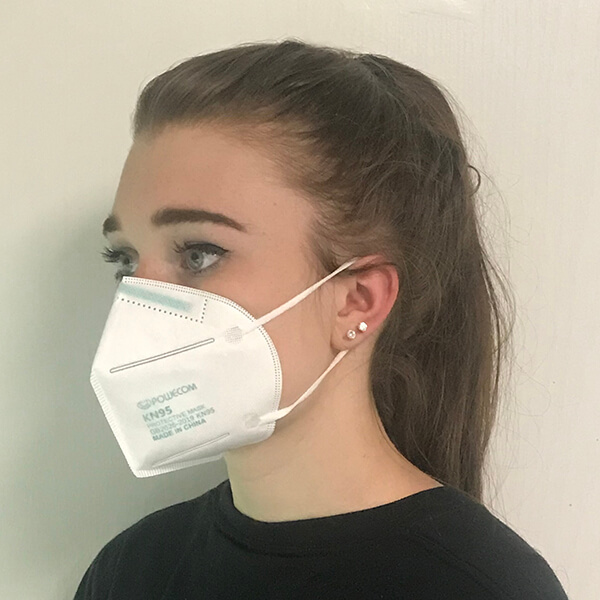
Although it can be found on Amazon, we do not recommend purchasing it there as the CDC has indicated that there could be counterfeits. Instead, the Powecom KN95 mask can be purchased directly from Bona Fide Masks ($10.70 for a pack of 10, so $1.07 cents per mask), which is an authorized distributor and receives the masks directly from the manufacturer, according to documentation ConsumerLab.com obtained from the owner of the website.
Bone Fide Masks also sells a version with head straps ($16.00 for a pack of 10, so $1.60 per mask), shown below, which, as discussed earlier, may permit a better fit, as well as a smaller-sized mask for children and people with smaller faces ($13 for a pack of 10, so $1.25 per mask), both of which meet the new Chinese standard. In addition, authentic Powecom masks are tagged with an "anti-fake" scratch-off bar code sticker that can be scanned to confirm authenticity with the manufacturer. (Note: Tests reported in May, 2020 of masks sold in Canada as Powecom KN95s showed them not to provide 95% efficiency. However, correspondence from the manufacturer received by CL indicated these were not sold by known distributors and may have been counterfeit - a known issue with other KN95 masks early in the pandemic.)
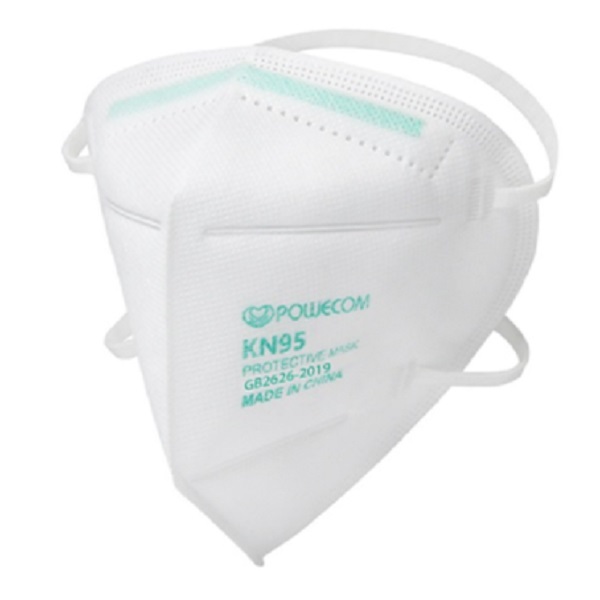
Be aware that, KN95 masks typically have thin flex lines (often dotted) across them to allow the mask to bend and contour to one's face. These lines are often translucent but they are sealed — they are not perforations and air cannot pass through them. (The "dots" are made by ultrasonic welding of the layers of the mask, according a communication shared with us from manufacturer of Powecom masks.)
Tip: KN95 masks often come with a sharply bent metal bridge which, if not adjusted, can leak air at the bend. To improve this, first straighten the bridge so that it is flat and then wrap the middle part of the bridge partially around a finger of similar width to the bridge of your nose, giving it better contour.
Another KN95 previously authorized for emergency use that we found on Amazon is the WWDOLL KN95 Face Mask ($16.74 for pack of 25, so 67 cents per mask, manufactured by Chengde Technology Co.).
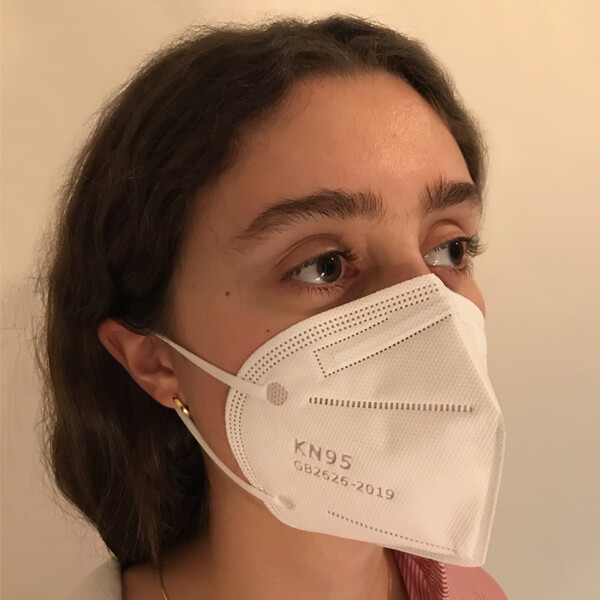
This mask was tested by the CDC, which found it to have a filtration efficiency ranging from 98.83% to 99.95%, and it conforms to China's GB2626-2019 standard. We found it provided a fairly good fit, although perhaps a little less secure against the upper neck than the Powecom, while the ear loops are a bit less elastic than that those on Powecom, making the WWDOLL a little less comfortable. It was as breathable as the Powecom masks, all of which require a slight effort when taking a deep inhalation when the fit is fully secure against the face. We did find that, for people with a large nose bridge, it was difficult to get a full seal where the nose hits the cheek — a problem with many masks.
This mask had been another Top Pick of ours. However, on February 18, 2021, the CDC reported that the manufacturer was misusing the CDC/NIOSH test information to market the mask, which is not permitted. The CDC did not indicate that it suspected the respirator to be counterfeit, and there was no mention of NIOSH test results on the packaging when ConsumerLab purchased this item. However, because this practice violates CDC guidelines, we have removed it from our Top Picks.
Avoid Counterfeit Respirators
Signs of a counterfeit respirator include no approval number or NIOSH markings, decorative fabrics or add-ons, and claims of being approved for children. The CDC publishes a list and images of dozens of counterfeit and falsely marketed respirators. In December 2021, the CDC added the SafeShield FS-N95 and Megha International's N95 to its list, both of which claim to be NIOSH approved but are not (CDC December 2021).
Other respirators
Before N95 respirators became more available, the United States Department of Labor, noted that healthcare workers who were unable to obtain N95 respirators could use R95, R99, P95, P99, P100 and others respirators. Like N95 masks, these are expected to filter out a minimum of 95% of particles of the most penetrating size, and those ending in a "99" or "100" filter out at least 99% or 99.97%, respectively, of such particles but can be more difficult to breathe through. R95 and P95 masks are typically used for protection when working with oil-based substances like fuel, paints, solvents, or pesticides. N95s are not resistant to oil, R95s are "somewhat resistant" and P95s are "strongly resistant to oil or oil proof," as shown in the CDC's infographic about these types of masks. If considering an alternative respirator, make sure it is NIOSH approved. Respirators with exhalation valves should not be used when trying to protect others. (See a video demonstration by researchers at Florida Atlantic University of how aerosols can spread when coughing while wearing an N95 mask with a valve).
KF94 respirators from Korea are often promoted as the Korean "equivalent" to N95 respirators, but this is not quite accurate. Although they can have relatively high filtration efficacy, KF94 masks are considered "public use" respirators and are not held to the same performance standards as Korea's Special 1st class "occupational use" respirators (which are considered to be roughly equivalent to NIOSH approved N95 masks). KF94 respirators are designed to have a filtration efficacy of 94%, and CDC tests of one brand of KF94 found its filtration efficacy to be even higher (99.85 to 99.94%). However, unlike all NIOSH-approved N95s (which attach with head bands), KF94 respirators attach with ear loops, which, the CDC points out, may compromise their fit and efficacy. The CDC did not perform fit testing on the KF94s it tested and noted a lack of information about manufacturing quality control. In addition, unlike surgical N95 respirators, KF94 respirators are not considered fluid resistant (Kim, J Korean Med Sci 2020).
Electrical air purifying respirators that mimic powered air-purifying respirators (PAPRs) are available on Amazon, ranging in price from about $60 to $100, but these devices would not be suitable for preventing the spread of COVID-19 among the general public. These devices include a portable high efficiency (HE) filter that can be connected to a face mask via a flexible hose/air duct to supply fresh air to the wearer. By ventilating air from the HE filter to the mask, these devices should create positive air pressure. This means that air exhaled by the wearer would leak out of the mask. Consequently, these devices might protect the wearer if the ventilation is strong enough, but they would not protect individuals nearby the wearer.
Furthermore, unlike NIOSH-certified PAPRs, which are rated as being more effective than N-95 masks, available electrical air purifying respirators do not appear to be certified. Therefore, it is uncertain if these devices even help protect the wearer. In addition, similar to other personal ("wearable") air purifiers, these devices might not be permitted on airplanes, as security officers can confiscate these devices if they feel they are unsafe or cause a threat.
Are copper masks better?
Copper has been shown to inactivate a wide variety of bacteria and some viruses, typically within minutes to hours of contact, and a study found that SARS-CoV-2 (at about 72°F and 40% relative humidity) was undetectable on copper after four hours (van Dormalen, NEJM (correspondence) 2020). There do not appear to be studies showing how effective masks made with copper or copper infused fabric are against SARS-Cov-2. However, preliminary research with other viruses suggests a possible benefit. A study funded by the maker of copper masks (Cupron) for healthcare and institutional use, showed that an N95 mask with two added layers of copper oxide infused material (polypropylene fabric containing 2.2% weight/weight copper particles) had a similar filtering efficacy as a regular N95 mask, but was much more effective in inactivating human influenza A virus (H1N1) and avian influenza virus (H9N2) (Barkow, PLoS One 2010).
Some concerns have been raised about the safety of copper masks and the possibility of breathing in copper particles. While we don't have safety information for specific products, laboratory studies that measured the amount of copper released from copper oxide impregnated masks during 5 hours under simulated breathing conditions was far below the respiratory copper permissible exposure limit (PEL) set by the USA Occupational Safety and Health Administration ("OSHA") (Borkow, Curr Chem Biol 2012).
How to protect yourself from COVID-19 in a car
Preliminary research suggests that viral loads can quickly build up within a closed car, even during rides as brief as 15 minutes. Wearing a mask, as well as a face shield, are good first steps to help protect yourself and others. When there are two people in a car (one driver and one passenger) seating the passenger in the back seat on the opposite side of the driver creates the most distance between them. To increase ventilation, computer modeling research shows that riding with all windows down is most effective. Since this isn't always practical, the next most effective way to increase ventilation is by opening one window in the back and one in the front, opposite of where the occupants sit, creating airflow across the interior of the car. Keeping all the windows closed and running the air-conditioning, is least effective (Mathai, Sci Adv 2020). Keep in mind that none of these steps eliminate the risk of infection.
How to improve safety for bus passengers and drivers
A study of aerosol flow on a school bus and transit bus that were driven under real-world conditions showed that mask wearing and ventilation can significantly reduce exposure to aerosols for passengers (Edwards, Aerosol Sci Tech 2021). Based on their experiments, the researchers recommended the following tips to help reduce exposure to aerosols for bus passengers:
- Require all passengers and drivers to wear masks on buses. Even a cloth mask that's 50% efficient can reduce particles released from a cough by 50% and reduce their dispersal by several feet.
- Open windows partially or fully. This can reduce airborne particles by 50% to 80%.
- Consider seating arrangements that only allow for same household or same cohort passengers to sit together.
- Social distancing of six feet is not practical on most buses, but any extra distance allows the air movement to reduce exposure to infectious particles.
For bus drivers, the researchers recommended risk could be reduced by using a dashboard fan to create airflow in the driver seat area. They also noted that, when safe to do so, opening all transit bus doors at every stop would allow for better air exchange.
What masks protect against wildfire smoke?
Cloth masks, including those with sewn-in or removable filters, should not be relied on for protection from wildfire smoke, according to the CDC. They protect against some of the larger particles in wildfire smoke, but not from smaller particles in smoke that can damage the lungs. In addition, one-strap paper dust masks and surgical masks, worn alone, are not recommended for wildfire smoke protection.
It is recommended that people who have to be outdoors in wildfire affected areas wear fit-tested, NIOSH-approved N95 or P100 respirators, and the CDC notes that properly fitted N95 respirators can "provide protection from wildfire smoke and from COVID-19 for the individuals wearing them." To help prevent the spread of COVID-19 to others, N95 masks without valves are recommended. If an N95 mask with a valve is your only option for wildfire smoke protection, consider covering the valve with tape or wearing a surgical mask over the N95 when around others, as recommended by John Balms, M.D. at UCSF. KN95 respirators can also provide protection from particles in wildfire smoke (see our Top Pick among KN95 masks, which was tested by the CDC).
Join the conversation
Loading Comments…
Submit your comment
This feature is restricted to active members.
Join now to add comments and get all member benefits, including over 1,400 product reviews.
Join NowAlready a member? Sign in here.
Agree to Comment Terms
Please abide by the following:
- If you make a statement of fact, such as whether a type of treatment does or does not work, state your basis -- such as personal experience or a published study.
- If you make a positive or negative comment about a product, note whether or not you have a financial interest in the product or in a competing product.
- Please be respectful in your tone.
- Please do not submit any type of HTML markup or scripting as it will not be accepted, nor will posts that exceed 2,500 characters.
For your privacy, only your first name (from your account) followed by a random number will appear with your comment. Your last name and email address will not be displayed.
Your comment has been submitted
We will review your comment before it is posted.
Join today to unlock all member benefits including full access to all CL Answers and over 1,400 product reviews.
Join NowAlready a member? Sign In Here.
Join now at www.consumerlab.com/join/
Join over 300,000 people on our weekly email list.
Join over 100,000 members and access 1,400+ product reviews

Find the best products with instant access to our latest tests & reviews of over 1,400 health products.
Save money by finding high-quality products at lower cost.
Stay safe with the latest clinical findings, warnings, and expert answers.
Access our weekly newsletter.