



Save to favorites
This feature is restricted to active members.
Join now to save favorites and get all member benefits, including over 1,400 product reviews.
Join NowAlready a member? Sign in here.

Our Members Asked:
Supplements for Eczema: Some May Help, While Others Don’t


Answer:
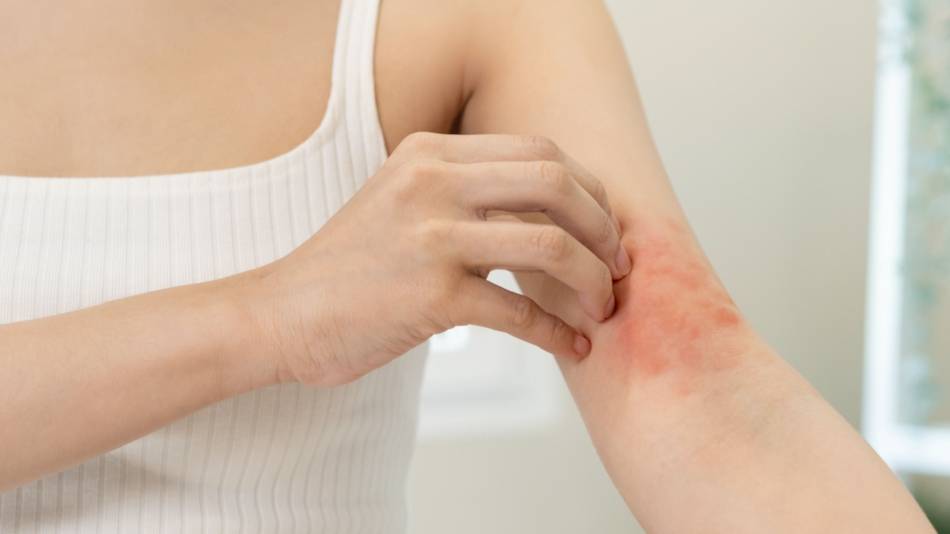
Certain supplements may reduce symptoms of atopic dermatitis (the most common form of eczema), while other supplements promoted for this condition do not seem to work.
Read below for information about the following supplements for eczema: gamma-linolenic acid, grapefruit seed extract, L-histidine, melatonin, phytoceramides, probiotics, vitamin B-12, vitamin D, and zinc. Application of apple cider vinegar to the skin is also discussed. Be aware that chocolate and cocoa may trigger contact dermatitis — another form of eczema.
Also see our article about choosing the right soap to find out what to look for in soap to avoid skin irritation and see our Top Picks for body wash, bar soap, and hand soaps.
Supplements that may help
Grapefruit seed extract
Preliminary research suggests that grapefruit seed extract might reduce constipation, gas and abdominal discomfort in people with atopic dermatitis and gastrointestinal symptoms. However, more research is needed to confirm (Kiehl, Ortho Mol Med 1990).
L-Histidine
Dietary histidine deficiency has been linked with the development of eczema-like skin lesions (Kopple, J Clin Invest 1975) and, compared to healthy people, individuals with atopic dermatitis appear to have lower levels of L-histidine in the "natural moisturizing factor" (i.e., compounds in the top layer of the skin that help keep it hydrated) (Kezic, Allergy 2011). A small study among adults with atopic dermatitis showed that taking L-histidine (4 grams/day) for 8 weeks reduced symptom severity by about 30% to 40% compared to baseline, and these improvements were significant compared to placebo (Tan, Clin Cosmet Investig Dermatol 2017). Evidence from other research shows that lower doses of L-histidine (0.8 grams/day) may help reduce symptoms among children with this condition (Gibb, J Nutr 2020).
Melatonin
Taking melatonin before bedtime may modestly reduce symptoms and time it takes to fall asleep among children and teens with atopic dermatitis (Chang, JAMA Pediatr 2016).
Phytoceramides
Taking certain phytoceramides by mouth might help improve symptoms of atopic dermatitis among children allergic to dust mites (Kimata, Pediatr Dermatol 2006). It is unclear if phytoceramides are beneficial for other types of eczema.
Probiotics
Short-term supplementation with certain species of probiotics may reduce symptoms of atopic dermatitis in both children and adults when taken by mouth short-term (Prakoeswa, J Dermatolog Treat 2020; Navarro-Lopez, JAMA Derm 2017). The effects of probiotics when applied topically remains uncertain (Myles, Sci Transl Med 2020).
Vitamin B-12
Vitamin B-12 deficiency may worsen atopic dermatitis severity, and supplementing with vitamin B-12 to improve vitamin B-12 status seems to improve symptoms (Chesini, J Diet Suppl 2020). However, there does not appear to be evidence that vitamin B-12 is beneficial for eczema among people with adequate levels.
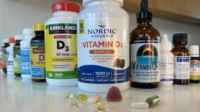
Vitamin D
Taking vitamin D along with standard medication for eczema may reduce the severity of symptoms among people with low or borderline low levels of vitamin D and moderate to severe atopic dermatitis (Mansour, Pharmacol Res Perspect 2020).
Supplements that may not help
Gamma-linolenic acid (GLA)
Although gamma-linolenic acid (GLA) has been used in Europe for treating atopic dermatitis, more recent evidence indicates that GLA derived from evening primrose oil or borage oil does not work for this condition (Cochrane Library 2013).
Zinc
Although zinc deficiency can cause an eczema-like rash (Schröder, New Engl J Med 2020), research does not support the use of zinc for treating eczema.
These things may worsen eczema
Apple cider vinegar
Soaking the skin in apple cider vinegar has been proposed as natural treatment for atopic dermatitis on the basis that eczema lesions tend to be more alkaline (have a higher pH) than healthy skin. However, clinical research found that soaking affected skin in apple cider vinegar did not help with this condition, and most people using apple cider vinegar reported mild itching and burning of the skin after soaking (Luu, Pediatr Dermatol 2019).
Chocolate and cocoa
Chocolate and cocoa powder contain relatively high concentrations of nickel and may trigger allergic contact dermatitis in people who are sensitive to nickel (Jacob, Ped Derm 2014; Pizzutelli, Eur Ann All Clin Immunol, 2011). Interestingly, vitamin C may help reduce nickel absorption, although there does not appear to be any research showing that vitamin C reduced or prevented eczema symptoms in people with nickel sensitivity.
Be the first to comment
Loading Comments…
Submit your comment
This feature is restricted to active members.
Join now to add comments and get all member benefits, including over 1,400 product reviews.
Join NowAlready a member? Sign in here.
Agree to Comment Terms
Please abide by the following:
- If you make a statement of fact, such as whether a type of treatment does or does not work, state your basis -- such as personal experience or a published study.
- If you make a positive or negative comment about a product, note whether or not you have a financial interest in the product or in a competing product.
- Please be respectful in your tone.
- Please do not submit any type of HTML markup or scripting as it will not be accepted, nor will posts that exceed 2,500 characters.
For your privacy, only your first name (from your account) followed by a random number will appear with your comment. Your last name and email address will not be displayed.
Your comment has been submitted
We will review your comment before it is posted.
Join today to unlock all member benefits including full access to all CL Answers and over 1,400 product reviews.
Join NowAlready a member? Sign In Here.
Join now at www.consumerlab.com/join/
Join over 300,000 people on our weekly email list.
Related Reviews (5)

Related CL Answers (3)


Join over 100,000 members and access 1,400+ product reviews

Find the best products with instant access to our latest tests & reviews of over 1,400 health products.
Save money by finding high-quality products at lower cost.
Stay safe with the latest clinical findings, warnings, and expert answers.
Access our weekly newsletter.