






Quick Summary
What did CL's independent tests of DHEA dietary supplements find?
DHEA supplements tested by ConsumerLab.com were found to contain the amounts of DHEA claimed within a reasonable margin of error (see What CL Found and How Products Were Evaluated). However, one product did not appear to meet requirements of its special formulation.
Among DHEA supplements that were APPROVED for quality, ConsumerLab chose two as Top Picks based on quality and value.
Labeled amounts of DHEA in products tested varied considerably from 5 mg to 25 mg per pill — so it's important to choose one that provides the right dose for the intended use, at the best price. Taking multiple pills of a low-dose DHEA supplement to achieve a high daily dose could cost you as much as 12 times as much as you need to pay. The cost to get 25 mg of DHEA ranged from just 6 cents to 77 cents across supplements.
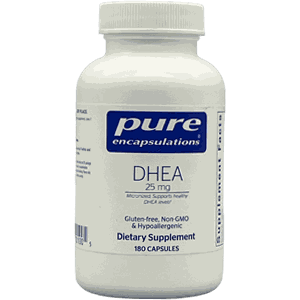
Products tested included DHEA pills by Designs for Health, Douglas Laboratories, Life Extension, Nutricost, Pure Encapsulations, and Vitacost.
What are the benefits of taking DHEA?
There is weak evidence that taking DHEA (dehydroepiandrosterone, a hormone the body uses to create other hormones, including estrogen and testosterone) may help improve mood, and in older men and women, sexual function as well as the appearance of the skin, although not general well-being, muscle mass, or mental function. Most studies have not shown a benefit of DHEA for athletic performance or as a weight-loss aid (see What It Does).
What is a DHEA supplement?
In the U.S., DHEA is sold as a dietary supplement—typically in capsules or tablets—rather than as an FDA-approved drug that requires a prescription.
How much DHEA should I take?
A typical dose is about 50 mg of DHEA per day, although for some uses, such as depression, the dose may be higher (See ConsumerTips™).
DHEA safety and side effects
DHEA may increase testosterone levels in women and should not be taken by women with hormone-sensitive diseases, such as breast cancer. It may also decrease HDL ("good cholesterol") levels and increase insulin resistance (see Concerns and Cautions for other potential side effects and drug interactions.)