



Save to favorites
This feature is restricted to active members.
Join now to save favorites and get all member benefits, including over 1,400 product reviews.
Join NowAlready a member? Sign in here.

Our Members Asked:
How does Athletic Greens’ AG1 compare to multivitamins and "greens" powders? Is AG1 worth it?


Answer:
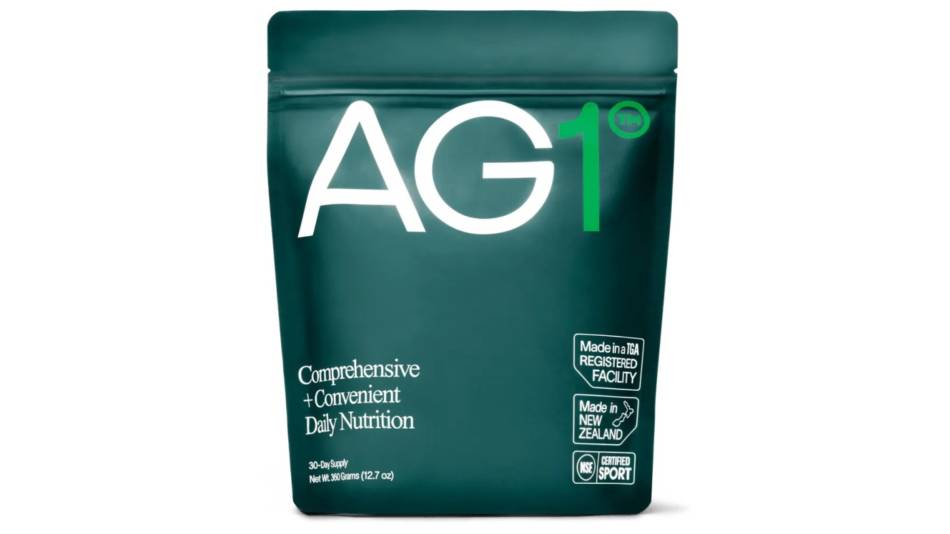
AG1 NEXT GEN
Athletic Greens reformulated AG1 in May 2025. The new formula, AG1 NEXT GEN, was described on the company’s website as an "upgrade" to include more vitamins and minerals, as well as probiotics with digestive and immune health benefits. The original AG1 formula (as tested in in our Fruits, Veggies, and Other Greens Supplements Review) is still sold through AG1's official Amazon store.
Among the many changes, be aware that the amount of vitamin B-12 was increased to a whopping 400 mcg, up from 22 mcg. Although uncommon, possible side effects of such a high-dose B-12 include acne and rosacea, and one study found high-dose B-12 to increase the risk of colorectal cancer in older adults when also given with folate (which is also in the product). On a positive note, green tea extract (which can potentially cause liver toxicity) was removed from the new formula, as was selenomethionine and spinach.
Other changes include adding 10 CFU of probiotics, as well as vitamin K2 (90 mcg), myo-inositol (100 mg), boron (500 mcg), molybdenum (45 mcg), and choline (25 mg). There were also small increases in amounts of vitamin B6, vitamin C, and magnesium.
The Athletic Greens website states that AG1 NEXT GEN was investigated in four placebo-controlled clinical trials. However, only two appear to have been published in peer-reviewed journals to-date.
One study, among 16 healthy, physically active men and women (average age 30) who consumed a single 13-gram serving of AG1 NEXT GEN, showed that the supplement significantly increased blood levels folate, calcium, zinc, vitamin C, biotin, nicotinamide, riboflavin, and thiamine compared with a maltodextrin-based placebo. However, this is not surprising because the placebo did not contain these nutrients. Interestingly, AG1 NEXT GEN did not significantly increase pyridoxine (vitamin B-6) levels over 8 hours compared with placebo, despite providing a high dose (5 mg, equivalent to 294% of the Daily Value) (Sapp, Front Nutr 2026). A second, 2-week study among 20 healthy, resistance-trained men and women (average age 27) showed that taking the same dose of AG1 NEXT GEN once daily significantly increased the abundance of four potentially beneficially bacterial species in stool (Lacticaseibacillus casei, Lactiplantibacillus plantarum, Lacticaseibacillus rhamnosus, and Bifidobacterium animalis) but did not significantly alter overall gut microbial diversity or improve digestive quality of life compared to placebo (maltodextrin) (Gonzalez, Front Nutr 2026).
The cost of AG1 Next Gen is similar to that of the previous formula, AG1.
AG1
In 2022, ConsumerLab purchased and tested AG1, the popular "greens" powder from Athletic Greens, checking for contamination with lead and other heavy metals, bacteria, and pesticides. Our findings are discussed in our Fruits, Veggies, and Other Greens Supplements Review, and in the Safety section below. [As of May 15, 2025, this version of AG1 is still sold on the company’s Amazon storefront but no longer sold on Athletic Greens’ website.]
Ingredients
The version of AG1 tested by ConsumerLab in 2022 provides 75 vitamins, minerals and nutrients. While some of these will help fill nutrients gaps for certain people, some are provided in excess of Daily Values (i.e., daily requirements) such as vitamin C (at 467% of the DV) and biotin (1,100% of the DV) and may not be needed by most people in the U.S. At the same time, it provides only small amounts (10% of the DV or less) of important macrominerals such as calcium, magnesium, and potassium.
AG1 also includes various proprietary "complexes" with ingredients that have shown health benefits in clinical research, but the complexes themselves do not appear to have been clinically studied (and AG1, itself, does not appear to have been studied). Also, the amounts of the ingredients in the complexes are not disclosed, so it is not possible to know if they are safe or effective amounts.
For example, its "Superfood Complex" (7,388 mg per serving) is touted as "supporting the microbiome and key bodily systems." The complex includes the prebiotic inulin, which may help promote the growth of bacteria in the gut, spirulina and chlorella, which may help lower cholesterol and control blood sugar, cocoa, which may improve blood flow, blood pressure, cholesterol levels, and other health measures, as well as many other ingredients, but it is unclear if the amounts of these ingredients in the complex are likely to be beneficial. In addition, its "Plant Extracts and Antioxidants Complex" (2,732 mg per serving) is touted as being able to "provide you with additional support you won't receive from vitamins" and to "help you adapt to stress." While some of the ingredients in the complex — such as Rhodiola, ashwagandha, eleuthero, and others — are considered to be adaptogens, evidence supporting the use of these ingredients for conditions such as stress or mental fatigue is generally weak. Furthermore, it is again unclear if the complex contains amounts of these ingredients that might have clinical benefit.
Safety
Due to the amount of lead per serving ConsumerLab found in AG1 in 2022, regular use of this product should be avoided by children and women who may be pregnant. See What CL Found section and the Results table in our Fruits, Veggies, and Other Greens Supplements Review to see our complete test results for this product.
The amounts of vitamins and minerals listed in this version of AG1 do not exceed tolerable upper intake levels (despite often being higher than required in some cases). Nevertheless, be aware that high doses of biotin can interfere with laboratory test results, including thyroid tests. In addition, high doses of vitamin C can increase the risk of kidney stones in at-risk individuals. Consequently, it may be wise for men and anyone at risk for or with a history of kidney stone to avoid taking more than 250 mg of vitamin C per day. Also be aware that the ingredients in AG1 such as spirulina can cause allergic reaction in some people. In addition, AG1 has been linked with elevated liver enzymes in anecdotal reports. Although this does not prove cause-and-effect, AG1 does contain certain ingredients, such as green tea extract and ashwagandha, that have been linked with liver toxicity.
Cost
AG1 is expensive relative to other supplements. ConsumerLab has found that you can get a good multivitamin, providing 100% of the Daily Value of most vitamins and minerals for as little as 3 cents per day. AG1 costs approximately $3 per day — or 100 times as much. Even if compared to other "greens" or "whole foods" powders, AG1 costs about 50% to 200% more than products ConsumerLab has tested and given top ratings.
Based on our review of AG1, if you are looking for specific active ingredients in AG1, it may be wiser and less costly to consider getting them from supplements in which the amounts are listed, so that you get exactly what you want and expect.
Join the conversation
Loading Comments…
Submit your comment
This feature is restricted to active members.
Join now to add comments and get all member benefits, including over 1,400 product reviews.
Join NowAlready a member? Sign in here.
Agree to Comment Terms
Please abide by the following:
- If you make a statement of fact, such as whether a type of treatment does or does not work, state your basis -- such as personal experience or a published study.
- If you make a positive or negative comment about a product, note whether or not you have a financial interest in the product or in a competing product.
- Please be respectful in your tone.
- Please do not submit any type of HTML markup or scripting as it will not be accepted, nor will posts that exceed 2,500 characters.
For your privacy, only your first name (from your account) followed by a random number will appear with your comment. Your last name and email address will not be displayed.
Your comment has been submitted
We will review your comment before it is posted.
Join today to unlock all member benefits including full access to all CL Answers and over 1,400 product reviews.
Join NowAlready a member? Sign In Here.
Join now at www.consumerlab.com/join/
Join over 300,000 people on our weekly email list.

Related CL Answers (5)

12 Out of 27 of the Multivitamin Supplements We Tested Failed to Get Our Approval.