

Quick Summary
CBD safety, side effects, and drug interactions:
-
What is CBD?
CBD (cannabidiol) is a compound derived from hemp and marketed as a supplement despite the U.S. FDA's position that CBD is not a dietary supplement. -
Does CBD work?
CBD taken orally has been shown to reduce the frequency of certain types of seizures, and preliminary evidence suggests it may also help with anxiety, schizophrenia, gastroparesis, and other conditions. However, most of these effects have involved large doses of CBD — hundreds of milligrams per day, which is more than in many marketed CBD supplements and products. CBD applied to the skin (such as CBD creams, gels, and lotions) may modestly reduce some forms of pain and might promote hair regrowth (see What It Is and What It Does). -
What did CL's tests of CBD products find?
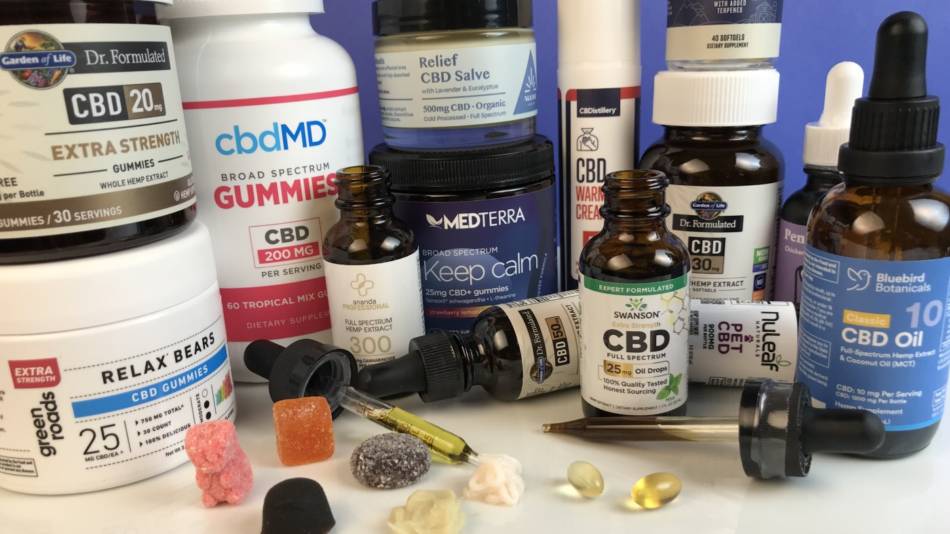
ConsumerLab found an enormous range in amounts of CBD in products -- from 5.7 mg to 240.9 mg per serving. The cost to obtain an equal amount of CBD from each product ranged from just 12 cents to $2.09 per 10 mg. Compared to CL's findings in 2018 and 2020, the price of CBD continued to fall, with the lowest cost per 10 mg of CBD now half of what it was in 2020. At the same time, the strength of products continues to increase, with many gummies, for example, now providing at 25 mg or more of CBD per serving. Levels of THC (tetrahydrocannabinol, a psychoactive compound) have tended to fall, with THC not detectable in most products. In those found to have it, the amount did not exceed 1 mg per serving — although even these lower levels can cause a positive drug test for cannabis for some people (see What CL Found, How Products Were Evaluated, and use the Results table to compare the amounts of CBD, THC, and other cannabinoids in products). -
Best CBD?
Based on quality and value, ConsumerLab selected several Top Picks, including for CBD with THC and CBD without THC among oils, softgels, and gummies, a Top Pick among topical creams and salves, and a Top Pick for Pets. 
How to choose a CBD product?
Look for CBD products that list the amount of CBD or cannabidiol per serving, and don't confuse that with the amount per entire bottle. If a product lists only "cannabinoids" it may contain some CBD but you won't know how much. Products may still have significant amounts of CBD if they list "hemp extract" as an ingredient, but don't expect much CBD if "hemp oil" is the only ingredient. Hemp extracts are more likely to contain a range of cannabinoids in addition to CBD (although it's not clear if this provides added benefit) and this is what is meant by the terms "full-spectrum" and "entourage effect" on labels — but full-spectrum products may or may not contain THC. If you want to avoid THC, look for products with claims like "THC-free" and see which products had no detectable THC in our tests. Note that CBD does not appear to be converted to THC in the body (see ConsumerTips™).-
How much CBD should I take and when?
Most of the research with CBD has involved high doses (several hundred milligrams daily). However, many CBD products on the market are lower-dose and it is not clear if this dosing is effective. Nevertheless, to greatly increase CBD absorption, take it with or shortly after a fatty meal (see ConsumerTips: Dosage.) - Low doses seem to be well tolerated, with abdominal discomfort being the most common side effect. High-dose CBD can cause a range of side effects (particularly gastrointestinal issues, lowered blood pressure, and increased heart rate) and can affect a wide range of medications. For details, see Concerns and Cautions.