




Quick Summary
What is red yeast rice?
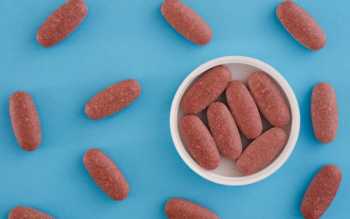
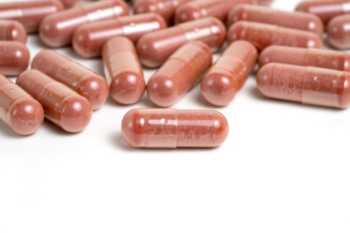
Red yeast rice (i.e., rice on which a particular yeast has grown) can naturally contain cholesterol-lowering lovastatin compounds known as monacolins K and KA, which are red in color (see What It Is).
Does red yeast rice work?
Red yeast rice can be very effective in lowering elevated levels of cholesterol, as shown in several clinical trials (see What It Does). However, not all red yeast rice supplements contain the amount of lovastatin needed to lower cholesterol, and products normally do not list the amount of lovastatin they contain on their labels.
What did CL find?
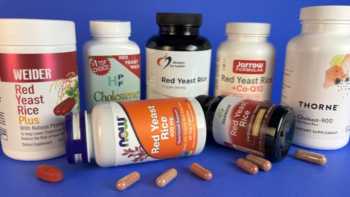
ConsumerLab independently tested 7 red yeast rice supplements from the following brands: Designs For Health, HPF Cholestene, Jarrow Formulas, NOW, Swanson, Thorne, and Weider.
The amount of lovastatin in the tested supplements ranged from 0.56 to 8 mg per 1,200 mg of red yeast rice (typically 2 capsules). When used within their suggested daily serving sizes, only 2 of 7 products provided the amounts of lovastatin known to lower cholesterol in placebo-controlled clinical trials (see What CL Found and How Products Were Evaluated). Only one of the two APPROVED products was solidly within the effective range, and it was also reasonably priced, making it our Top Pick for red yeast rice.
We also tested every product for citrinin, a potential kidney toxin, which, in the past, we have found in many products but, fortunately, was not detectable in any of the currently tested products.
Should you use red yeast rice?
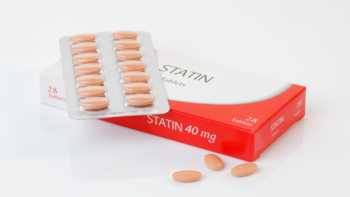
Based on the varying amounts of lovastatin in products and possible changes in these amounts over time, it may be preferable to use a prescription statin drug to ensure a more consistent dose (generic prescription lovastatin is also now lower cost than lovastatin from red yeast rice) (see ConsumerTips™). However, red yeast rice may be effective for some people who don't respond to statins drugs, and certain side effects may be diminished.
Best way to take red yeast rice?
It is best to take red yeast rice in two divided doses each day, with one dose before bedtime, as this may improve efficacy. Typically, 1,200 to 2,400 mg of red yeast rice is taken daily (two to four 600 mg pills).
Cautions
Red yeast rice can cause digestive upset and other mild symptoms, and may also, like other statins, cause muscle breakdown and affect the liver and kidneys. It can also interact with certain medications. Don't eat grapefruit or use St. John's wort when taking red yeast rice or other statins. Rarely, taking red yeast rice at night seems to cause insomnia. See Concerns and Cautions for more information.
Products tested in 2026
+— 51 sources
In addition the results of its expert testing, ConsumerLab uses only high-quality, evidence based, information sources. These sources include peer-reviewed studies and information from agencies such as the FDA and USDA, and the National Academy of Medicine. On evolving topics, studies from pre-print journals may be sourced. All of our content is reviewed by medical doctors and doctoral-level experts in pharmacology, toxicology, and chemistry. We continually update and medically review our information to keep our content trustworthy, accurate, and reliable. The following sources are referenced in this article:
- Banach, Pharmacol Res 2022
- Becker, Ann Int Med 2009
- Chang, J Multidiscip Healthc 2024
- Heber, Am J Clin Nutr 1999
- Liu, Front Nutr 2024
- Mazza Biomed Pharmacother 2018
- Minamizuka, Asia Pac J Clin Nutr 2021
- Parra-Virto, Clin Investig Arterioscler 2018
- Townsend Newsletter 2002
- Xue, BMC Cardio Disorders 2017
- Chagas, Cell Biochem Funct 1992
- Childress, J Clin Lipidol 2013
- Cohen, Eur J Prev Cardiol 2017
- Gordon, Arch Int Med 2010
- Gupta, Veterinary Toxicology 2007
- Heber, J Alt Comp Med 2001
- Lura, Mycopathologia 2004
- Official Journal of the European Union 2014
- The Japan Times
- Trucksess, J AOAC Int 2003
- Blair, Am J Cardiol 2000
- Cabezas, J Am Diet Assoc 2006
- EFSA Journal 2018
- Liu, J Food Drug Analysis 2018
- OJEU 2022
- Simons, Am J Cardiol 2002
- Wallace, BMJ 2003
- ANSES 2020
- Brokaar, Explor Res Clin Soc Pharm 2025
- Chen, Diabetes Metab. Syndr. Obes.: Targets Ther 2020
- Dombremez, Rev Neurol (Paris
- FDA Drug Safety Communication, 2012
- Gale, J Clin Neurosci 2014
- Gillett, Am Fam Physician 2011
- Golomb, Am J Cardiovasc Drugs 2008
- Grieco, J Hepatol 2009
- Karl, J Clin Lipidol 2012
- Kurnik, Drug Healthc Patient Saf 2025
- Liu, Chin Med 2006
- LiverTox 2016
- Loubser, BMJ Case Rep 2019
- Mazza, Biomed Pharmacother 2018
- Mazzanti, Br J Pharmacol 2017
- Roselle, Ann Intern Med 2008
- UCSD Statin Study 2007
- Vgontzas Clin Pharmacol Ther 1991
- Vrolijk, Br J Clin Pharmacol 2020
- Wang, Cur Ther Res 1997
- Wigger-Alberti, Allergy 1999
- Yinhua, PLOS One 2014
- Zigmont, Diab Metab Res Rev 2019
As a ConsumerLab.com member, you may print a copy of this report for your personal use.
You can access a special print version by clicking the "Print" icon in the upper right corner of this report.
You can then use your web browser's print functions to print the whole report or just selected pages.
You may also email or post a link to this report using the web address above.
Non-members using the link will see a free summary and can join to view the full report.
Other means of copying or distributing this report, in part or full, are not permitted.
If you are sight-impaired and your computer is having trouble converting the text in this report to speech,
contact us for assistance at [email protected] or by
phone at 914-722-9149.
The "Latest Update" date indicates when new clinical or product information was most recently added. In the full review (available to CL members), the newest information is highlighted in yellow and, if a new product is added, it is footnoted in the results table, showing the date added to the review. The year(s) when testing was completed for the products in the review appears at the end of the Summary section.
|