


Save to favorites
This feature is restricted to active members.
Join now to save favorites and get all member benefits, including over 1,400 product reviews.
Join NowAlready a member? Sign in here.

Our Members Asked:
Do any supplements or foods benefit people with Crohn's disease? Are there any supplements that should be avoided?


Answer:
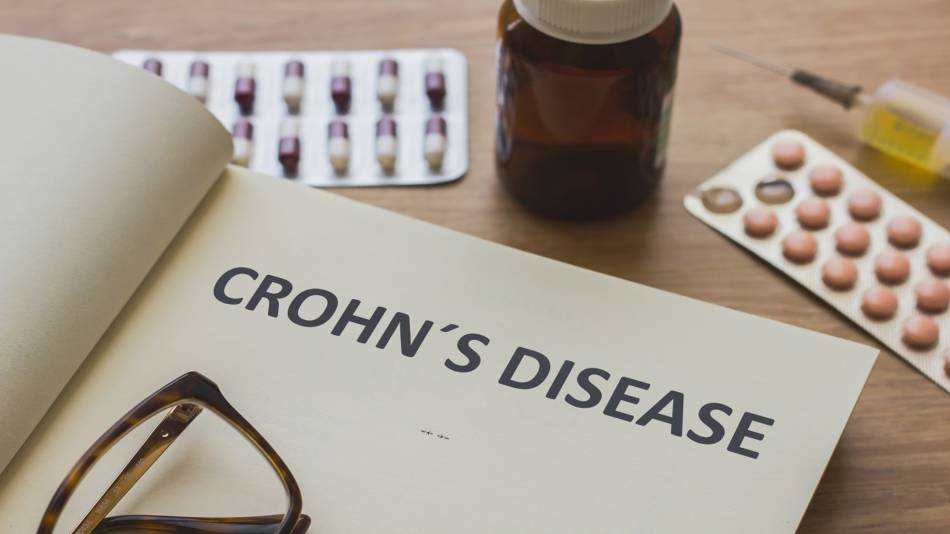
Crohn's disease is an inflammatory bowel disease that damages the lining of the gastrointestinal tract. This damage and associated treatments and changes in diet can interfere with the body's ability to absorb vitamins, minerals and other nutrients from food, and cause symptoms such as abdominal pain, diarrhea, and fatigue. While there is little evidence that supplements can slow the damage or reduce symptoms of Crohn's, vitamin and mineral supplements can help to prevent or treat deficiencies and the symptoms caused by these deficiencies, such as fatigue caused by iron-deficiency anemia. There is also evidence that following certain diets, such as the Mediterranean diet, may be beneficial. People with Crohn's disease should consult with their healthcare provider before taking supplements or making changes to their diets.
Common vitamin and mineral deficiencies with Crohn's disease
Vitamin and mineral deficiencies can occur in people with Crohn's disease for a number of reasons, including dietary limitations or reduced intake of certain foods, changes in the microbiota in the gut (including small intestinal bacterial overgrowth, or SIBO), and the extent and location of the damage to the intestinal tract (including, in some cases, surgical removal of portions of the small intestine, i.e., "resection") — as some nutrients are absorbed at specific locations along the digestive tract.
According to the Crohn's and Colitis Foundation, most people with inflammatory bowel disease, including Crohn's, may benefit from taking a multivitamin/multimineral supplement. It also advises that "adequate intake of calcium and supplementation with vitamin D is important for all patients with IBD, especially if on high dose or long term steroids, or if avoiding dairy products."
Deficiencies of the vitamins and minerals listed below are common in people with Crohn's disease, so it's important to that intake of these be adequate. (Note: The American Gastroenterological Association (AGA) advises that all individuals with inflammatory bowel disease (which includes Crohn’s disease as well as ulcerative colitis) be monitored for iron deficiency and vitamin D deficiency (Hashash, Gastroenterology 2024)).
Iron
Iron-deficiency anemia is one of the most common deficiencies in people with Crohn's disease. This may be treated with iron supplements, although in some cases, intravenous or prescription iron may be recommended, including a prescription form of iron, ferric maltol (Accrufer, Feraccru) that may be more tolerable and effective in people who are unable to tolerate other forms.
B vitamins
B Vitamins — Low or deficient levels of folate (vitamin B-9) may occur in up to 80% of people with Crohn's disease. Crohn's disease may increase the risk of deficiency of thiamin (vitamin B-1) and vitamin B-6, and those who have had a significant ileal resection (resection of the lowest part of the small intestine) are at increased risk for vitamin B-12 deficiency.
Vitamin A
Research suggests that people with Crohn's disease, particularly those who have a low BMI (body mass index) and low bodyfat, can be at increased risk for vitamin A deficiency. One study suggests that oral supplementation with a multivitamin providing vitamin A can correct vitamin A deficiency in children and adolescents with Crohn's disease, but studies in adults are needed. Blood levels of vitamin A do not appear to correlate with disease activity.
Vitamin K
Vitamin K deficiency may occur and has associated with low bone mineral density in people with Crohn's disease, although there does not appear to be evidence that supplementing with vitamin K increases bone mineral density in people with Crohn's.
Vitamin D
Some, but not all research suggests that people with Crohn's disease tend to have lower blood levels of vitamin D, and lower levels may be associated with disease severity. Adequate intake of vitamin D is highly recommended. There is some evidence that vitamin D supplementation may improve quality of life in people with Crohn's disease with insufficient blood levels of vitamin D, but better studies are needed to determine if vitamin D supplementation reduces symptoms or has other benefits in people with Crohn's.
Magnesium
Chronic or acute diarrhea in people with Crohn's disease may deplete magnesium, making supplementation helpful. However, certain forms of magnesium can have a laxative effect, so choose a form that is less likely to cause diarrhea.
Selenium
There is some evidence that people with Crohn's disease tend to have lower than average blood levels of selenium, but studies on the effects on selenium supplementation in people with Crohn's disease are lacking.
Zinc
Some people with Crohn's disease may have inadequate intake of zinc, and/or have low blood levels of zinc. Oral zinc supplementation may help correct deficiency in some people with Crohn's disease.
Can any other supplements help with Crohn's disease?
N-acetyl-glucosamine (NAG)
There is very preliminary evidence that form of glucosamine known as N-acetyl-glucosamine (NAG) may be of some benefit in people with Crohn's disease. NAG is naturally produced in the body and helps to maintain and repair the mucus lining of the gastrointestinal tract, and there is some evidence that levels of NAG may be reduced in people with Crohn's disease. However, studies that suggest a benefit were not placebo-controlled, and more research is needed to prove a benefit.
Fish oil
Due to its anti-inflammatory effects, and some benefit found in people with ulcerative colitis (which is also an inflammatory bowel disease), there has been some interest fish oil for reducing inflammation or improving symptoms in people with Crohn's disease. However, fish oil supplementation did not prevent relapses of Crohn's in a clinical trial.
Bone broth
Bone broth is often promoted for healing the gut and treating various digestive disorders. It can also be a source of collagen, and research suggests that people with Crohn's disease may have lower blood levels of collagen. However, there does not appear to be any research on the effects of bone broth or collagen supplementation in people with Crohn's disease.
Probiotics
Although Crohn's disease may affect the balance of bacteria in the gut, the American Gastroenterological Association does not recommend the use of probiotics in Crohn's disease due to insufficient evidence.
Use caution with the following supplements if you have Crohn's disease
Curcumin
Due to its antioxidant and anti-inflammatory properties, curcumin (from turmeric) has been proposed in treating Crohn's disease. However, in a clinical trial among adults with Crohn's disease who had recently undergone bowel resection and were taking the immunosuppressant medication (azathioprine), a significantly higher proportion of those receiving curcumin had a severe recurrence compared to those receiving the placebo.
Melatonin
There is one report of melatonin triggering symptoms of active Crohn's disease (abdominal cramps and diarrhea).
Nutritional yeast
There is some preliminary evidence that consuming nutritional yeast, brewer’s yeast, or other yeast-containing products may trigger an immune response or worsen symptoms in people with Crohn’s disease.
Are there diets that can help?
According to the American College of Gastroenterology guidelines for the treatment of Crohn's disease, specific dietary therapies may be appropriate when used with other recommended treatments, such as medications, for patients "deemed to be at low risk for progression of disease" but patients should be followed carefully for signs of disease worsening or progression.
Many different diets that have been proposed to help in people with Crohn's disease, including gluten-free diets, low fiber diets, the Specific Carbohydrate Diet (which eliminates all processed and refined carbohydrates, soy, lactose, sucrose, and grains), and the low-FODMAP diet (which reduces intake of certain fermentable carbohydrates), although more research is needed to prove a benefit.
There is some evidence that both the Specific Carbohydrate Diet and a Mediterranean diet may be of some benefit in people with mild to moderate Crohn's disease. In a study among 191 men and women with mild to moderate Crohn's disease who consumed either the Specific Carbohydrate Diet or the Mediterranean diet for six weeks, both groups achieved similar rates of remission at six weeks (46.5% and 43.5%, respectively), although there was no control group, as would be necessary to prove a benefit (Lewis, Gastroenterology 2021).
A caution with dishwasher "rinse aids"
There is a theoretical concern that alcohol ethoxylates in dishwasher "rinse aids" may compromise the integrity of the intestinal epithelial barrier – which could trigger inflammation in the gut and elsewhere in the body. Laboratory experiments demonstrated that alcohol ethoxylates are toxic to intestinal epithelial cells and that significant amounts of these compounds (which act as surfactants to reduce "spotting") remain on cups and plates washed in professional dishwashers because there is typically no rinse cycle after a rinse aid is applied in these dishwashers (home dishwashers typically release rinse aid during a final rinse). For ethical reasons, a study of the effect of rinse aids on people has not been conducted, so this possible adverse effect has not been proven (Ogulur, J Allergy Clin Immunol 2023). (Note: Lemon juice and vinegar have been suggested as rinse aids but, although these may have some cleaning benefits, they are not known to be effective rinse aids and some dishwasher manufacturers warn that using vinegar too often can damage metal or rubber dishwasher parts, such as seals and gaskets, and others, such as Bosch, warn that using homemade rinse aids may invalidate the appliance’s warranty.)
Join the conversation
Loading Comments…
Submit your comment
This feature is restricted to active members.
Join now to add comments and get all member benefits, including over 1,400 product reviews.
Join NowAlready a member? Sign in here.
Agree to Comment Terms
Please abide by the following:
- If you make a statement of fact, such as whether a type of treatment does or does not work, state your basis -- such as personal experience or a published study.
- If you make a positive or negative comment about a product, note whether or not you have a financial interest in the product or in a competing product.
- Please be respectful in your tone.
- Please do not submit any type of HTML markup or scripting as it will not be accepted, nor will posts that exceed 2,500 characters.
For your privacy, only your first name (from your account) followed by a random number will appear with your comment. Your last name and email address will not be displayed.
Your comment has been submitted
We will review your comment before it is posted.
Join today to unlock all member benefits including full access to all CL Answers and over 1,400 product reviews.
Join NowAlready a member? Sign In Here.
Join now at www.consumerlab.com/join/
Join over 300,000 people on our weekly email list.


Join over 100,000 members and access 1,400+ product reviews

Find the best products with instant access to our latest tests & reviews of over 1,400 health products.
Save money by finding high-quality products at lower cost.
Stay safe with the latest clinical findings, warnings, and expert answers.
Access our weekly newsletter.