



Save to favorites
This feature is restricted to active members.
Join now to save favorites and get all member benefits, including over 1,400 product reviews.
Join NowAlready a member? Sign in here.

Our Members Asked:
Should I take, or avoid, any supplements if I take omeprazole (Prilosec), esomeprazole (Nexium), or other proton pump inhibitors for heartburn?


Answer:
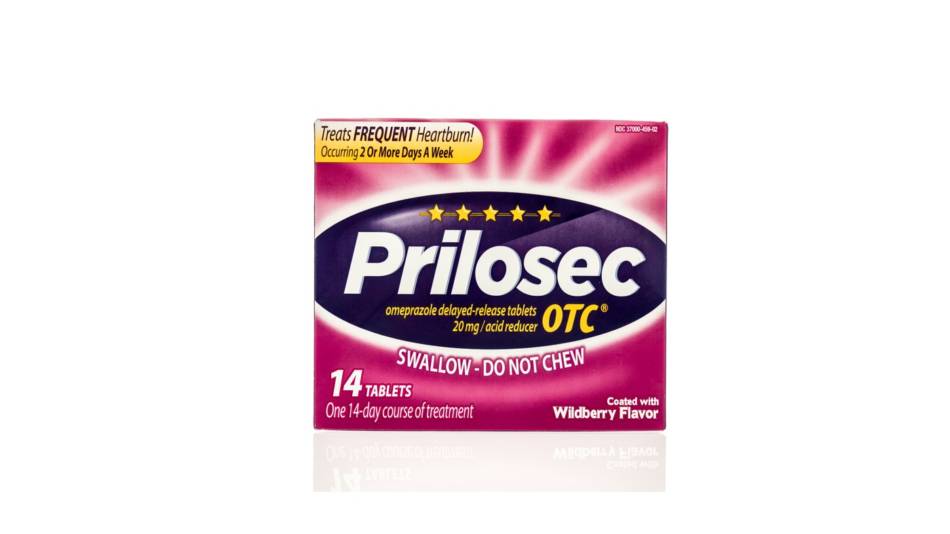
Some supplements may reduce the effects of omeprazole (Prilosec), esomeprazole (Nexium), and other proton pump inhibitors (PPIs), a class of medication that reduces stomach acid to help treat heartburn and related conditions. On the other hand, some PPIs may reduce the absorption and blood levels of certain vitamins and minerals.
Supplements that may affect PPIs
St. John's wort and quercetin should not be taken with omeprazole (Prilosec), esomeprazole (Nexium), and other proton pump inhibitor (PPI) drugs, as they may increase the breakdown of those drug and reduce their effects.
Supplements that may be affected by PPIs
PPIs may reduce calcium absorption (see how to minimize this in the Calcium Supplements Review), with some evidence linking lansoprazole (Prevacid) use with greater risk of calcium deficiency than omeprazole (Prilosec). Long-term and multiple daily doses may increase the risk of osteoporosis-related fractures (Prilosec Prescribing Information 2018). It may also cause magnesium depletion, which may be more likely to occur with esomeprazole (Nexium) than omeprazole. PPI use may also possibly increase the risk of zinc deficiency.
PPI use has been linked with increased risk of vitamin B-12 deficiency in some, but not all, studies. Some evidence has linked esomeprazole use with greater risk of B-12 deficiency than omeprazole. People taking acid-suppressing medications daily over a long period of time (e.g., more than 3 years) should tell their doctor if they experience symptoms of B-12 deficiency, as B-12 supplementation may be necessary.
Use of omeprazole and some other PPIs can cause potassium deficiency in some people.
Use of PPIs may also increase the risk of vitamin C deficiency, which, if prolonged, can cause scurvy.
Long-term use of the PPI pantoprazole has been associated with lower blood levels of vitamin D and increased risk of vitamin D deficiency. It has also been linked with lower blood levels of phosphate.
Some PPIs may decrease levels of iron and may increase the risk of iron deficiency, although the effect seems to depend on the dose and duration of PPI use, and not all PPIs seem to have this effect.
Also see our CL Answer about supplements for indigestion and heartburn.
Join the conversation
Loading Comments…
Submit your comment
This feature is restricted to active members.
Join now to add comments and get all member benefits, including over 1,400 product reviews.
Join NowAlready a member? Sign in here.
Agree to Comment Terms
Please abide by the following:
- If you make a statement of fact, such as whether a type of treatment does or does not work, state your basis -- such as personal experience or a published study.
- If you make a positive or negative comment about a product, note whether or not you have a financial interest in the product or in a competing product.
- Please be respectful in your tone.
- Please do not submit any type of HTML markup or scripting as it will not be accepted, nor will posts that exceed 2,500 characters.
For your privacy, only your first name (from your account) followed by a random number will appear with your comment. Your last name and email address will not be displayed.
Your comment has been submitted
We will review your comment before it is posted.
Join today to unlock all member benefits including full access to all CL Answers and over 1,400 product reviews.
Join NowAlready a member? Sign In Here.
Join now at www.consumerlab.com/join/
Join over 300,000 people on our weekly email list.
Related CL Answers (9)








Join over 100,000 members and access 1,400+ product reviews

Find the best products with instant access to our latest tests & reviews of over 1,400 health products.
Save money by finding high-quality products at lower cost.
Stay safe with the latest clinical findings, warnings, and expert answers.
Access our weekly newsletter.