



Save to favorites
This feature is restricted to active members.
Join now to save favorites and get all member benefits, including over 1,400 product reviews.
Join NowAlready a member? Sign in here.

Our Members Asked:
Which supplements may benefit people with essential tremor, and which should be avoided?



Answer:
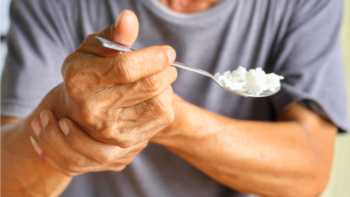
Essential tremor or ET (previously called benign essential tremor) is a movement disorder that causes involuntary, rhythmic shaking, typically of the hands, when one moves or contracts a muscle (but not at rest). ET can make it difficult to do activities such as writing, drinking from a cup, or typing, but it can also affect the head, arms, voice, tongue, legs, or trunk (Struble, Nurse Pract 2010).
There is no cure for ET, but first-line treatment of symptoms may include the beta-blocker propranolol or the anti-seizure medication primidone. However, 30% to 50% of people with ET do not respond to these treatments (Zesiewicz, Neurology 2011). While other medications such as gabapentin, alprazolam, nimodipine, theophylline, and others may be prescribed as second-line options, not all people with ET benefit from these drugs.
Essential tremor typically occurs without other symptoms, although it may also involve balance problems. In the U.S., essential tremor is thought to affect about 10 million people, with onset most common among people 40 and older. The exact cause of ET is unknown, although children of a parent with ET have up to 50% chance of also developing the condition (NINDS, Essential Tremor Information Page).
As discussed below, supplements have been used in treating symptoms of essential tremor, generally with little success.
The evidence for supplements in treating essential tremor
Caprylic acid
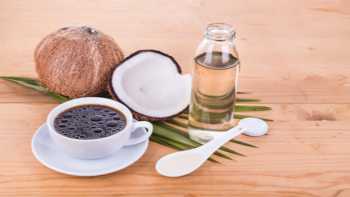
Also called octanoic acid, caprylic acid is medium-chain fatty acid (it's one of the fatty acids in MCT oils and refined coconut oils).
A study among 18 adults with ET (average age 62) found that taking a single dose of 4 mg/kg of caprylic acid (about 272 mg for a 150 lb person) did not significantly reduce tremors upon extension of the wrist and hand compared to placebo at 80 minutes after supplementation, despite maximum blood levels of caprylic acid being reached at about 70 minutes after intake. Interestingly, there was a trend toward improvement at five hours after intake, suggesting a possible delay in the onset of the effect (Haubenberger, Neurology 2013).
Another study that evaluated higher doses of caprylic acid (8 mg/kg to 128 mg/kg, which is equivalent to 545 mg to 8.7 grams for a 150 lb person) found that tremor severity tended to decrease with increasing dose compared to placebo. However, this study was designed to assess safety and was too small to determine if the improvement in tremor severity was statistically significant. Interestingly, like the earlier study, this study also found a delay in the onset of effect (Voller, J Clin Invest 2016).
One study that evaluated caprylic acid in 16 people (average age 70) with essential voice tremor found that taking 16 mg/kg (about 1,000 mg for a 150 lb person) of caprylic acid (Best Formulations) daily for 20 days reduced both the severity and frequency of voice tremor compared to placebo. A higher dose of 32 mg/kg (about 2,000 mg for a 150 lb person) on day 21 did not have a significantly greater benefit (Lowell, Laryngoscope 2019).
Thiamin
Due to its importance in maintaining brain and nerve function, there has been interest in thiamin (vitamin B1) for reducing symptoms of essential tremor. Although mega-dose shots of thiamin have been shown to improve tremor severity and ability to perform daily activities (such as writing, drinking from a glass, dressing, etc.) in two people with essential tremor, controlled clinical studies are needed to confirm these results. It is unclear if taking thiamin orally would be beneficial.
CBD
Laboratory research has shown that cannabinoid receptor type 1 (CB1) antagonists can reduce tremors in animal models of ET. Because cannabidiol (CBD) acts as a CB1 antagonist and has shown some, although mixed, evidence of benefit for other types of tremors, there has been interest in using it to reduce symptoms of ET. However, taking a single dose of hundreds of milligrams of CBD (which is significantly higher than the amount found in most CBD products on the market) does not seem to reduce the severity of tremors in people with ET.
GABA
Blood and cerebrospinal fluid (CSF) levels of the neurotransmitter GABA (gamma-aminobutyric acid) have been found to be lower in people with ET compared to healthy people (Mally, J Neural Transm [Vienna} 1996). Because certain medications used to treat ET, such as gabapentin, may work by increasing GABA levels (Gironell, Tremor Other Hyperkinet Mov [N Y] 2014), it has been speculated that GABA supplements may also be beneficial. However, there is no strong clinical evidence supports this theory.
One case report involving a teenage patient with history of essential tremor for two years found that taking 750 mg of GABA twice daily along with a 150-mg multivitamin (Triptobel) containing thiamin, other B vitamins, and L-tryptophan three times daily significantly reduced tremors beginning after 14 days of treatment (Novak, J Neurol Stroke 2017). However, these results have not been replicated in controlled clinical studies. Furthermore, not all drugs that increase the availability of GABA in the body improve symptoms of ET (for instance, tiagabine does not seem to work) (Gironell, Tremor Other Hyperkinet Mov [N Y] 2014).
BCAAs
Although blood levels of the branched-chain amino acids (BCAAs) isoleucine and leucine have been found to be lower in people with ET compared to healthy people (Mally, J Neural Transm [Vienna} 1996), there is no evidence that supplementing with BCAAs improves symptoms of essential tremor.
Magnesium
Magnesium deficiency can cause muscle spasms and mild tremors, and correcting magnesium deficiency may improve these symptoms; however, there is no clinical evidence that magnesium supplementation is beneficial for essential tremor.
Alcohol
While many people with ET experience symptom improvement within 20 minutes of drinking alcohol, the benefit is short-lived (lasting for just three to five hours), may result in rebound tremors once the alcohol has passed through the body, and may increase the risk of developing alcohol addiction (Mostile, Mov Disord 2010).
Supplements and foods to avoid with essential tremor
Caffeine
People with ET may be advised to avoid dietary stimulants such as caffeine, as these may trigger tremors in some people (NINDS, Essential Tremor Information Page). Keep in mind that herbal supplements such as green tea, guarana, Yerba maté, and kola nut naturally contain caffeine.
Animal protein / harmane
A study conducted in New York found that men who consumed the greatest amount of animal protein (>133 grams per day) had 21 times the risk of ET compared to those who ate the least amount (<51 grams per day), although this association was not observed among women (Louis, Neuroepidemiology 2008). Furthermore, a study conducted in the Faroe Islands that included 27 people with ET and 200 controls found that the concentration of one of the neurotoxic chemicals found in animal protein (harmane) was higher among people with definite and probable ET compared to those without, despite the fact that the total quantity of animal protein intake was similar between those with ET (about 124 grams per day) compared to control (about 114 grams per day) (Ferrer, Tremor Other Hyperkinet Mov [N Y] 2020). Harmane can form in any type of meat, including chicken, beef, pork and fish, particularly when the meat is cooked at high temperatures (i.e., grilled, fried, or oven-broiled) and well-done. However, meat is not the only dietary source of harmane. Coffee, vinegar, soy sauce, ketchup, tobacco, cocoa, and fermented beverages such as wine, beer and whiskey can also significantly contribute to dietary intake of harmane (Pfau, J Chromatogr B Analyt Technol Biomed Life Sci 2004; Herraiz, Food Addt Contam 2004).
Although a cause-and-effect relationship has not been established, people with ET may want to try reducing intake of animal protein and other dietary sources of harmane while increasing intake of plant-based proteins (see CL's answer about protein supplements for vegetarians for information about soy, pea, rice and hemp protein. Also see CL's article about plant-based burgers).
Join the conversation
Loading Comments…
Submit your comment
This feature is restricted to active members.
Join now to add comments and get all member benefits, including over 1,400 product reviews.
Join NowAlready a member? Sign in here.
Agree to Comment Terms
Please abide by the following:
- If you make a statement of fact, such as whether a type of treatment does or does not work, state your basis -- such as personal experience or a published study.
- If you make a positive or negative comment about a product, note whether or not you have a financial interest in the product or in a competing product.
- Please be respectful in your tone.
- Please do not submit any type of HTML markup or scripting as it will not be accepted, nor will posts that exceed 2,500 characters.
For your privacy, only your first name (from your account) followed by a random number will appear with your comment. Your last name and email address will not be displayed.
Your comment has been submitted
We will review your comment before it is posted.
Join today to unlock all member benefits including full access to all CL Answers and over 1,400 product reviews.
Join NowAlready a member? Sign In Here.
Join now at www.consumerlab.com/join/
Join over 300,000 people on our weekly email list.
Related Reviews (5)



Related CL Answers (3)

Join over 100,000 members and access 1,400+ product reviews

Find the best products with instant access to our latest tests & reviews of over 1,400 health products.
Save money by finding high-quality products at lower cost.
Stay safe with the latest clinical findings, warnings, and expert answers.
Access our weekly newsletter.