






Quick Summary
Which Creatine Supplement Is Best?
 ConsumerLab selected 11 creatine supplements for review, which it purchased and tested for creatine content and signs of creatine degradation (creatinine). One product failed these tests and was NOT APPROVED. Among products that were APPROVED in testing (including an additional product tested through CL’s voluntary Quality Certification Program), CL selected one Top Pick that provides 5 grams of pure creatine monohydrate powder at very reasonable cost (see What CL Found, How Products Were Evaluated, and CL's Top Picks). Based on the amounts of creatine found, the cost to obtain 5 grams of creatine monohydrate ranged from 13 cents to $1.85.
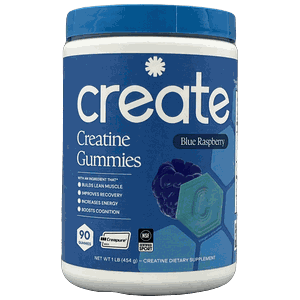
Creatine supplements tested include BulkSupplements.com Creatine Monohydrate Powder, California Gold Nutrition Sport Creatine Monohydrate, Create Creatine Gummies, Fitness Labs German Creatine, GNC Pro Creatine Monohydrate, Life Extension Creatine Capsules, Momentous Creatine, Naked Creatine, Nutricost Performance Creatine Monohydrate, Optimum Nutrition Micronized Creatine Powder, Orgain Creatine, Sports Research Creatine Monohydrate, and Thorne Creatine.
What Does Creatine Do?
Creatine is an amino acid derivative that helps supply energy to muscles, including the heart, particularly during short-term, maximal exercise (see What It Is). Some, but not all, studies suggest that creatine supplements can improve muscle strength and endurance during repeated high-intensity, short-duration exercise, such as weightlifting and sprinting, but are not helpful in purely aerobic exercise. Creatine may also be useful for improving exercise tolerance in patients with congestive heart failure (CHF) and for increasing muscle strength in people with muscular dystrophies. It does not improve memory in young adults and has shown very limited benefits on cognition in older adults, including menopausal women (see What It Does).
Is Creatine Safe?
Creatine is generally considered safe when taken in appropriate amounts for short periods, but little is known about its potential long-term adverse effects. There is some concern that long-term use at high doses (20 grams/day) may adversely affect the kidneys and cardiovascular system (see Concerns and Cautions).
How to Take Creatine?
Commonly, a "loading" dose of creatine is taken for 5 to 14 days, followed by a maintenance dose. However, some studies have shown a benefit using a constant dose rather than a larger loading dose. If using a powder or mix, dissolve it in very warm water to help it fully dissolve, and drink it soon after mixing, as creatine will begin to break down once in liquid. When using creatine supplements, it is important to drink ample water per day. For dosage details, plus information about how caffeine intake may affect creatine, see ConsumerTips™.
Other supplements for muscle
Learn about BCAAs (branched-chain amino acids), HMB, and taurine. Also see our Reviews of other supplements for muscle, including L-glutamine, vitamin D, protein powders, and "nitric oxide" supplements.